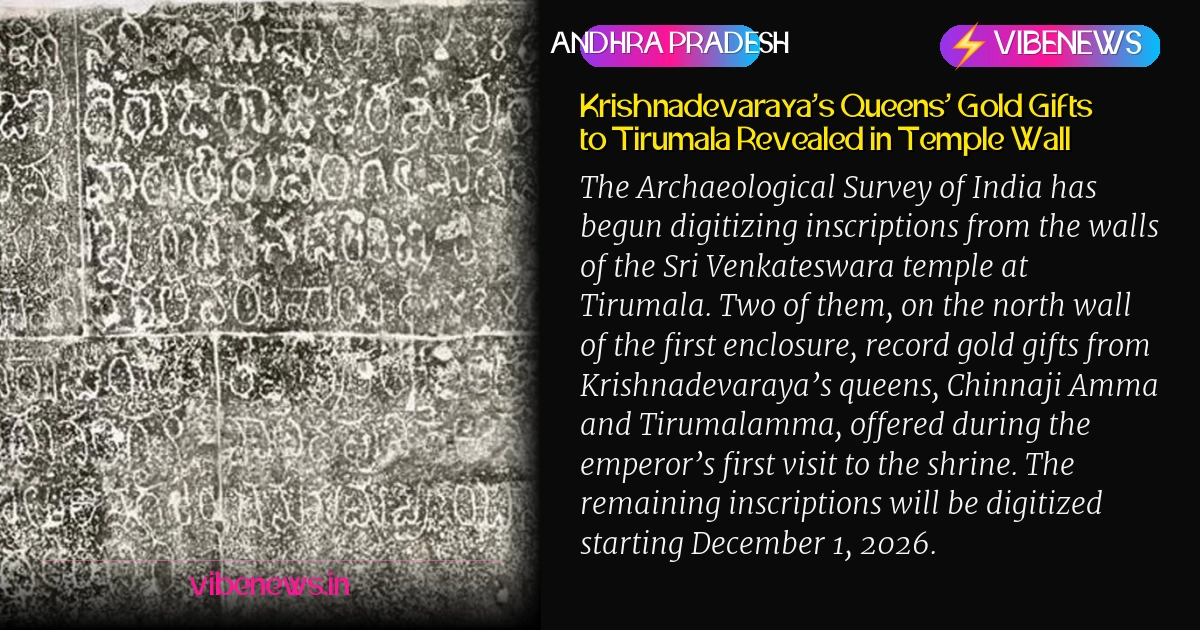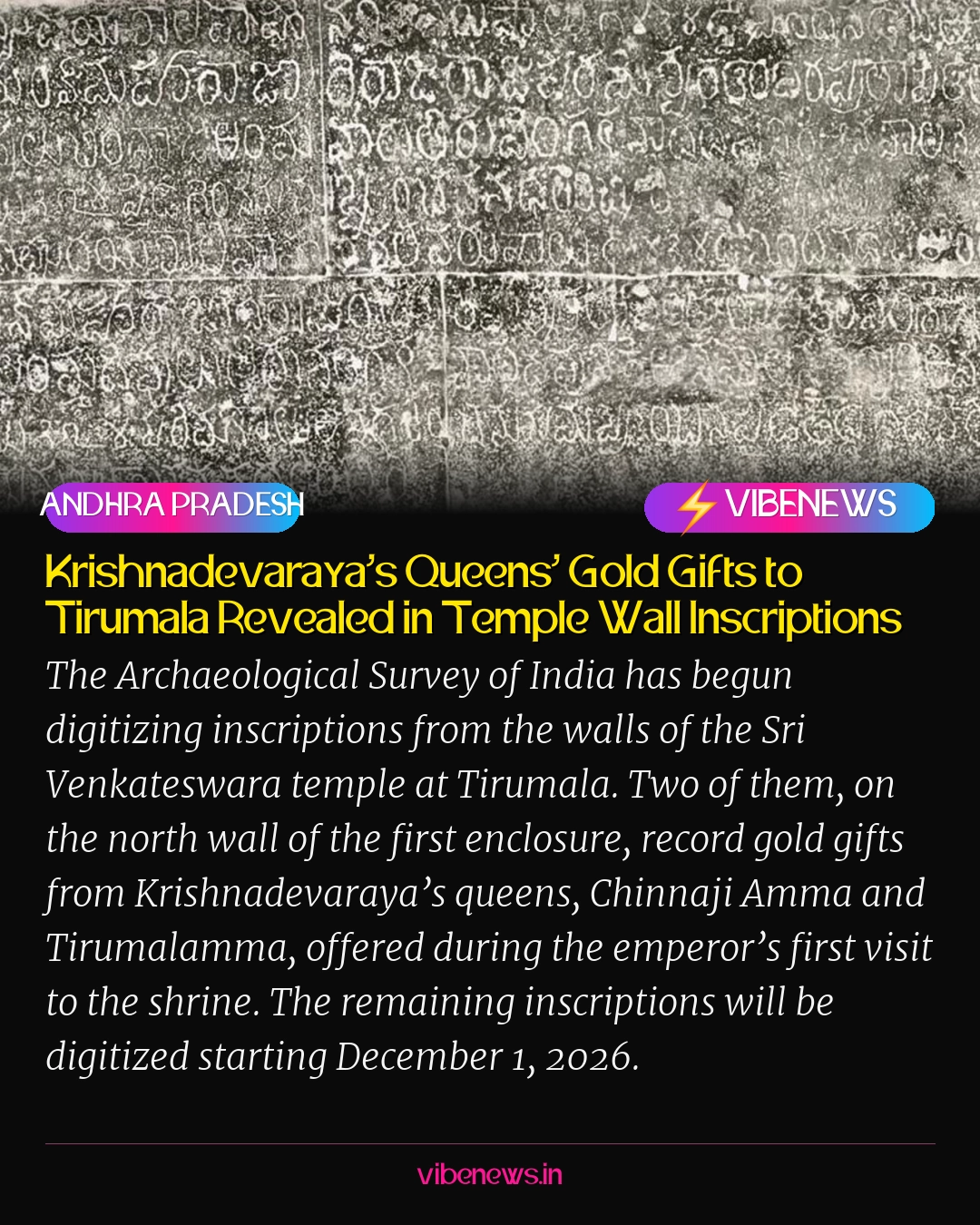
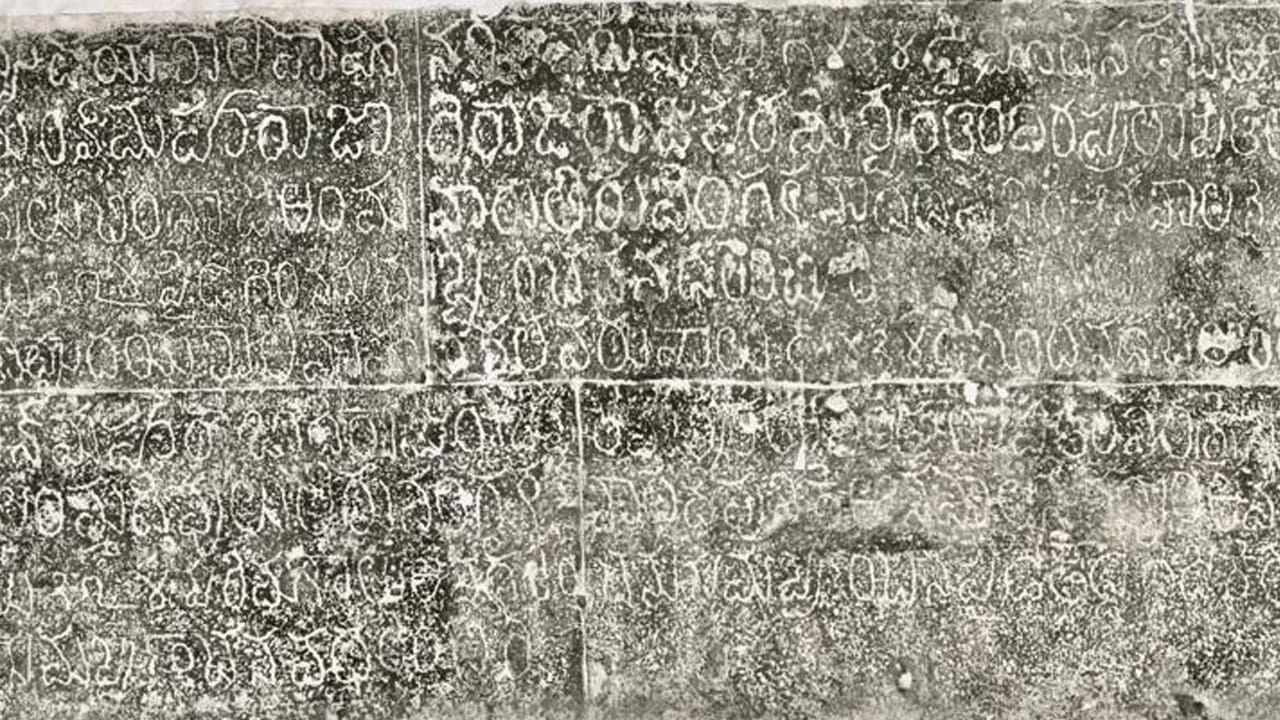
The Archaeological Survey of India has started digitizing inscriptions carved into the walls of the Sri Venkateswara temple at Tirumala, and two of them record gold offerings made by the queens of Emperor Krishnadevaraya. The work falls under the Bharat-Sri project, and the survey’s epigraphy wing has already collected the inscriptions from the temple’s enclosure walls, known as prakara.
So far, the team has started digitizing replicas of roughly 100 inscriptions that were gathered earlier. The rest will be taken up beginning December 1, which means the process runs into next month before it is complete.
Two stones on the north wall stand out
Among the inscriptions being digitized, the ASI has flagged two carved on the north wall of the temple’s first enclosure as especially important. Both are written in Telugu language and script, which makes them readable to a wide audience of local scholars and devotees alike once they are studied in full.
The inscriptions carry a precise date. They were recorded in the Angirasa year 1434, in the Phalguna month, during the bright fortnight, on the Panchami tithi. In the Common Era calendar, that falls on Thursday, February 10, 1513.
What the queens gave
The two inscriptions name Krishnadevaraya’s queens, Chinnaji Amma and Tirumalamma, as donors. According to the survey’s reading, the queens made their offering to Tiruvengalanatha, the form of the deity that the Telugu text uses, which corresponds to Lord Venkateswara. The record describes the gift as coming after the night worship of the deity, when milk was offered as naivedyam, or food offering.
After the night worship of Tiruvengalanatha, that is Lord Venkateswara, the queens presented two gold vessels weighing 374 thookas, meant to hold the milk offering, and a gold plate weighing 10 thookas for holding fragrant substances.
That gift list is the detail that will draw the most attention from historians. It shows not only that royal women of the Vijayanagara court were giving to the temple, but also that the gifts were specific and measured by weight, down to the vessel that held the milk and the plate that held fragrances.
A visit that the emperor is linked to
Krishnadevaraya is recorded as having visited Tirumala seven times. The ASI points out that the gift described in these inscriptions was made during his first visit. That detail changes how the inscriptions might be read. It suggests the offering was not a routine gesture added later in a long relationship with the shrine, but an early act of patronage that was recorded on stone at the temple itself.
The survey’s findings are presented in the source as the agency’s reading of the inscriptions, and that distinction matters. The gold weights and dates come from the carved text as the ASI interprets it. Readers should treat them as the survey’s current reading rather than a finished, fully published study, especially since digitization of the rest of the inscriptions has not yet begun.
Why the Andhra Pradesh connection matters
Tirumala sits in Andhra Pradesh, so the discovery adds directly to the state’s record of its own historical texts. Many of the temple’s older records have survived in stone rather than on paper, and that makes the physical walls of the shrine an archive in their own right. Digitizing them means scholars can study the texts without repeated handling of the carvings, and the copies can be kept as a record if the stone weathers over time.
For devotees, the story offers a different kind of connection. The inscriptions tie the temple’s history to a named royal household, with names, a date and a precise list of gifts. Few visitors who walk the enclosure walls would know that some of those carvings record a queen’s gold offering from more than five centuries ago.
What the report does not say
The source does not say whether the gold vessels or the gold plate still exist, or whether any later records describe what happened to them. It also does not state how many of the remaining inscriptions are expected to be linked to the Vijayanagara period, or whether the two north-wall records have been published in a scholarly journal. Those questions will likely be answered as the digitization moves forward and the ASI releases its fuller readings.
What is already clear is the basic sequence. The ASI has gathered inscriptions from the temple walls, started digitizing about 100 replicas, set December 1 as the start for the rest, and singled out two stones that name the queens and record their gold gifts on a February 1513 date.
TL;DR
- The ASI has started digitizing temple inscriptions collected from the enclosure walls of Tirumala’s Sri Venkateswara temple.|About 100 inscription replicas are being digitized now, with the remaining work set to begin on December 1.|Two north-wall inscriptions name Krishnadevaraya’s queens, Chinnaji Amma and Tirumalamma, as donors.|The records are dated to February 10, 1513 CE, corresponding to the Angirasa year 1434.|The gifts included two gold vessels weighing 374 thookas and a gold plate weighing 10 thookas.|The gift was recorded during Krishnadevaraya’s first of seven visits to Tirumala.