Char Dham helicopter operators have threatened to suspend all charter services from November 2, after aviation regulators made it mandatory for every sortie to carry two pilots. The threat, issued on Sunday, November 1, 2026, puts thousands of upcoming pilgrims in a difficult position, with the Himalayan shrine circuit relying heavily on helicopter travel.
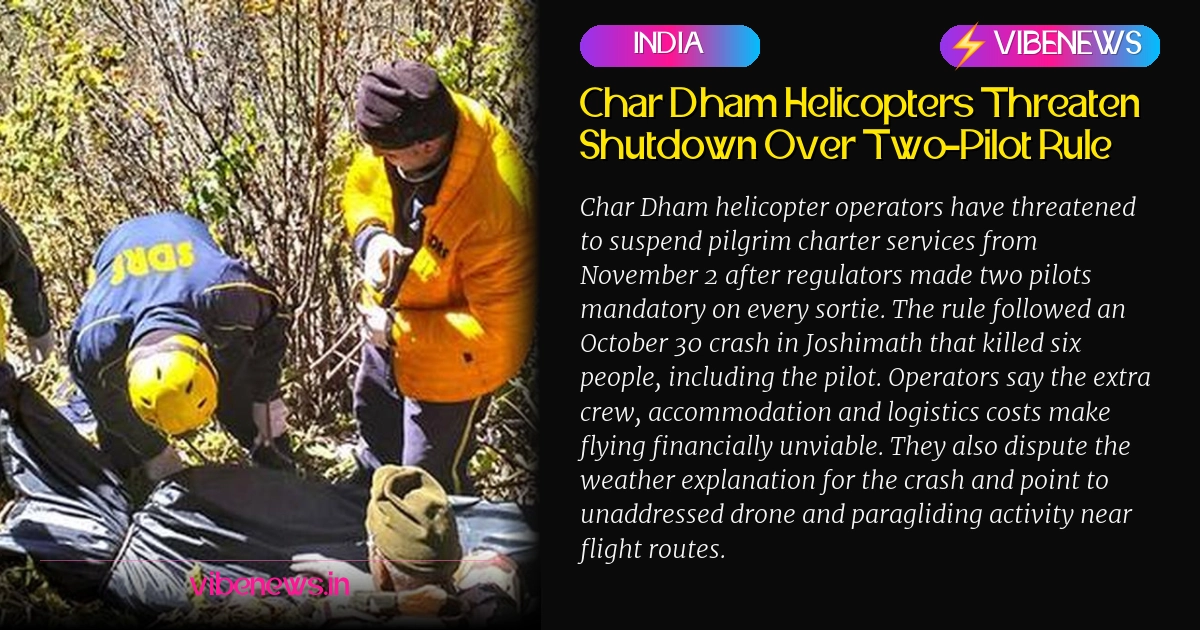
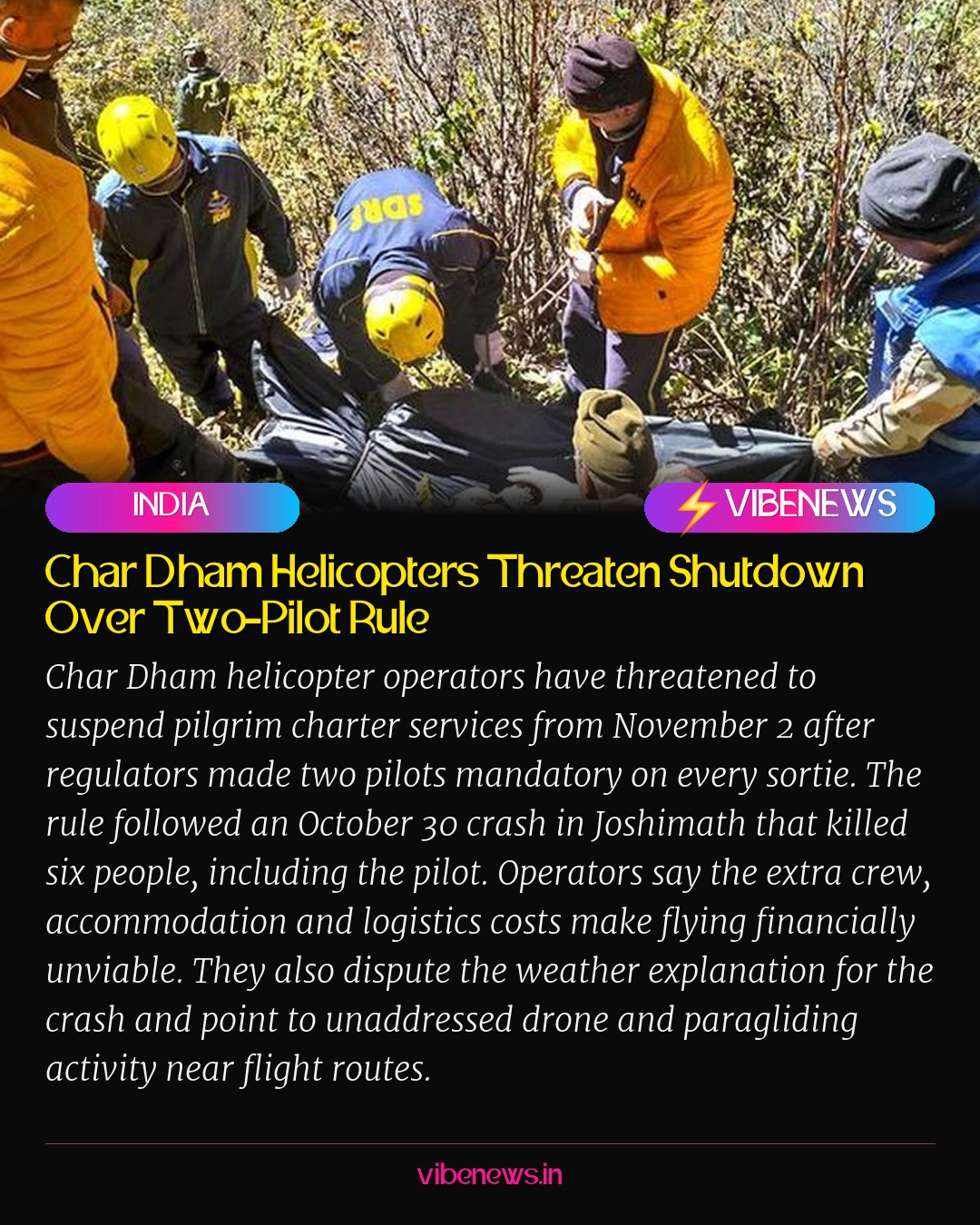
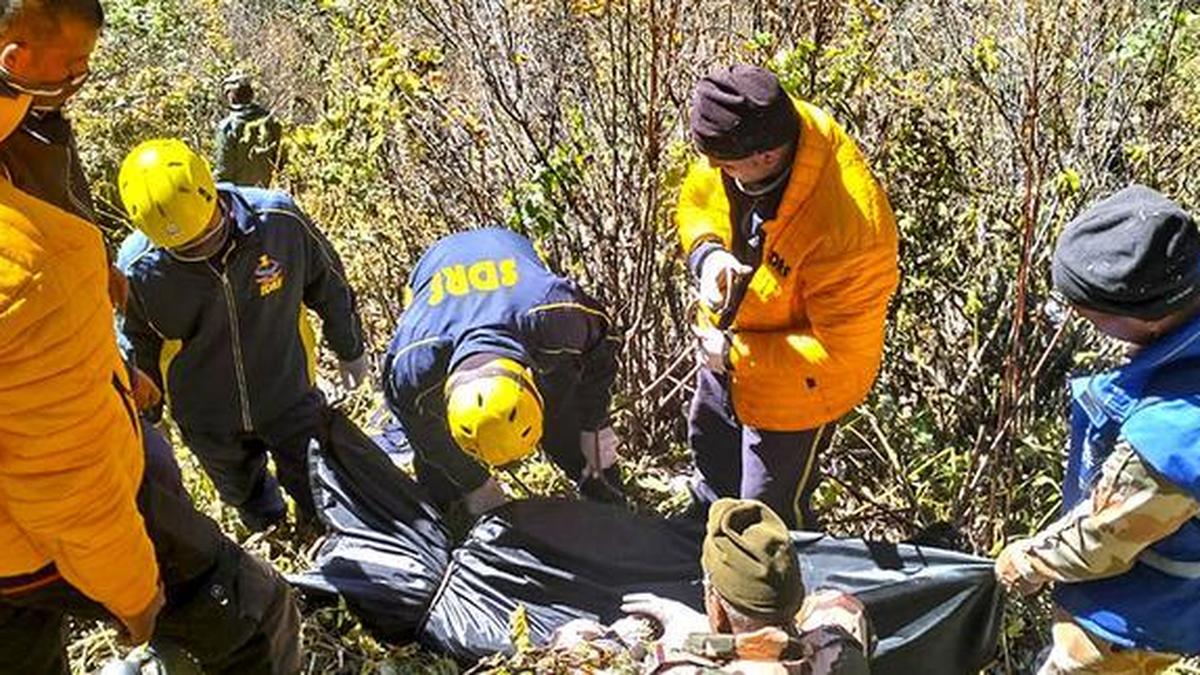
The two-pilot mandate was introduced by the Directorate General of Civil Aviation (DGCA) and the Uttarakhand Civil Aviation Development Authority (UCADA) following the October 30 helicopter crash in Joshimath. Six people died in that crash, including the pilot. Photographs from the site showed rescue personnel carrying the mortal remains as teams were deployed to recover the bodies.
The money problem
Operators say the new requirement hits them hard, and they want it reversed or reviewed before they fly another route. In a collective representation to the aviation regulators, they sought an urgent review of the directive. Their core complaint is that it was introduced without consultation or any assessment of its commercial impact.
The operators said the two-pilot rule would significantly increase crew, accommodation and logistical expenses. Their letter made the economics plain. Charter rates and limited operational margins leave no room to absorb the extra spending, and passing the cost on to customers is not commercially feasible either. The operators proposed suspending Char Dham charter operations from November 2 until authorities review the directive and agree on a workable solution.
Doubts about the weather explanation
The crash has also become a fight over cause. A helicopter operator, speaking on condition of anonymity, questioned the weather-related angle that has been part of the official discussion. The operator pointed to what the videos show. The UCADA CEO had said flights were allowed to take off only when the weather was clear, and the operator argued that footage recorded from the ground shows a clear view of the mountains. In that footage, the helicopter was flying at an altitude of over 10,000 feet.
That operator said the helicopter’s sudden fall could point to one of two possibilities. One is a medical emergency involving the pilot. The other is a foreign object striking the aircraft. Neither has been confirmed in the material available, and the investigation is still open.
The drone and paragliding complaint
A second operator, associated with Char Dham helicopter operations for more than a decade, said the drone and paragliding problem was not new. According to that operator, complaints about drones and paragliding activity near temple routes had been raised repeatedly with UCADA. Nothing changed.
“In almost all meetings, we have registered complaints about drones and paragliding activity causing trouble for flights, but no action was taken.”
The same operator raised a specific detail about the day of the crash. A NOTAM, or Notice to Airmen, was issued by the Indian Army on that day, and the Army has a substantial presence in Joshimath. The operators argue that regulators have a habit of shifting accountability onto operators and pilots while ignoring safety hazards along flight paths. That is the grievance driving their threat as much as the cost.
What the authority says
UCADA CEO Prateek Jain responded to the allegations. He said the possibility of a drone hitting the helicopter had already been included in the investigation. He also said efforts were underway to identify the source of one of the crash videos, shot from the ground, in which another object was seen flying near the helicopter.
Jain said the concerns raised by operators had been addressed. “We have addressed the concerns regarding drones and paragliding raised by the operators and have chalked out very specific routes for the choppers to fly,” he said. He added that after the crash, police and district administrations across Uttarakhand had been asked not to grant permission for drone operations near temples or along helicopter routes.
When asked whether the same request had gone to the Indian Army, Jain said the authority was considering the matter and exploring ways to address it. That answer leaves one of the operators’ central demands unresolved. The drone issue cannot be fixed by one agency alone if the airspace over key routes is shared with military activity.
What pilgrims should know right now
The operators’ threat is a proposal, not a confirmed shutdown. Their letter asks for suspension from November 2 until authorities review the two-pilot directive. What has not been announced in the available reporting is whether the regulators will reconsider the rule, or whether operators will follow through. Anyone with bookings on Char Dham helicopter routes should check directly with their operator before setting out.
The dispute carries real weight for a pilgrimage circuit where helicopters are often the only practical way to reach the high shrines within a single day. Any pause in charter flights would hit the pilgrims who depend on them first, and the timing, days after a fatal crash, means the stakes are already high.
TL;DR
- Char Dham helicopter operators threatened on November 1, 2026 to suspend all charter services from November 2.
- The threat follows a DGCA and UCADA mandate requiring two pilots on every charter sortie.
- The two-pilot rule came after the October 30 Joshimath helicopter crash that killed six people, including the pilot.
- Operators say the extra crew, accommodation and logistics costs cannot be absorbed or passed on to customers.
- Operators dispute the weather explanation and say drone and paragliding complaints near flight routes were ignored.
- UCADA CEO Prateek Jain says drone risks are part of the investigation and new routes have been set.