Context of the Map Inclusion
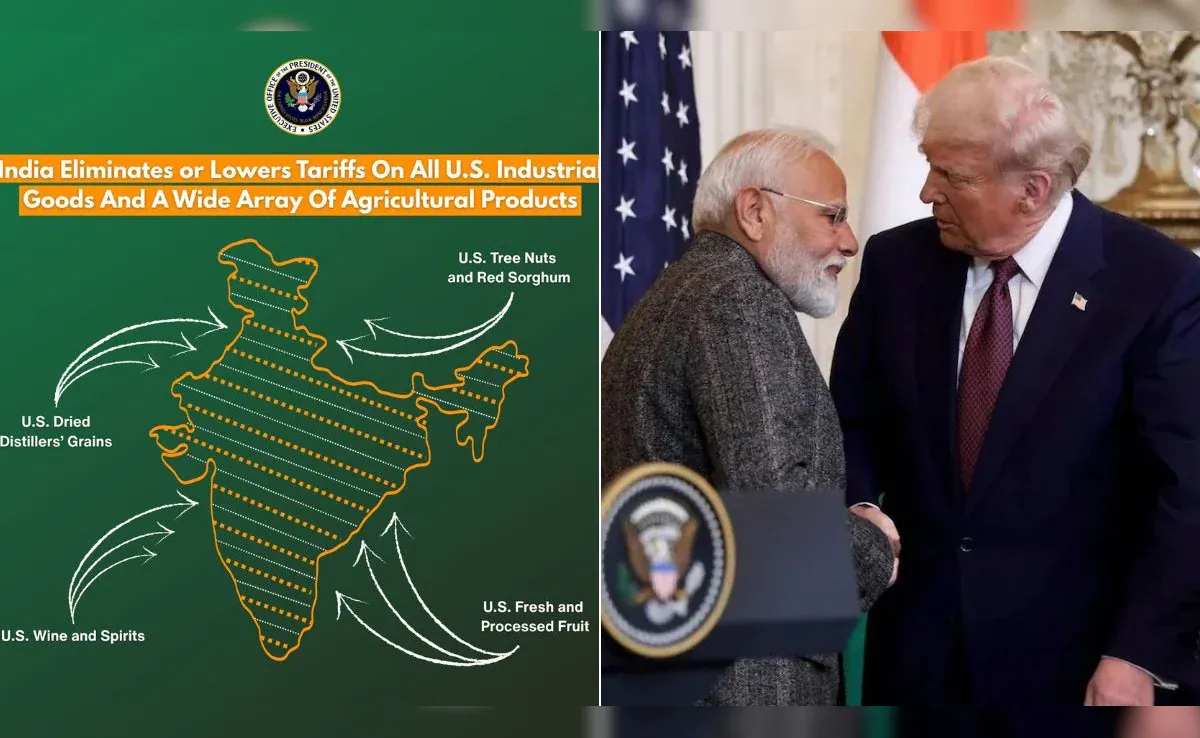
The India-US Bilateral Trade Agreement, reducing tariffs to 18% effective February 7, 2026, incorporated India's standard official map in annexures or references, showing Jammu & Kashmir and Ladakh with Pakistan-occupied Kashmir (PoK) and Aksai Chin as integral parts. This aligns with India's consistent portrayal since the 2019 reorganization and parliamentary resolutions declaring these areas inalienable.
Diplomatic Reactions
Pakistan lodged strong protests terming it "unacceptable," viewing the depiction as challenging its claims over PoK/Gilgit-Baltistan. China, controlling Aksai Chin since 1962, issued no public response, possibly prioritizing economic ties. The map's presence did not derail negotiations centered on trade concessions like generics, gems, and automotive quotas.
Significance for India
For India, routine inclusion reinforces sovereignty assertions without negotiation compromise. It signals the issue's non-negotiable status in international dealings, contrasting past sensitivities where maps were avoided or altered.
Broader Implications
The episode highlights how territorial depictions in bilateral documents carry symbolic weight amid resolved economic talks. India's firm stance projects confidence in partnerships while neighbors react variably. No disruptions occurred, with focus remaining mutual benefits. The development subtly asserts India's position on disputed territories within pragmatic diplomacy securing economic gains.
TL;DR
- India-US trade deal documents include official India map.
- Depicts J&K Ladakh with PoK Aksai Chin integral.
- Consistent parliamentary resolutions 2019 reorganization.
- Pakistan strong protest unacceptable claims challenge.
- China no public response silence.
- Map presence no negotiation disruption economic focus.
- Reinforces India sovereignty stance non-negotiable.
- Symbolic weight territorial depictions bilateral pacts.
- Pragmatic diplomacy economic gains separation.
- Quiet assertion confidence partnerships.