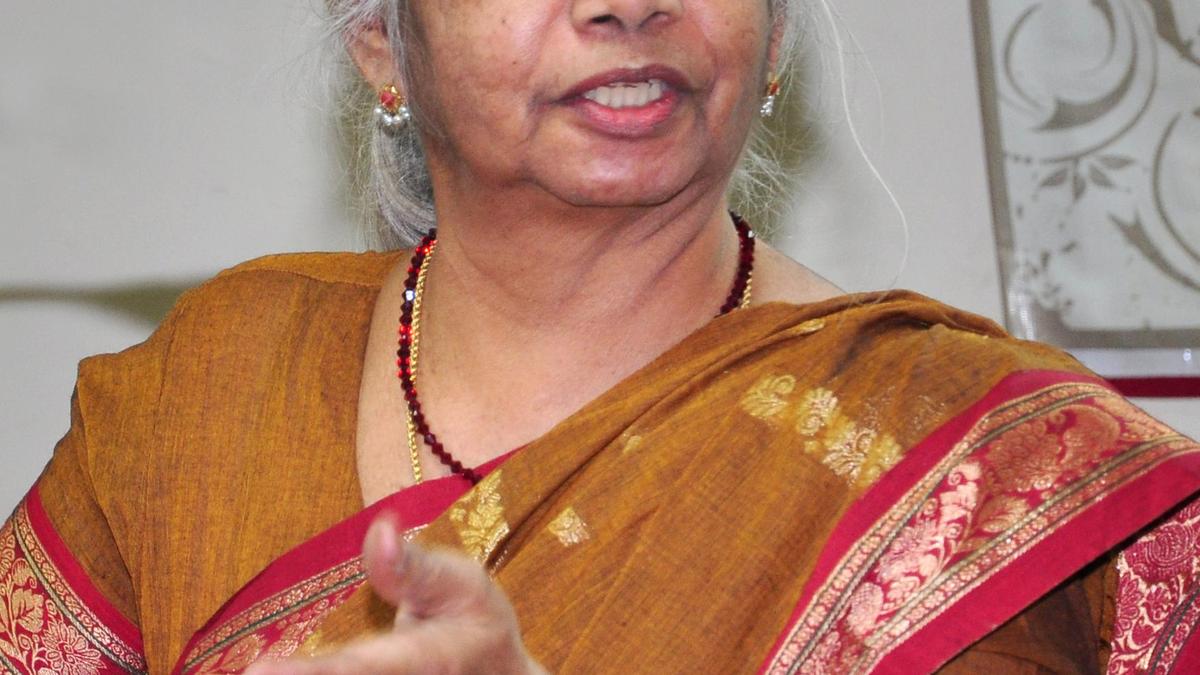
Sakuntala Narasimhan, a trailblazing musician, journalist, feminist and consumer rights activist, died on November 18. She was 86.
She had a rare place in Indian culture. She was a vocalist in both the Carnatic and Hindustani traditions, the two major classical systems of South and North India. Few performers train seriously in both. She was also a journalist who earned two PhDs, one in Women’s Studies and one in Musicology. Those credentials would make a full life on their own, but they only tell part of the story.
A voice lost, and a pen found
Her career began with a setback. When her first child was a year or two old, she mysteriously lost her voice. She could barely speak, let alone sing. The doctors could not identify the cause. For an accomplished vocalist, being confined to home with a small child and unable to sing was deeply frustrating.
That silence pushed her toward writing. Her daughter, Shobhana Narasimhan, a professor at the Jawaharlal Nehru Centre for Advanced Scientific Research, recalls how it started. A women’s magazine ran a short story competition, and Sakuntala won it. She got to know the people at the magazine and gradually wrote more and more. Over time, she became a longstanding columnist for multiple newspapers.
The PhDs she waited for
She had once started a doctorate in economics after her marriage, but she never finished it. Her daughter was born a year later, and the degree slipped away. Shobhana, a physicist, says it always bothered her mother that she did not have a PhD.
The turn came in 1991. Shobhana completed her own PhD that year, and she gave her mother a challenge. "When I got my PhD in 1991, I told her, ‘Amma, now it’s your turn.’" Sakuntala went on to earn her first PhD in women’s studies, and then another in musicology.
A genius at the mic and beyond
Renowned musician Archana Udupa was one of her students. She remembers a teacher who could perform a self jugalbandi, moving back and forth between Hindustani and Carnatic styles. A jugalbandi is usually a duet between two performers. Sakuntala managed the same conversation within one body and one voice.
Udupa says her teacher stood at the very top of the profession. Sakuntala was the only A-top artist in both Carnatic and Hindustani music at All India Radio and Doordarshan. A-top is a grade above A, the highest rank these state broadcasters gave their performers.
Udupa also believes the music world did not give Sakuntala the recognition she earned. She received her State award when she was nearing 80. Udupa said the industry could have celebrated her far more, and her words carry the weight of a student who watched that gap open.
"We need to celebrate such people at the right time and before it is too late."
Archana Udupa, musician and former student of Sakuntala Narasimhan
A public intellectual
Nupur Basu, a journalist and documentary filmmaker, had known Sakuntala for around four decades. She remembers a woman whose passion was music, but whose interests reached much further. "But she cared about everything," Basu said. Women columnists were rare in those days, and she would call Sakuntala a public intellectual.
Her daughter describes the household she grew up in. Shobhana says she was raised to believe there was nothing she could not do because of her gender. Her mother also taught her that injustice must be confronted, not endured in silence. That lesson came from a woman who had once lost her voice and then built a public one.
Sakuntala was also a consumer rights activist and a feminist. Those roles sat alongside her work as a vocalist and columnist, not apart from it. Her life connected the concert stage, the newspaper column and the fight for fairness.
The final illness
Sakuntala kept writing and singing for as long as age allowed. Eventually, age began to take a toll on her health. She fell seriously ill in the last month of her life. She was diagnosed with cancer, and the disease progressed rapidly.
Her death leaves a gap in several fields at once. Her students, her family and the readers of her columns now have to carry her work forward. Those who knew her say the best way to honour her is to celebrate artists while they are still here to hear it.
TL;DR
- Sakuntala Narasimhan, a Carnatic and Hindustani vocalist and journalist, died on November 18 at the age of 86.
- A sudden loss of voice led her to writing, and she became a longstanding columnist for multiple newspapers.
- She earned two PhDs, one in Women’s Studies and another in Musicology.
- Her student Archana Udupa says she was the only A-top artist in both Carnatic and Hindustani music at All India Radio and Doordarshan.
- She received her State award when she was nearing 80, and she was diagnosed with cancer in her last month.