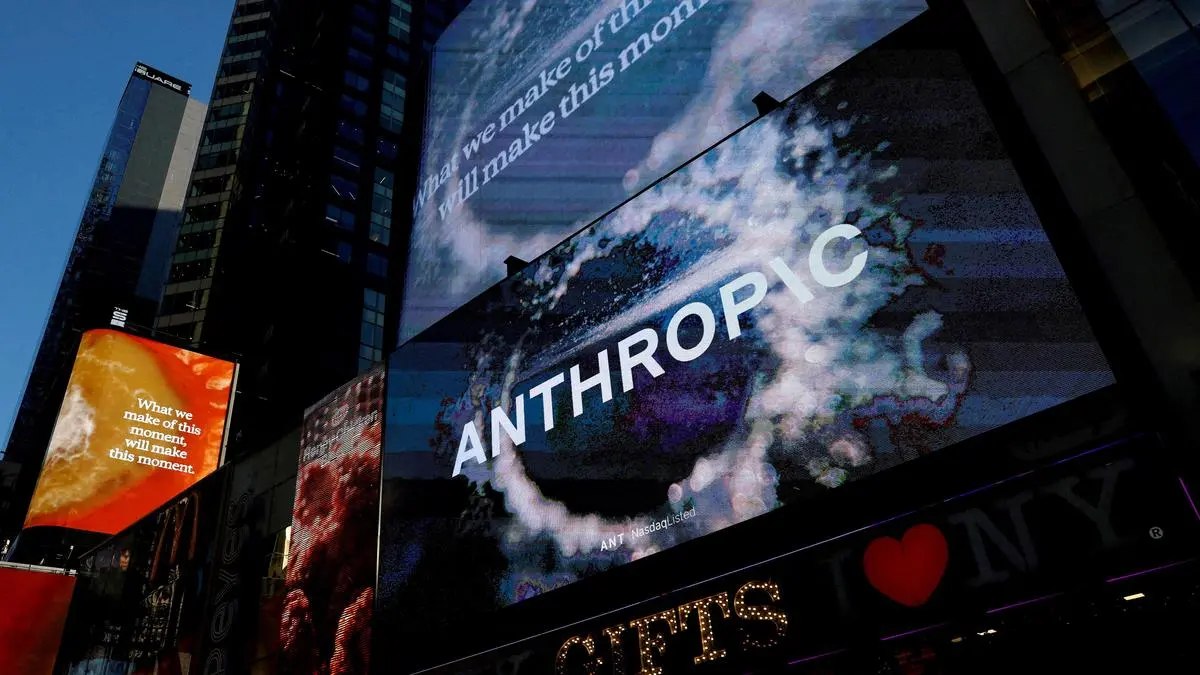
Anthropic, the artificial intelligence company behind the Claude chatbot, will list its shares on the Nasdaq on Thursday at $83 each, a price that could push its value to as much as $1.5tn (£1.14tn). That would place it among the most highly valued companies in the world.
The company had earlier said it would likely offer shares for between $70 and $78 each, a range that valued it at up to $1.3tn. The higher price signals that the company’s listing is expected to command a premium over that initial estimate.
Demand is the story driving the pre-listing buzz. An early investor, speaking on condition of anonymity, told us that shares were more than 10 times oversubscribed ahead of the public debut. In plain terms, people wanted far more stock than was available. If that holds up, Anthropic’s valuation could move well past its target once trading begins.
Depending on how strong that demand turns out to be, Anthropic could even surpass the early market valuation of Elon Musk’s SpaceX. SpaceX went public in June with a value of $2.2tn, the largest stock debut of its kind at the time. In the weeks that followed, SpaceX shares fell significantly, a reminder that a strong opening does not guarantee a strong run.
The money involved is enormous. Anthropic’s listing will bring in more than $68bn from its initial investors, and the company expects another $26bn from private placements. That puts the total it expects to raise at $94bn. The cash already lined up from the listing is more than SpaceX raised in June.
Anthropic is also set to hold a unique position on the US market. OpenAI, the maker of ChatGPT and Anthropic’s biggest rival in AI, is expected to go public next year. Until then, Anthropic will be the only public company in the US that is entirely focused on AI, meaning it was founded and built around AI tools and products. That sets it apart from tech giants such as Google and Microsoft, which also develop AI but earn money from a wide range of other services.
Excitement and unease in the same breath
Investors are excited, but not without reservations. The central question is whether the company’s business can keep pace with its financial obligations. Yang Wang, a principal financial analyst at Counterpoint Research, said that hundreds of billions of dollars in financial obligations will come due over the next couple of years, and that Anthropic has to meet them. Wang also pointed to the rarity of the opportunity: “Nevertheless, it is not an everyday occurrence for public investors to gain direct exposure to a frontier-model developer with the potential to shape the next stage of productivity.”
That scarcity is part of the appeal. Nearly every other major tech company is pouring huge sums into AI infrastructure and tools, but those firms are built around social media, online retail or online search. For them, AI tools and applications are secondary. Anthropic is different because its business is the technology itself.
“Anthropic going public gives us a whole new window into what AI demand looks like,” said Marta Norton, who heads strategy at the investment firm Empower.
From OpenAI alumni to a listed company
Anthropic was started by a group of co-founders led by siblings Dario Amodei and Daniela Amodei. All of them left their jobs at OpenAI to build a new AI firm. Since then, the company has positioned itself in the crowded AI race as the one more focused on building the technology with safety at the top of its priorities.
That stance has already brought friction. Anthropic refused a demand from the US Department of Defense that its tools be used in an essentially unrestricted way. Dario Amodei has been outspoken about his belief that AI tools may soon become so powerful that they pose a threat to human existence. The company has also urged developers to slow the development of AI, arguing that advanced systems could pose “catastrophic” risks to humanity if they are not handled with proper safeguards.
Rival OpenAI has voiced similar worries about the technology’s risks, and it has delayed its own plans to list on the stock market to address AI safety concerns. Anthropic, however, is looking to grow quickly and to gain more access to financing through public markets to do so.
Norton put the timing down to money. Anthropic is going public now, despite market volatility, because it needs more capital. “AI is financially demanding,” Norton said. “The public markets open up the financial spigot a little bit more, and so the time has come.”
The risks behind the hype
Broader worries about the AI industry’s business model are growing. The sector relies on expensive computer chips that are in short supply. It also depends on data centres that have drawn controversy, and funding those operations requires deals with other technology companies.
Regulators are watching too. The Federal Reserve has expressed concern about the rapid growth of AI-related debt financed through what it described as “complex and opaque” structures. That concern appeared in minutes from its October meeting, which discussed a potential rate rise. Some participants also noted that AI-related exposures were becoming increasingly concentrated among a small number of firms.
So the listing arrives with a clear tension. Demand for Anthropic’s shares appears to be extraordinary, and the company is raising money on a scale few listings have matched. Whether that enthusiasm holds once the shares start trading, and whether the business can turn AI interest into lasting profits, is what investors will be watching from Thursday onward.
TL;DR
- Anthropic shares are priced at $83 each and set to start trading on the Nasdaq on Thursday.
- The listing could value the Claude chatbot maker at up to $1.5tn, one of the highest valuations globally.
- An early investor said shares were more than 10 times oversubscribed before the public debut.
- Anthropic expects to raise $94bn in total, including $68bn from initial investors and $26bn from private placements.
- It will be the first US firm focused exclusively on AI to go public, ahead of expected OpenAI listing next year.
- The Federal Reserve has flagged concern about AI-related debt financed through complex and opaque structures.