
Canada is emerging as a preferred destination for AI data centres that American communities are rejecting, and the country’s industry leaders see an opening. Lucy Hargreaves, chief executive of the non-profit policy group Build Canada, wrote on X the day after American voters passed 40 of 41 local ballot initiatives aimed at limiting or blocking data centre development in this month’s midterm elections. "Data centres in Canada looking pretty appealing right now," she wrote.
Hargreaves later told the BBC that some of the capital once destined for US projects is now more available for Canada. "The question really is whether or not we want to go for that," she said.
Alberta Is Taking Most of the Boom
Alberta sits at the centre of the country’s AI data centre push, with 90% of currently proposed sites set to be built there. The province, rich in natural gas, has called itself "North America’s destination of choice" for AI data centres and offers a "concierge" service to help investors build at "unparalleled speed."
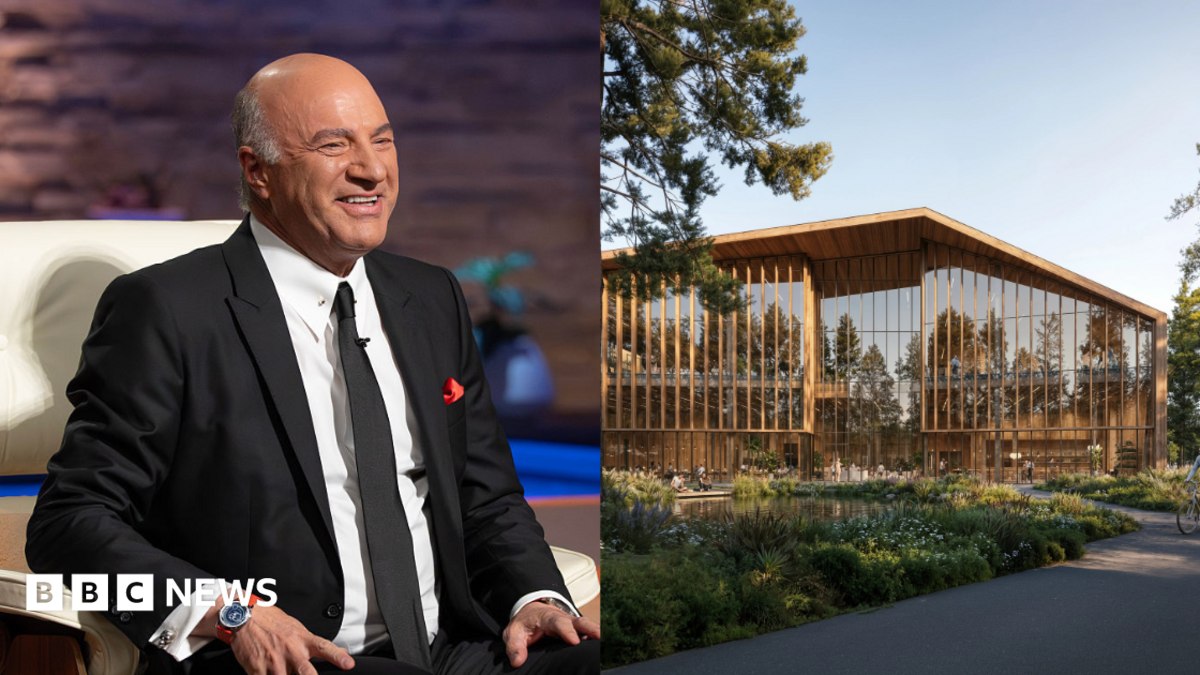
One of the biggest bets belongs to Kevin O’Leary, the Canadian businessman, TV personality and ally of Donald Trump. He announced plans this year for two large AI data centres, both named Wonder Valley, one in Alberta and one in the US state of Utah. The two projects are getting very different receptions.
In Utah, residents have organised a fierce opposition campaign. Outgoing state senator Stuart Adams demanded in June that O’Leary scale the project down by 75%, from 40,000 acres to 13,000. Financing for the Utah site is still underway, and it is unclear when, or whether, construction will start.
The Alberta project, a 7,000-acre, 7.5-gigawatt development, has won strong support from the provincial government and the local municipality. It is billed as "off-grid," running on its own power system fuelled by natural gas from the region. In April, the Alberta government exempted the project from an environmental impact assessment, arguing it was unnecessary. The project will still need permits before construction.
Local Support and Growing Unease
Reeve Ryan Ratzlaf of Greenview Municipality in north-western Alberta called the project the "perfect fit" for a rural community that had spent 13 years looking for an industrial tenant for a resource-rich parcel of land. He argued that the economic benefits outweigh the risks, and described the facility as "a giant warehouse with computer equipment inside," less risky than the petrochemical plants that could have been built there instead.
Some residents are worried about water. The site is projected to use six million cubic metres a year for cooling, about the size of 2,400 Olympic-size swimming pools. Ratzlaf said that amount is a drop compared with the annual flow of the nearby Smoky River, which the centre would draw from.
Public anger is also growing. Some residents attended recent provincial information sessions and walked out furious. At an August town hall, one resident asked, "If no one wants this, why are you pushing forward with this?" Sturgeon Lake Cree Nation has sued the government over its decision to override the environmental assessment for the Wonder Valley project, calling the decision "irrational" in court filings. The Alberta government has proposed legislation that would restrict where data centres can be built.
Protests are spreading beyond Alberta. Hundreds of people gathered in Nova Scotia on a Saturday against a proposed AI data centre that technology company Anthropic would use.
Ottawa and Ontario Are Holding Firm
So far, Canada’s lawmakers have stood their ground. The Carney government has framed AI data centres as a matter of national security and sovereignty, and has projected that Canada needs to expand its computing capacity 16-fold over the next four years to meet domestic demand. Ontario Premier Doug Ford said his province needs to move "full steam ahead" on building them. Canada has also released high-level guidance, co-signed by Anthropic, Meta and other large AI players, calling on data centres to pay for their electricity, minimise water use and deliver long-term benefits to their regions.
Sean Mullin, a senior fellow at the University of Toronto and a former adviser to Canada’s prime minister on sovereign AI compute strategy, said the backlash has been milder in Canada mainly because there are fewer projects. "I think we could experience some of the same backlashes if we’re not thoughtful about it," he said.
A Warning From Alberta
Bek MacIntosh, an Alberta resident, halted a proposed hyperscale data centre in Olds over concerns about its scale, scope and proximity to her home, after an eight-month fight. She said she is not opposed to all AI infrastructure. She is worried about what Alberta has opened up.
"I don’t think any political party in Canada is prepared for it."
MacIntosh warned that if provinces do not develop data centres responsibly, voters could have a "knee-jerk reaction" like the ones seen in the United States. She said Alberta has opened the door to "the most reckless of reckless developers."
Key Facts
40 of 41 local ballot initiatives aimed at limiting data centres passed in the US midterm elections.Alberta accounts for 90% of currently proposed AI data centre sites in Canada.The Alberta Wonder Valley project is 7,000 acres and 7.5 gigawatts, and was exempted from an environmental impact assessment in April.The Carney government says Canada needs to expand computing capacity 16-fold over four years.What is the Alberta Wonder Valley project?
It is a proposed 7,000-acre, 7.5-gigawatt AI data centre billed as off-grid, relying on its own power system fuelled by natural gas from the region. Kevin O’Leary is among its investors.
Why are residents worried about water use?
The site is projected to need six million cubic metres of water a year to cool its equipment, roughly the size of 2,400 Olympic-size swimming pools. Some community members have raised concerns about this figure.
TL;DR
- Canada’s AI data centre boom is centred in Alberta, where 90% of currently proposed sites are set to be built.
- American voters passed 40 of 41 local ballot initiatives aimed at limiting data centre development in this month’s midterms.
- Kevin O’Leary’s Alberta Wonder Valley project is 7,000 acres and 7.5 gigawatts, and was exempted from an environmental impact assessment.
- The project will use about six million cubic metres of water a year for cooling, according to projections.
- Sturgeon Lake Cree Nation has sued the Alberta government over the environmental assessment decision.
- The Carney government says Canada must expand its computing capacity 16-fold over four years.