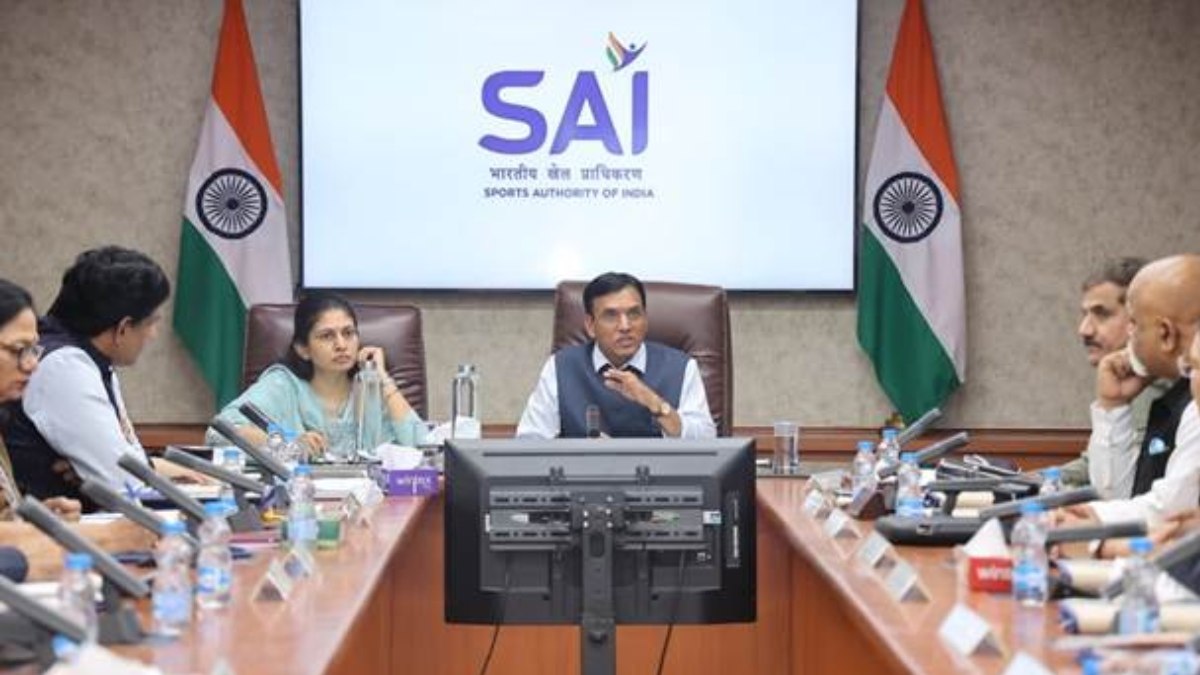
The Union Sports Ministry on Wednesday constituted a 14-member committee to design a framework for professionally managed and financially sustainable sports leagues in India, and it has given the panel eight weeks to submit its recommendations.
The move is part of Sports Minister Mansukh Mandaviya’s broader idea of building a robust league structure in India. The government wants to take the commercial and sporting success of the Indian Premier League and apply it to other disciplines. The committee is the government’s most concrete step so far toward that goal.
Who sits on the panel
The committee brings together government officials, sports administrators, franchise owners, corporate representatives, broadcasters and a legal expertise. The Ministry says the mix is deliberate, because stakeholders across the sporting, commercial, broadcasting and regulatory sides of professional leagues all have a role to play.
Kunal, Joint Secretary (Governance) in the Sports Ministry, will serve as convener. Vineel Krishna, Joint Secretary (Khelo India), is also on the panel. Raghuram Iyer, CEO of the Indian Olympic Association, represents the sporting federation side.
Hemang Amin, who is BCCI CEO and IPL Chief Operating Officer, brings direct experience of running the country’s most valuable league. B Srinivasan represents Reliance Industries, while P.K.S.V. Sagar comes from GMR Sports, Sanjay Adesara from Adani Sportsline, and Divyanshu Singh from JSW Sports. Those names signal how much private sports capital already sits behind franchise competitions in India.
On the broadcast side, Ishan Chatterjee represents JioStar, Rajesh Kaul represents Sony Pictures, Anupam Swaroop represents DD Sports, and Parag Darade represents Zee Entertainment. Abhijit Bhattacharya of BVL and advocate Nandan Kamath round out the group.
What the committee has to do
The committee’s first job is to map the current league ecosystem. It will look at the constraints that hold back the launch, growth and commercial viability of competitions across different sports. Only after that diagnosis does it move to recommendations.
The panel will also pick out priority sports and categories that could gain from structured leagues. The Ministry has named Olympic sports, women’s sports, youth sports, indigenous sports and emerging disciplines as the key areas. The committee has been told not to push a single template onto every sport. Instead, it will suggest operating structures that fit the sporting and commercial potential of each discipline.
Money is at the centre of the mandate. The committee will look at how to draw private capital into Indian leagues, including corporate investment, franchise ownership, sponsorships, broadcasting and digital media rights, and Corporate Social Responsibility financing.
Government support is also on the table. The panel will examine how public money can complement private participation. Options include Viability Gap Funding, direct and indirect financial assistance, and concessional access to government sports infrastructure. Viability Gap Funding is a form of state support meant to make a project commercially workable when private investors will not commit enough money on their own.
Why the Ministry thinks the model needs fixing
The IPL has grown into one of the biggest sporting properties in the world. But franchise leagues have not worked the same way in other sports. India has seen professional leagues emerge in badminton, kabaddi, hockey, wrestling and several other disciplines. These competitions have created opportunities for athletes, attracted sponsors and pushed sports beyond cricket.
Money keeps being the problem. The Hockey India League, for example, has run into financial difficulties, and its long-term viability has come under scrutiny despite its revival. The Ministry sees that kind of struggle as proof that leagues need stronger commercial models, steadier investment and better planning.
Many disciplines with strong sporting and social potential continue to face commercial viability hurdles, particularly during their initial stages.
That line comes from the Ministry’s own statement, and it explains the thinking behind the committee. The government is not only asking how to start more leagues. It is asking how to keep them alive once the first season is over.
Linking leagues to schools and local clubs
The committee will also look at how professional leagues can connect with schools, colleges, universities and local clubs. The goal is a clear pathway from grassroots participation to professional opportunities. Leagues, in turn, would gain a wider sporting audience.
A sustainable league structure could also create jobs beyond the field. The Ministry points to roles in sports management, broadcasting, technology and event operations. The Ministry has stressed that making this work will need coordinated effort from private companies, sports organisations, state governments, local bodies and communities.
Who the committee will consult
Before it finalises anything, the committee can consult National Sports Federations, officials from existing leagues, investors and sports technology companies. That gives the panel room to test its ideas against the people who already run, fund and play in competitions.
The timeline is tight. The committee has eight weeks to hand its final recommendations to the Sports Ministry. How those proposals are received will determine whether India’s league experiment moves beyond cricket in a structured way, or stays mostly a story about the IPL.
If the framework is implemented well, it could give Olympic, women’s, youth and indigenous sports a firmer footing. It could also open more paid opportunities for athletes and for the wider sports industry, which is what the Ministry is betting on.
TL;DR
- The Union Sports Ministry has formed a 14-member committee to build a framework for financially sustainable sports leagues in India.
- BCCI CEO and IPL COO Hemang Amin is among the members, alongside representatives from the Indian Olympic Association, major corporates and broadcasters.
- The committee has eight weeks to submit its recommendations to the Ministry.
- Priority areas include Olympic, women’s, youth, indigenous and emerging sports, with no single model imposed on every discipline.
- The panel will also explore Viability Gap Funding and ways to draw corporate investment, franchise ownership and CSR financing.
- The move is part of Sports Minister Mansukh Mandaviya’s plan to extend IPL-style success to other sports.