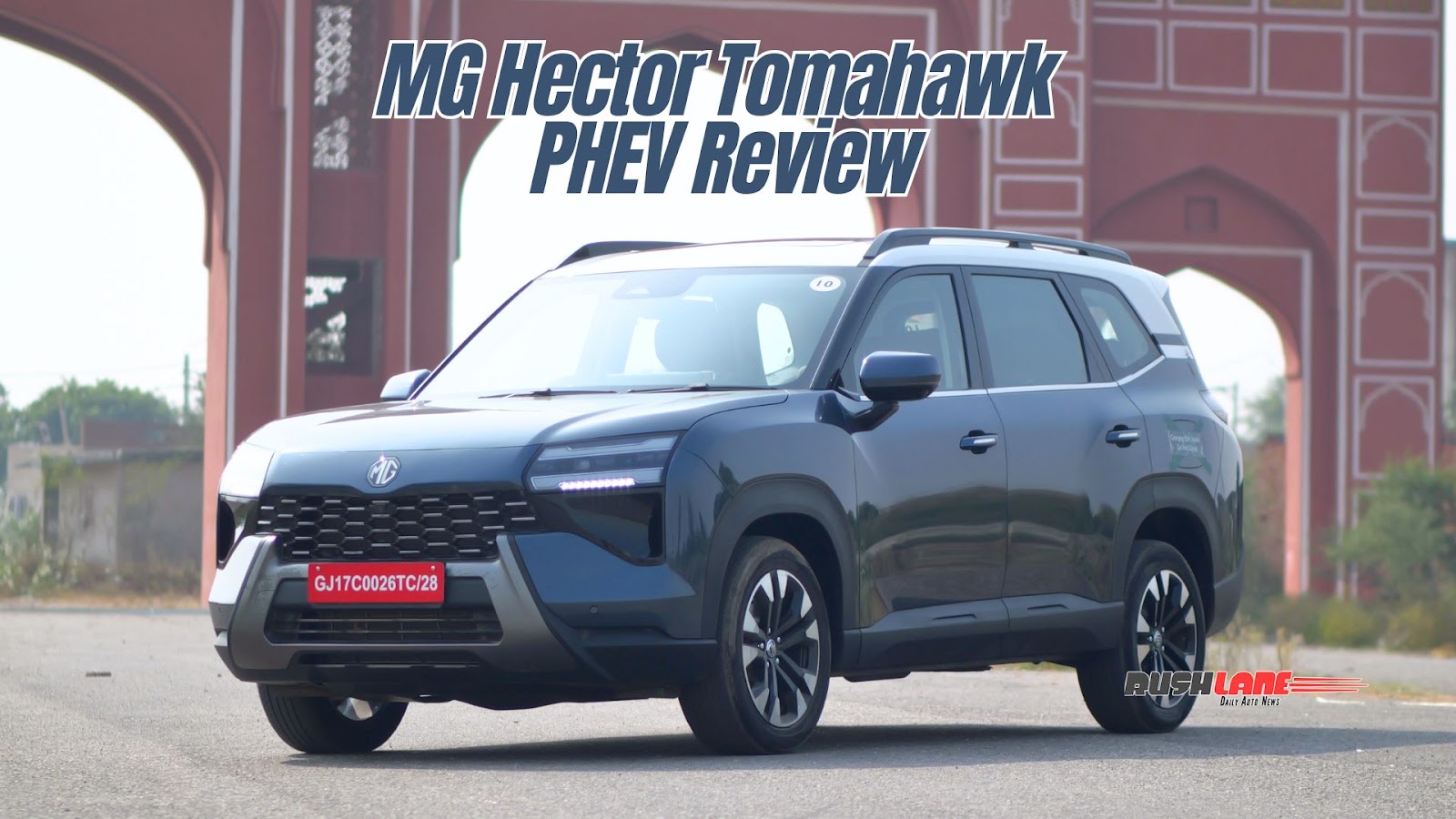
The 1,000-Kilometre Sealed Tank Test
JSW MG Motor India put its new plug-in hybrid to the test by organizing a media drive from Ahmedabad to Delhi NCR, covering approximately 1,000 km on a single full fuel tank and one full battery charge. To verify real-world capabilities without external help, officials sealed the fuel filler cap and charging flap before departure. Reviewers assessed the MG Hector Tomahawk PHEV across two days of sustained highway driving, evaluating comfort, practicality, and powertrain efficiency.
Pricing and Market Positioning
Positioned as an accessible alternative in a segment where plug-in hybrids have mostly stayed confined to luxury brackets, the Hector Tomahawk PHEV carries an ex-showroom price tag of Rs 25.7 lakh for the Exclusive variant and Rs 27.8 lakh for the Essence variant. Its primary hybrid alternative in the market is the Toyota Innova Hycross, while other potential contenders include the Mahindra XUV7XO, XEV 9S, Tata Safari, and Harrier EV depending on seating and powertrain preferences.
Powertrain Performance and Range
The vehicle pairs a 52-litre petrol tank with a 20.5 kWh battery pack, boasting a claimed combined range of 1,100 km and 115 km of electric-only driving. Setting off with a fully charged battery and full tank, the vehicle covered roughly 1,000 km without refuelling or recharging. For the first 140 km from Ahmedabad, it operated predominantly in electric vehicle mode before the petrol engine engaged to manage remaining charge. During series-hybrid operation, the engine generated electricity while the electric motor drove the wheels, yielding displayed petrol consumption around 4.6 litres per 100 km, or approximately 21.7 km/l on the highway.
The MG Hector Tomahawk PHEV makes a convincing case for buyers seeking electric driving for everyday use without giving up the flexibility of a petrol engine on longer journeys.
Interior Space and Practicality
Inside, the seven-seater layout features a darker shade of brown distinguishing it from its EV sibling. The first and second rows offer ample space, soft-touch padding on door pads, armrests, and the dashboard, plus a panoramic sunroof and roof-mounted AC vents. However, testers noted that the third row remains cramped for adults at six feet tall, physical climate toggles require a stretch, and several ventilation and seat settings remain buried within the touchscreen interface.
Ride Quality Versus Handling Compromises
The softly sprung, four-wheel independent suspension absorbs road bumps with commendable ease, delivering a comfortable ride quality over rough patches. Yet, handling leaves room for improvement, showing noticeable body roll through corners, limited steering feedback across its three settings, and pronounced nose-dive under hard braking. Wind and tyre noises also creep into the cabin alongside noticeable door-pad rattling from the punchy Infinity speakers.
Key Facts
Priced at Rs 25.7 lakh (Exclusive) and Rs 27.8 lakh (Essence), ex-showroom.
Equipped with a 20.5 kWh battery pack and a 52-litre petrol tank.
Claimed combined driving range reaches up to 1,100 km with 115 km electric-only capability.
Achieved approximately 1,000 km of driving during the media test without external refuelling or recharging.
What is the fuel efficiency of the MG Hector Tomahawk PHEV?
During sustained highway driving, reviewers observed displayed petrol consumption of around 4.6 litres per 100 km, which translates to approximately 21.7 km/l.
How does the plug-in hybrid handle seating and boot space?
The SUV offers a seven-seater layout with a cramped third row for taller adults. Boot space stands at 192 litres with all three rows up and expands to 528 litres when the third row is folded down.
What are the primary handling drawbacks of the vehicle?
Reviewers noted noticeable body roll through corners, limited steering feedback, and pronounced nose-dive under braking, making it better suited for relaxed family cruising rather than sporty driving.
TL;DR
- JSW MG Motor India tested the MG Hector Tomahawk PHEV on a 1,000 km drive from Ahmedabad to Delhi NCR with sealed fuel and charge flaps.
- The plug-in hybrid is priced between Rs 25.7 lakh and Rs 27.8 lakh ex-showroom for its two variants.
- It features a 20.5 kWh battery and a 52-litre petrol tank, offering strong electric-only range for daily commutes.
- The SUV delivers a comfortable, softly sprung ride with independent suspension at all four corners, despite some handling body roll.