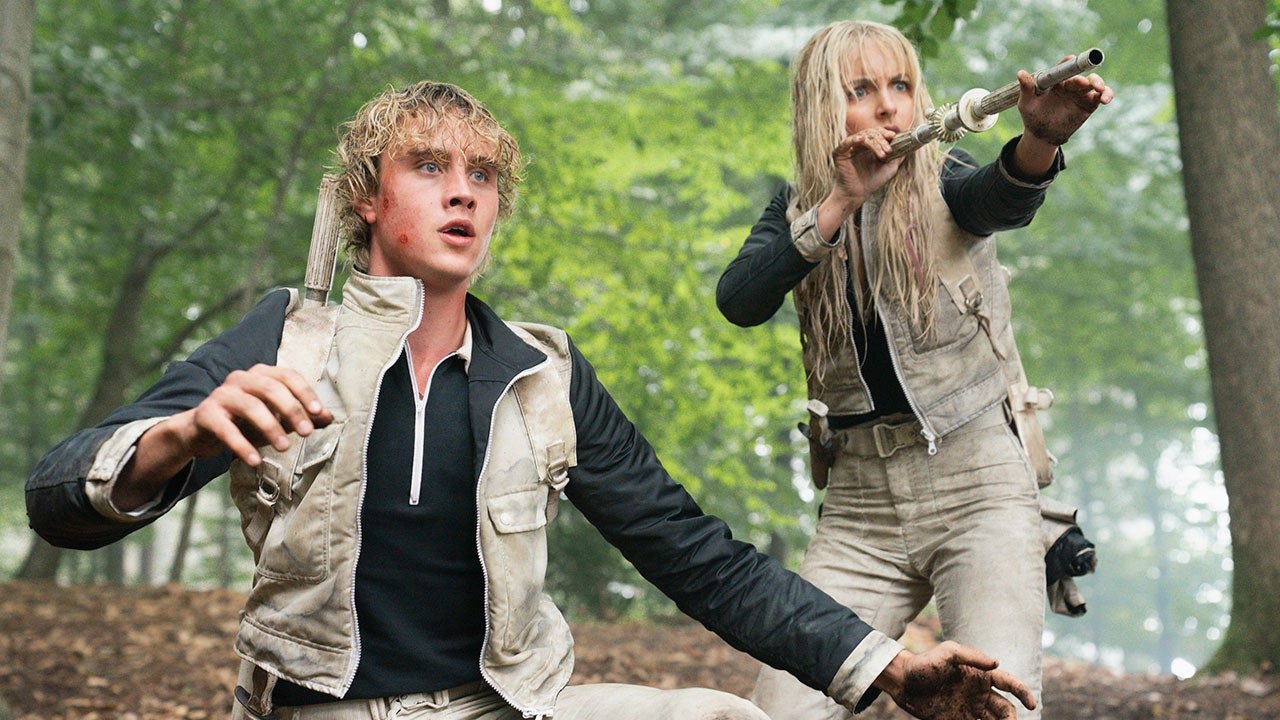
Haymitch Abernathy wins his Games in The Hunger Games: Sunrise on the Reaping, then returns to District 12 to find the Capitol has already taken everything from him. Joseph Zada plays the young Haymitch, with Ralph Fiennes as President Snow and Jesse Plemons as Plutarch Heavensbee.
The film’s ending is the part that has fans talking. Haymitch is shown as the bitter, drunk, isolated figure viewers met in the original films, and the prequel ends with him fulfilling the goal he set out to achieve: ending the Games.
How the Prequel Ends for Haymitch
According to the review, the Gamemakers edit Haymitch’s footage so he looks like an ideal Capitol victor, unfeeling, ruthless and cowardly. The Capitol wants people to see him as a pariah rather than a hero who inspires the districts.
The cruelty goes further. The Capitol times Haymitch’s return so he arrives in time to watch his family burn alive, but too late to save them. Snow then lets him believe his love, Lenore Dove Baird, played by Whitney Peak, will be spared. She dies from poison hidden in the candy Haymitch gave her earlier in the film.
Plutarch knew Haymitch’s loved ones would likely be taken from him, and he suggested as much. The review says he valued a future strategic alliance more than Haymitch’s peace, which is why Snow spares Haymitch.
The closing scenes show a grown Katniss, Peeta and Haymitch, played by Jennifer Lawrence, Josh Hutcherson and Woody Harrelson, celebrating that the Reaping is over. Haymitch sits on the hill where he once found refuge with Lenore. The review reads this as the moment Haymitch sees his work pay off in his own lifetime.
Why the Ending Weakens the Original Films
The review’s central complaint is simple. A prequel should deepen the original story, and this one undercuts it.
Turning the original Hunger Games story into the fulfillment of Haymitch’s long-delayed goal undercuts the power of those first films.
In the original films, Haymitch’s transformation from cynic to rebel felt earned and uncertain. Here, the voice-over explains that he had been lying in wait the whole time. If the hope was always there, the review argues, the change fans saw was never real.
The review also points to Harrelson’s Haymitch in Catching Fire, who tells Katniss that nobody ever wins the Games. The reviewer says the prequel’s version is almost angelically good, and his failure to expose the Games is a narrow one, not the moral compromise that made the original character so affecting.
Plot Holes and Convenient Returns
The critique also targets the way the prequel sets up Catching Fire. Beetee, Wiress and Plutarch return because of circumstances the review calls convenient, including the death of Gamemaker Seneca Crane. The review says Plutarch’s long rise through the Capitol ranks, while he quietly plotted against it, makes his years of sending children to their deaths harder to accept.
The footage raises another question. If the Capitol could manipulate Haymitch’s Games, why would it run Katniss’s Games live? The review also asks why the Capitol would let Haymitch anywhere near Katniss, twice, including the Quarter Quell.
The review also says the film leans too often on fan service, such as Snow asking Plutarch whether he has considered a career in Gamemaking. It adds that the movie explains its themes through dialogue rather than letting them land on their own.
What Comes Next for Panem
The review does not write off the franchise. It credits the film’s message that working toward a world that reflects one’s values is worthwhile even when the results are not visible. It also praises Zada as a standout.
The reviewer argues that the next Panem story needs to be fresh. Instead of another tribute from District 12 in the arena, the review suggests a series about the people working underground for decades before the rebellion seen in Mockingjay. That approach, the review says, could explore privilege, propaganda and how divisions are sown within a nation.
TL;DR
- Haymitch Abernathy wins his Games but loses his family and his love to President Snow’s cruelty.
- The prequel’s ending shows him fulfilling his long-delayed goal of ending the Games.
- The review argues that this ending undercuts the power of the original Hunger Games films.
- The critique says Haymitch’s transformation feels less earned because the voice-over reveals he had been waiting all along.
- The review praises Joseph Zada’s performance but calls the story’s plot convenient in places.