
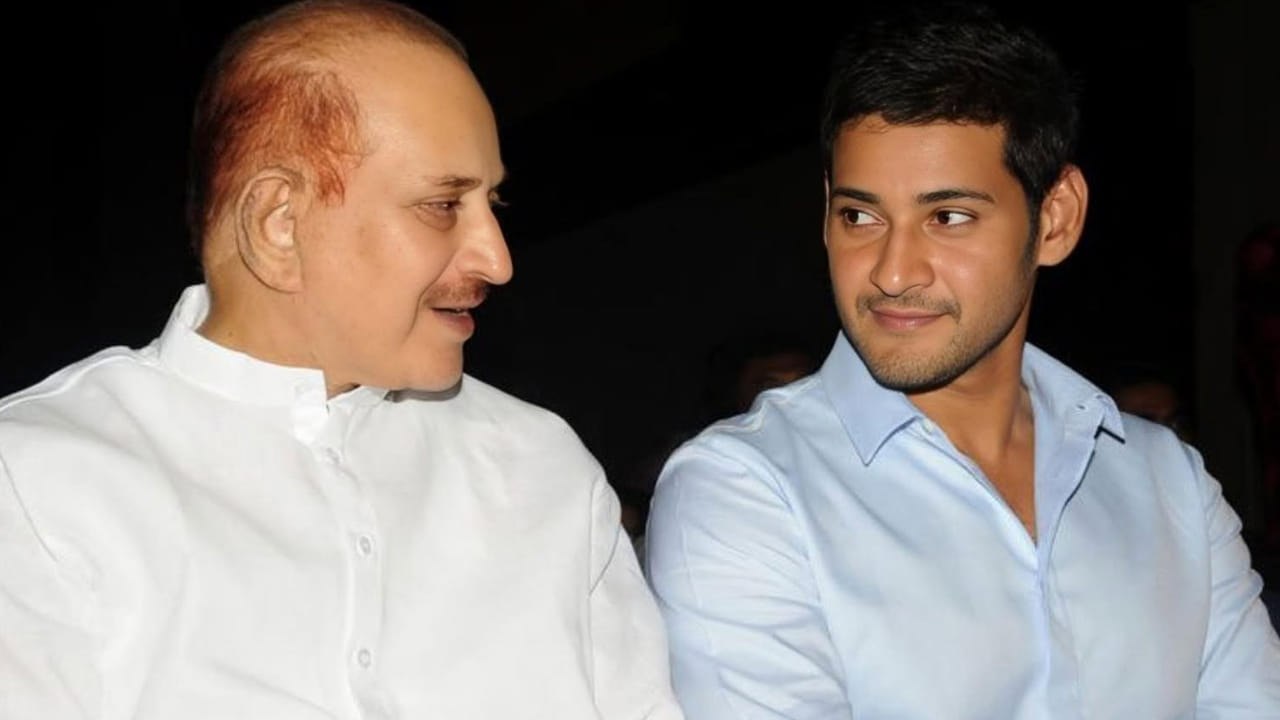
Superstar Krishna has said he never heard the story of a Nani film, and that had he heard it, he would have told his son Mahesh Babu to say no. The remarks came from an earlier interview in which the veteran actor looked back on his film career, his family life, and the changes he sees in Telugu cinema today.
Krishna’s reasoning was direct. In his view, the central character was a young boy’s role, and that kind of part would not work for an actor carrying the kind of big-screen image Mahesh has built. He pointed to the fact that the same story had succeeded in Tamil with a new actor in the lead. For him, that was proof the material could work, but not necessarily for a established star.
A father who backed every decision, with one exception
Krishna did not present himself as a critic of his son’s choices. He said he had always fully supported the decisions Mahesh made about his career. The Nani film was the exception, and it was only because he had never listened to its subject. That detail matters. Krishna was not judging the finished product. He was judging the fit between a particular story and a particular star, and saying he would have made that call before a single frame was shot.
That kind of frankness from a father about a son’s filmography is rare, and it is what makes the remark stand out.
Family life, home cooking, and a table that is always full
The interview also touched on home life. Krishna said the family likes to spend time together and have fun. He added that he sometimes cooks for everyone at home. His favourite dish to make, he said, is paya, and it happens to be a particular favourite of Mahesh. He also said his daughter Manjula does not eat non-vegetarian food, so he makes tomato rice for her, and that she comes over for that dish alone. If he learns the children are free, he said, he invites everyone for a meal.
It is a small window into a household that has been in public view for decades, and it shows a side of the star family that rarely makes headlines.
Multistarrers, rivalries, and a different kind of work ethic
Krishna spoke warmly about the multistarrer films of his era. He said there was plenty of encouragement for such projects in his time. He recalled sharing screen space with a long list of major names, including N.T. Rama Rao, A. Nageswara Rao, Sobhan Babu, Krishnam Raju, Rajinikanth, and Sivaji Ganesan.
He also described an industry where heroes did not begrudge each other. According to him, actors wanted their own roles to be strong, but nobody wished harm on a co-star. That is a claim he framed as a contrast to the present day, though the interview does not go into specific examples of rivalry today.
His own work rate also came up. Krishna said he once made as many as 18 films in a single year, partly so that many people in the industry could get work. He recalled that in those days, a film could be shot in 25 to 30 days. The comparison is striking when set against the timelines he described for modern productions.
What he thinks has changed
Krishna’s broader critique of the industry centred on priorities. He said there is less importance given to everything that once mattered in filmmaking, and he singled out music and casting. In the past, he said, films were made within budget and released on schedule, and that discipline is a big reason they succeeded.
Today, he said, a single film can take six months to a year to complete, with 250 to 300 days of shooting. He also voiced frustration that audiences seem to no longer understand song lyrics, and that viewers are gravitating toward big-budget films with heavy graphics. Smaller films with strong stories, in his telling, are getting less support.
His hope is that audiences will return to watching budget films again. He believes that shift would bring back the industry’s former glory.
Why this matters beyond one family
The interview is not a new controversy, and it does not announce a fresh decision about any project. What it does offer is a rare insight into how a legendary Telugu actor thinks about casting, story fit, and the economics of filmmaking. The Nani film is the headline, but the deeper thread is Krishna’s argument that a star’s image should drive his choices, and that a story which thrives in one language or with one actor may not translate to a bigger name in a different context.
Fans who follow Mahesh’s career will read the remark as a window into how the family looks at roles. Industry watchers will likely see a veteran’s view of how production schedules, budgets, and audience tastes have shifted over the decades.
Krishna’s comments were made in an earlier interview, and the source material does not indicate any response from Mahesh Babu or Nani to them. The remarks stand as the senior actor’s own assessment of a film he never saw from the inside and a career he helped build.
If I had heard that subject, I would have told Mahesh not to do it.
TL;DR
- Krishna says he would have advised Mahesh Babu against a Nani film’s subject had he heard it.
- He called the story a young boy’s role, unsuited to a star with Mahesh’s big-screen image.
- He pointed to a Tamil version that succeeded with a new actor in the lead.
- Krishna said he has always fully backed his son’s career decisions.
- He also said films in his era were shot in 25 to 30 days, and he once made 18 films in a year.
- He criticised today’s longer shoot schedules and the lack of focus on music and casting.