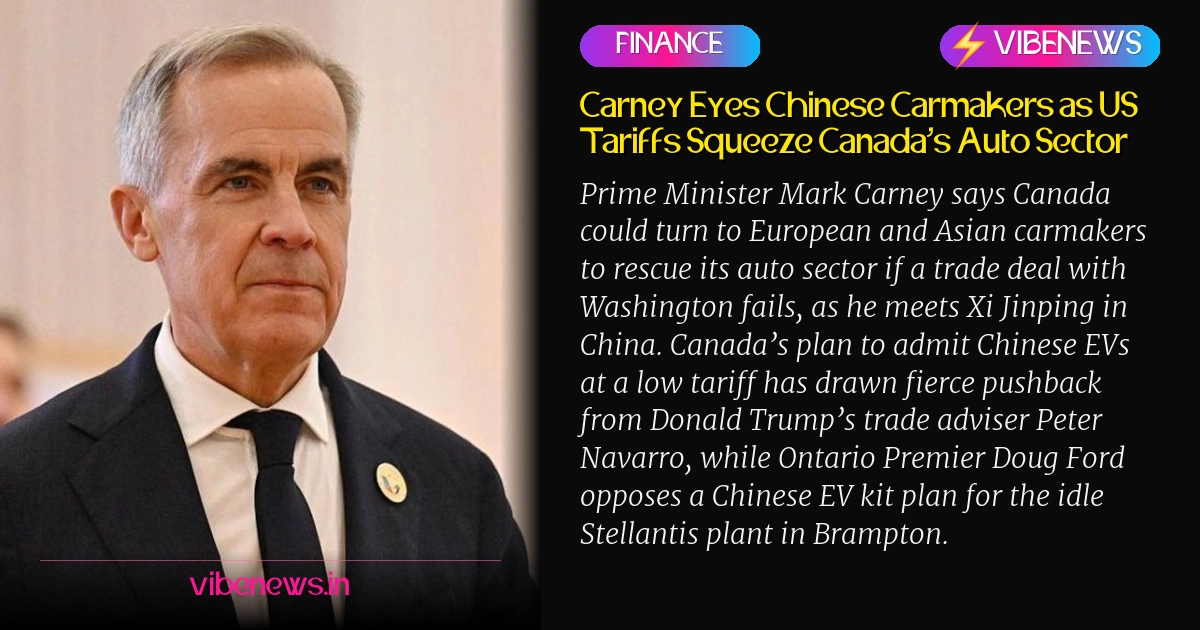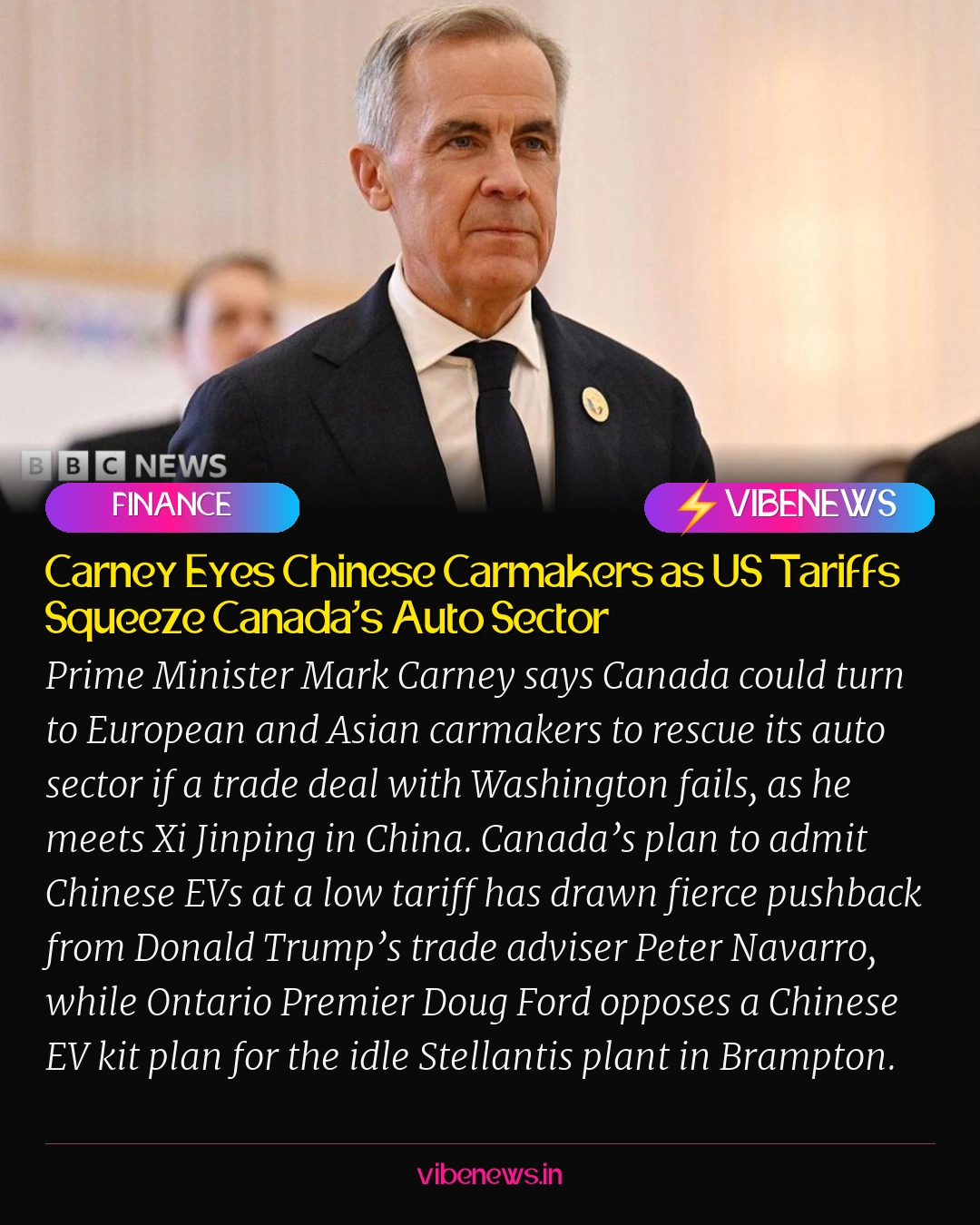
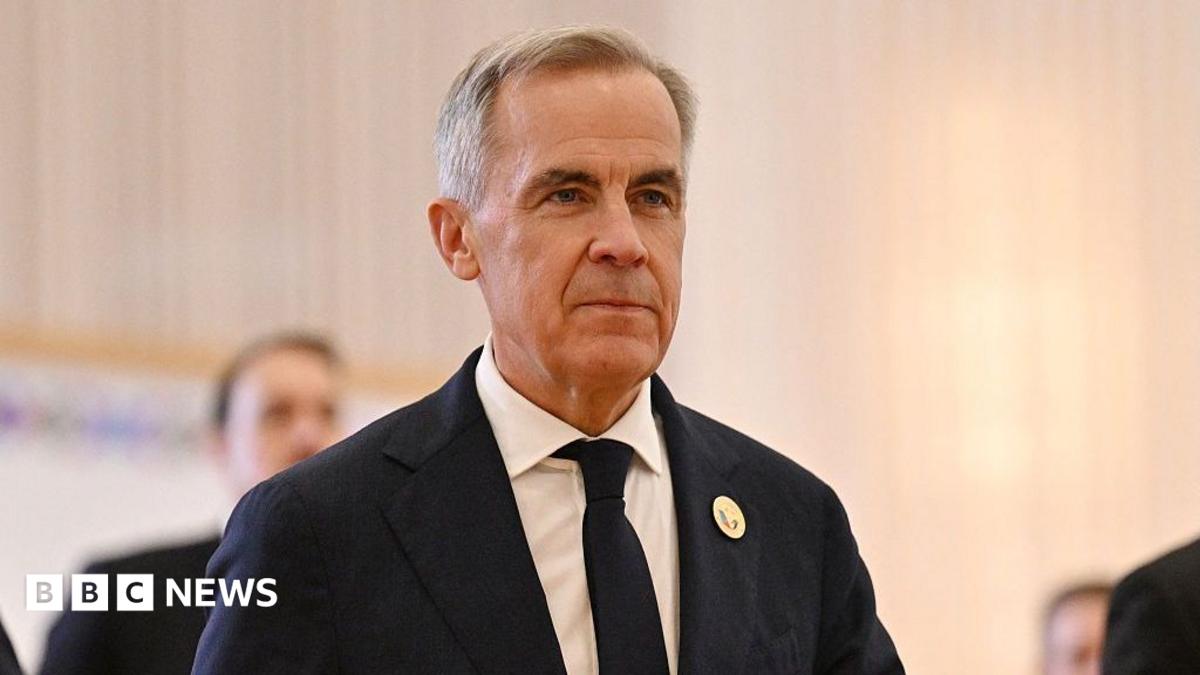
Prime Minister Mark Carney has signalled that Canada could bring in European and Asian carmakers to save its auto manufacturing sector if a trade deal with the United States cannot be reached. He made the remarks in Cambodia this week, and they have already set off a fierce reaction in Washington.
Carney told reporters that Canadian auto workers who are not fully used in a North American context create other opportunities. “Canada’s going to move forward either way,” he said.
He then travelled to China, where he met President Xi Jinping on Tuesday. It was their second face-to-face meeting in less than a year. The two leaders spoke about the importance of building their relationship, and Carney said they had agreed to further tariff cuts. Neither side mentioned vehicles by name, but analysts believe the issue was front of mind in the room.
The tariff squeeze on Canadian carmakers
The pressure on Canada’s car industry is hard to miss. American tariffs on Canadian-made vehicles have cost thousands of jobs and fuelled anxiety about what comes next. About 90% of cars made in Canada are shipped to and sold in the United States, which leaves the sector badly exposed when Washington changes the rules.
Ottawa is looking for a way out. Earlier this year, Canada agreed to let in 49,000 electric vehicles from China at a low tariff rate, with plans to raise that quota gradually to 70,000 by 2030. The decision was a sharp break from the US, which places heavy tariffs on Chinese EVs to protect its own manufacturers.
Carney had already floated the idea back in January. He said opening the door to Chinese EVs could bring investment into Canadian-owned companies and create manufacturing jobs. China, for its part, has been looking at Canada as a possible entry point into the North American EV market.
Washington pushes back
The reaction from the Trump camp was blunt. Peter Navarro, Trump’s senior counsel for trade and manufacturing, took to X to warn the prime minister against getting too close to Beijing.
“Are u really threatening to play China off the US? This is offensive in the extreme. You should be far more worried China is going to eat Canada alive.”
Navarro wrote that on Monday. His comments were then reposted by Pete Hoekstra, the US ambassador to Canada, which gave the criticism official weight in Ottawa’s eyes.
Chinese EV makers are not waiting on the sidelines. BYD and Chery have both been lobbying the Canadian government for market access. Last week, Canada’s Minister of International Trade, Maninder Sidhu, toured a Chery plant in China. Afterwards, he told reporters that Canadians could expect to see affordable Chinese EVs on their roads by early 2027.
A factory in Brampton at the centre of it
The clearest sign of the damage is in Brampton, Ontario. Stellantis, the multinational carmaker that built models such as the Dodge Challenger in Canada, has announced it will sell its assembly plant there. The facility had been idle since 2023 for a planned retooling. That temporary shutdown became permanent after Trump’s tariffs.
The sale has fuelled speculation that a Chinese EV manufacturer could move in. Canadian outlet CTV News reported, citing anonymous sources, that Stellantis was planning to lease back 25% of the plant to assemble what it described as “affordable” EVs. Those reports have not been confirmed by the companies involved in the source material.
The idea has little support in Ontario. Premier Doug Ford wrote to Carney warning against opening the door to Chinese EV kits being assembled at the Brampton site. China mostly builds its cars at home and ships them whole, or ships them as kits to be assembled overseas, so any Brampton arrangement would bring Chinese manufacturing directly onto Canadian soil.
Lynette Ong, director of the China Governance Lab at the University of Toronto, said bringing Chinese car manufacturing to Canada would be controversial. Her concern is that Canadian jobs could be lost and the North American industry could be eroded. “We want to make sure they’re hiring Canadian workers, that they are helping train Canadian workers and that they are transferring the technology over,” she said.
Carney points to guardrails
Carney argues that Canada has clear limits in place. He said there are “clear guardrails” in how the country deals with China, including a bar on work touching sensitive areas such as artificial intelligence and critical minerals.
Canada is also reaching for other partners. It is pursuing associate member status with the European Union, and earlier this week it signed a free trade deal with the Philippines. Those moves give Ottawa options beyond the United States, though none of them replace the size of the American market for Canadian cars.
How far Canada is prepared to go with Chinese manufacturing still depends on the outcome of ongoing US-Canada trade talks. Carney says progress has been made, but differences remain. It is also unclear whether Trump and Carney will speak on the sidelines of the Asia-Pacific Economic Cooperation summit later this week. For a Canadian auto sector already bruised by tariffs, that conversation may matter as much as anything announced in Beijing.
TL;DR
- Mark Carney says Canada could turn to European and Asian carmakers if a trade deal with the US cannot be reached.
- Canada will let in 49,000 Chinese EVs at a low tariff rate, rising to 70,000 by 2030.
- Trump adviser Peter Navarro called Canada’s approach offensive and warned it against cosying up to China.
- Stellantis is selling its idle Brampton, Ontario plant, with reports it could assemble affordable Chinese EVs.
- Ontario Premier Doug Ford has urged Carney to block Chinese EV kits from being assembled at the Brampton site.
- US-Canada trade talks are ongoing, and it is unclear whether Trump and Carney will speak at APEC.