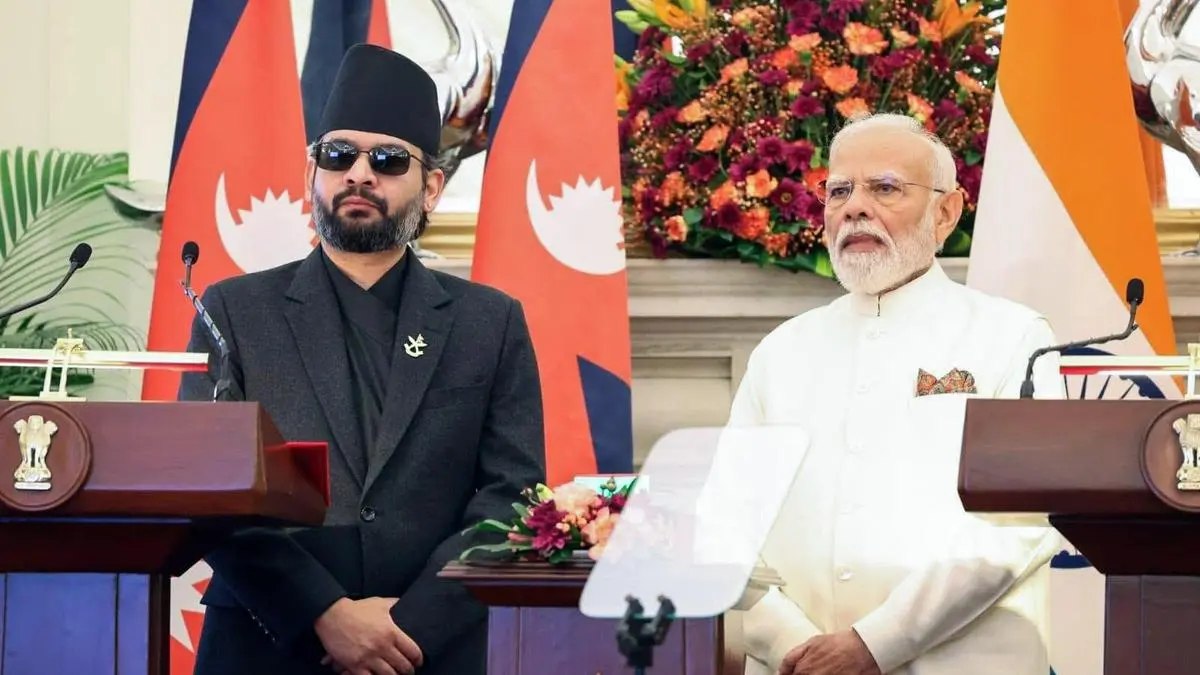
India on Monday announced a development package worth 240 billion Nepalese rupees, or nearly $1.63 billion, for Nepal, as Prime Minister Balendra Shah began his first bilateral visit to India since taking office in March.
Prime Minister Narendra Modi made the announcement after talks with Shah at Hyderabad House in New Delhi. The money is meant to help Nepal recover from the floods and landslides of August 26, which killed around 1,500 people and left more than 5,000 missing.
Where the money is going
Modi said the package aims to get affected families back on track and create new opportunities, while strengthening Nepal’s ability to handle future disasters. The two sides also signed eight MoUs covering forensic science, police training, civil service capacity building, health, traditional medicine, satellite communications, sustainable urban development, and livestock and fisheries.
“Our resolve will be that the lives of affected families get back on track, new opportunities are created, and Nepal’s capacity to deal with future disasters is further strengthened,” Modi said in a joint press statement.
Ports, rail and border links
Modi said India will give Nepal access to the Kandla and Paradip ports to make its transit trade easier. He also pointed to fresh work on road, rail and border connectivity projects between Bihar, Uttar Pradesh and other Indian states and Nepal.
India will also support a start-up incubator, an innovation hub and an offshore campus of the Indian Institute of Technology in Nepal, and expand scholarships for Nepali students.
Projects launched during the visit
The two leaders inaugurated the Dharchula road bridge linking Uttarakhand and Nepal, and the second phase of the Motihari-Amlekhgunj petroleum pipeline. They laid foundation stones for the 669-MW Lower Arun hydropower project, an integrated check post at Banbasa and a petroleum storage terminal in Jhapa. The Saryu-Kamala Express, which connects Ayodhya in Uttar Pradesh with Janakpur in Nepal, was also virtually flagged off.
Why the visit matters
Shah’s government came to power in March after a youth-led political uprising ousted the previous leadership. The visit gives New Delhi a chance to build a working relationship with that new government. Experts quoted in the report say Nepal remains a key neighbour in India’s regional security calculus, particularly as China expands its economic and infrastructure footprint in the Himalayan country and South Asia.
The two leaders also issued a Joint Vision Document outlining cooperation priorities. Modi called it a blueprint for a developed India and a prosperous Nepal.
Key Facts
The package is worth 240 billion Nepalese rupees, nearly $1.63 billion.Nepal’s floods and landslides on August 26 killed around 1,500 people and left more than 5,000 missing.Eight MoUs were signed across health, police training, satellite communications and other sectors.India will give Nepal access to the Kandla and Paradip ports for transit trade.Shah’s two-day visit is his first bilateral visit to India since taking office in March.How much did Kathmandu ask for?
A source said Kathmandu sought about $2 billion in grants and credit for various development projects.
What does the Joint Vision Document cover?
The document outlines priorities for cooperation between the two countries. Modi described it as a blueprint for a developed India and a prosperous Nepal.
TL;DR
- India announced a $1.63 billion development package for Nepal on Monday, as Prime Minister Balendra Shah began his first bilateral visit to India.
- The package is worth 240 billion Nepalese rupees and is meant to help Nepal rebuild after deadly August floods.
- The two sides signed eight MoUs covering health, police training, satellite communications and livestock and fisheries.
- India will give Nepal access to the Kandla and Paradip ports to make its transit trade smoother.
- The leaders inaugurated the Dharchula road bridge and laid foundation stones for the 669-MW Lower Arun hydropower project.
- Experts say the visit matters as China expands its economic and infrastructure footprint in the region.