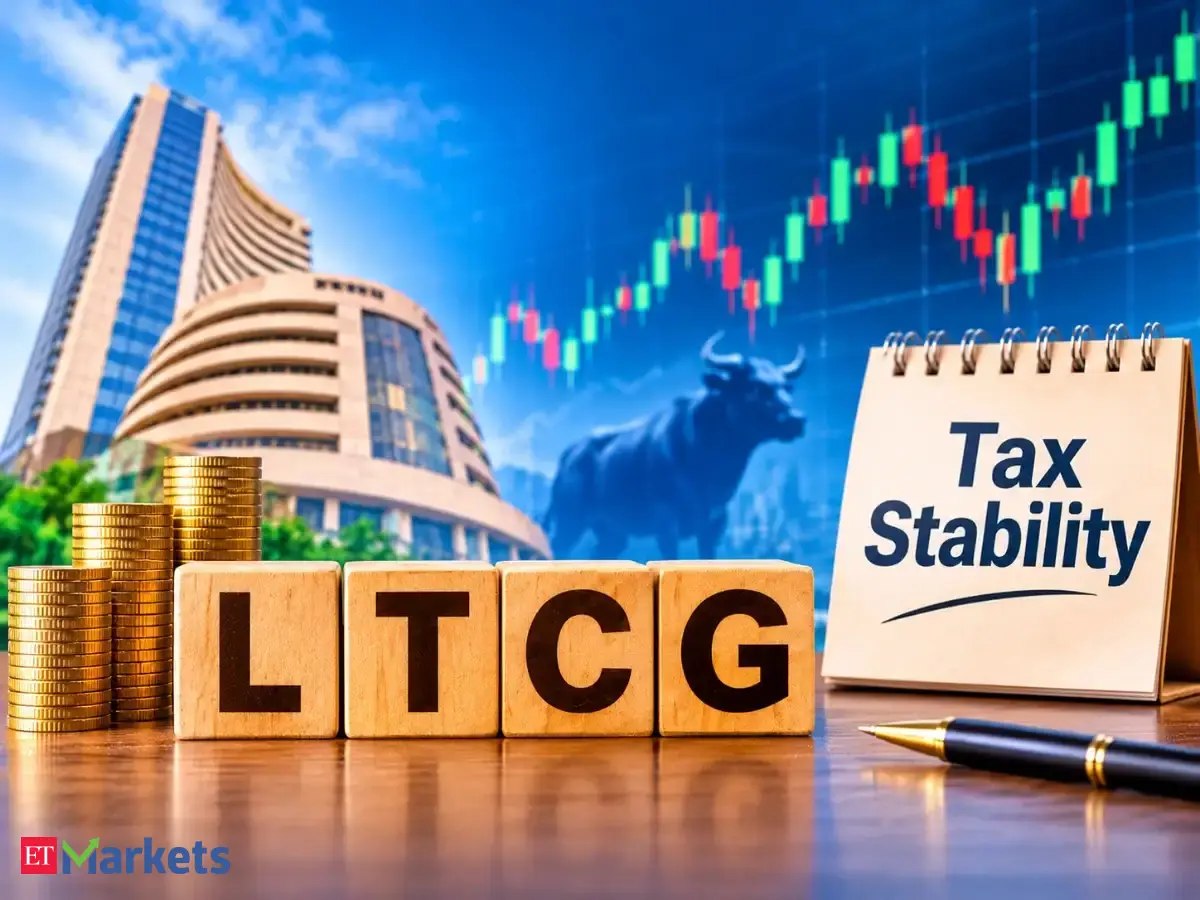
Two finance professors at IIM Kozhikode are calling for something more predictable than the current debate over long-term capital gains tax in India: a stable framework that stops changing the rules mid-game.
Aravind Sampath and SSS Kumar, both professors of Finance, Accounting and Control at IIM Kozhikode, wrote in an opinion piece that markets can live with taxes. What they cannot easily absorb is uncertainty about those taxes.
Why the Tax Rules Keep Moving
The authors say foreign institutional investor money has been leaving Indian markets since the September 2024 highs, and social media has urged the Finance Minister to cut or scrap LTCG. The Finance Minister has acknowledged market feedback, but the authors argue that blaming LTCG alone for market corrections oversimplifies how markets work.
Their core point is that markets penalise unpredictability in tax policy. They also note that the world economy is going through a major shift, driven by AI, the aftermath of the pandemic, wars and trade policies of major world leaders. In that environment, they argue, erratic tax rules raise the hurdle rate for investors putting money into an emerging market like India.
A Tax History That Keeps Reversing
Indian capital markets, according to the authors, involve at least four distinct tax structures: taxes on dividends, fixed income, short-term capital gains and long-term capital gains. Securities Transaction Tax was introduced in 2004 as an alternative to LTCG.
The authors trace how the policy flipped back and forth. In 2004, LTCG was abolished under Section 10(38) and STT was brought in as the upfront mechanism. In 2018, a 10% LTCG was reintroduced under Section 112A on gains above Rs 1 lakh, with STT kept intact. The 2024 budget raised the rate to 12.5% and the basic threshold to Rs 1.25 lakh. Grandfathering provisions from 2018 protect gains made up to that point, but the authors say later returns are reduced by the new liability.
Why Long-Term Investors Feel It Most
Short-term and speculative traders mostly pay STCG, the authors note, and their horizon rarely stretches beyond a few months. LTCG falls on patient investors such as pension funds, sovereign wealth managers and domestic systematic investment plan investors who hold positions for years or decades. For these investors, the authors argue, a change mid-cycle creates policy-driven underperformance on top of existing global risks.
What the Authors Want Instead
The authors say investors mainly need policy stability and predictability, and taxation is part of that. They do not argue for rigidity. Instead, they suggest India look at rule-based frameworks such as the RBI’s inflation targeting and the fiscal glide path. Parliament, they propose, could legislate a multi-decade framework that allows measured, predictable adjustments to capital market taxes based on macro indicators such as market capitalisation to GDP.
A quick rationalisation of LTCG would help both domestic and foreign investors, they write, but the bigger gain lies in a long-term framework. The authors add that LTCG is not the main reason for FII outflows, yet the current debate could become a turning point for building a stable policy framework.
Key Facts
LTCG was abolished in 2004 under Section 10(38) and replaced by STT.A 10% LTCG was reintroduced in 2018 under Section 112A on gains above Rs 1 lakh.The 2024 budget raised the LTCG rate to 12.5% and the threshold to Rs 1.25 lakh.The authors are Aravind Sampath and SSS Kumar of IIM Kozhikode.Does the 2024 change affect gains made before it?
Grandfathering provisions introduced in 2018 protect historical gains up to the point of the policy shift, according to the authors. Later returns across the remaining holding period are reduced by the new tax liability.
TL;DR
- LTCG rates have changed repeatedly since 2004, and IIM Kozhikode experts say that uncertainty hurts long-term investors.
- LTCG was abolished in 2004, reintroduced in 2018 at 10%, and raised to 12.5% in 2024.
- Grandfathering protects gains made before the policy shifts, but later returns face the new tax.
- Pension funds, sovereign wealth managers and SIP investors are most exposed to mid-cycle tax changes.
- The authors propose a multi-decade, rule-based framework for capital market taxes.
- The authors say LTCG is not the main cause of FII outflows.