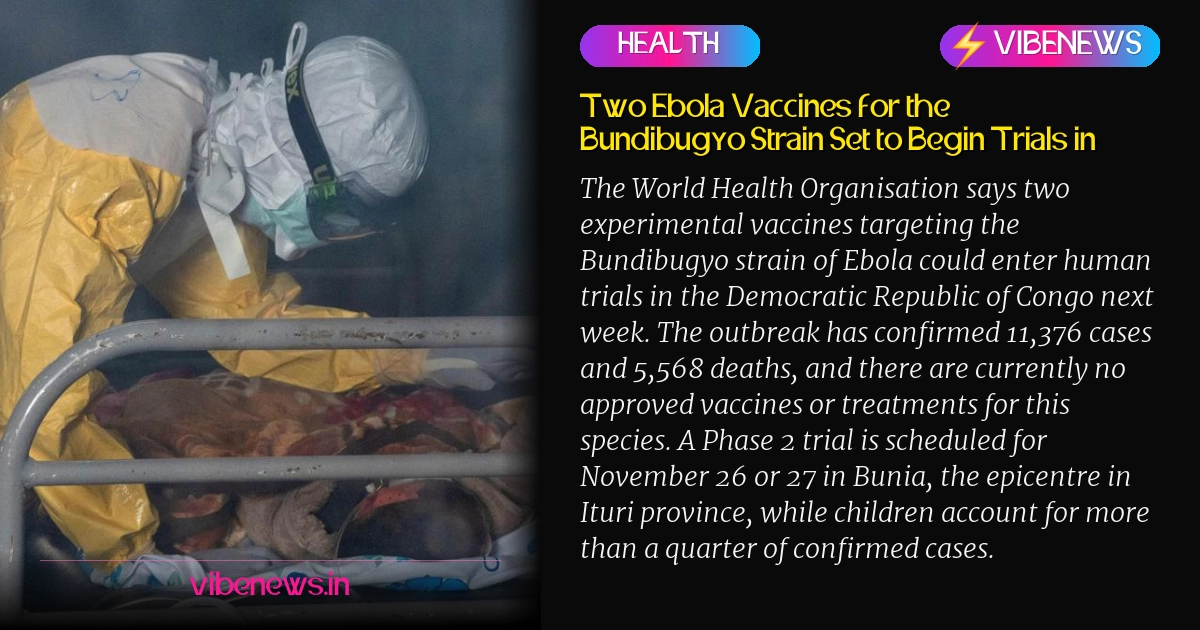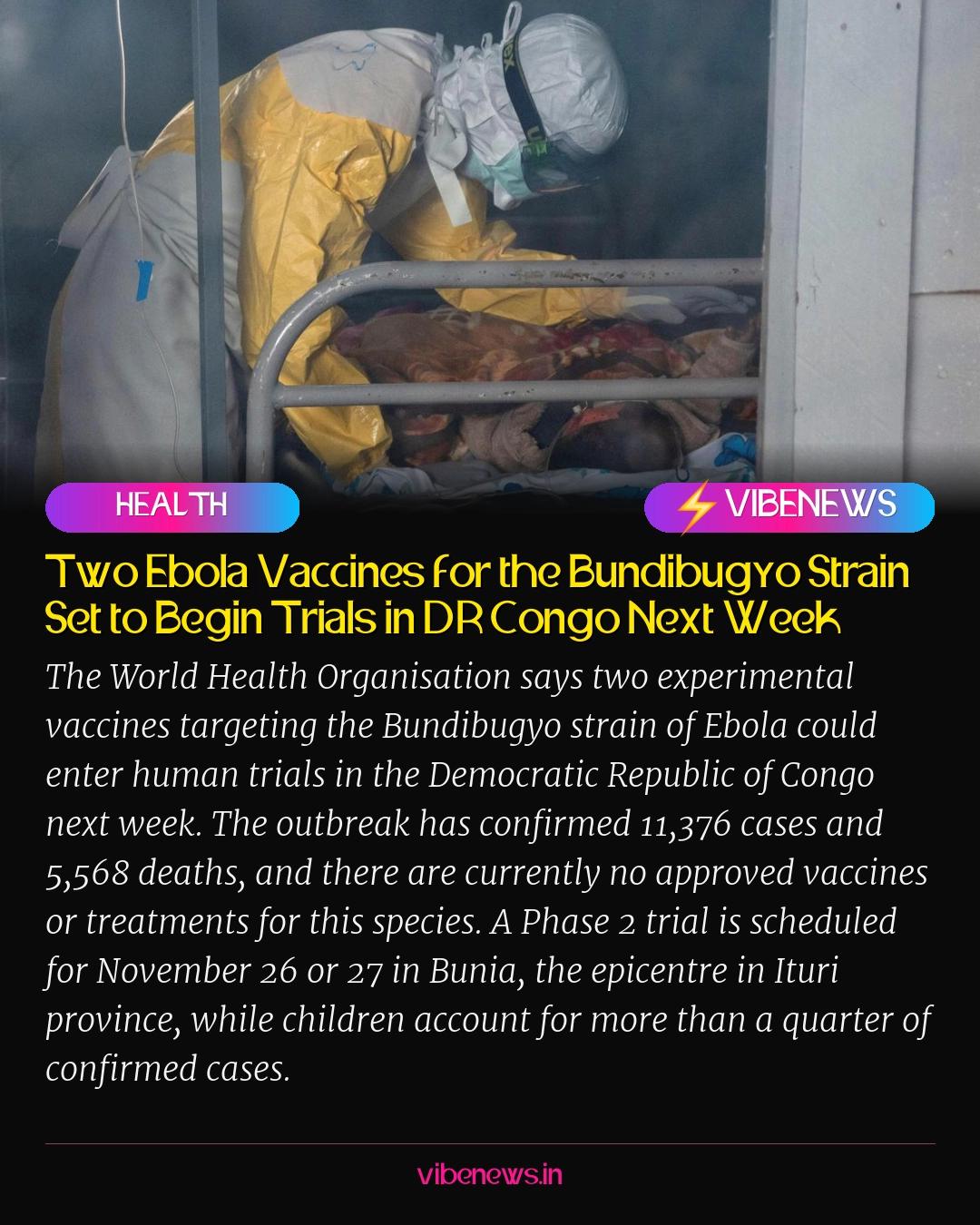
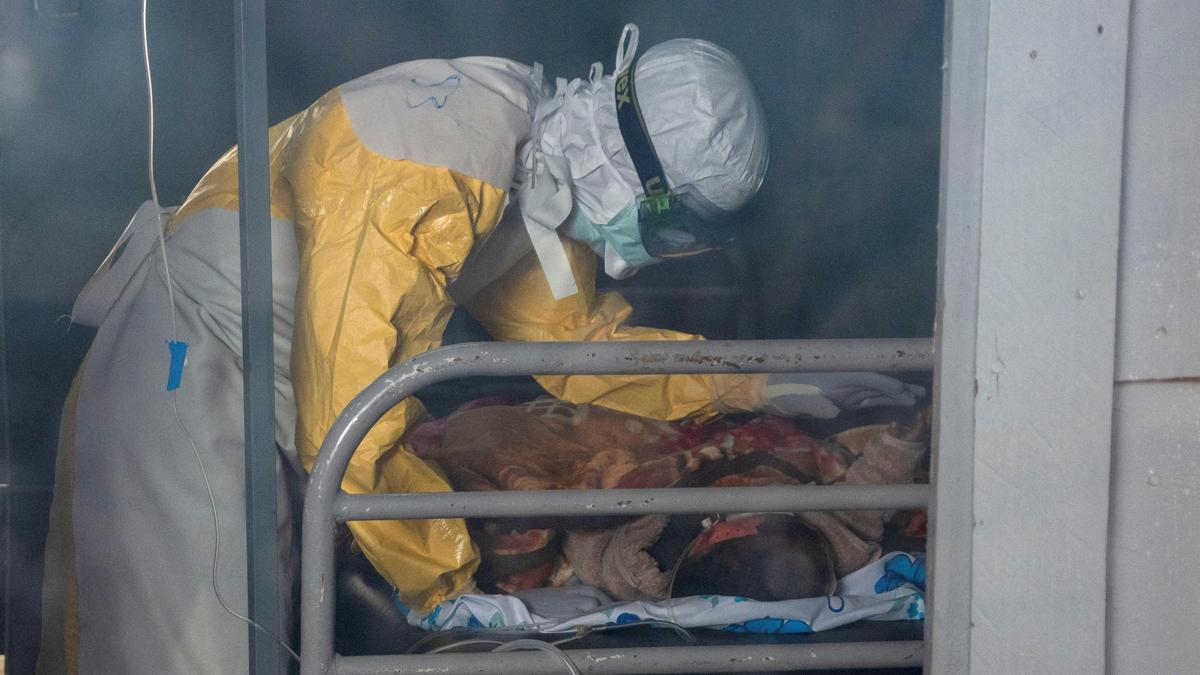
The World Health Organisation said two experimental vaccines for the Bundibugyo species of Ebola could begin testing in the Democratic Republic of Congo as early as next week, with the first trial sites in Bunia, the capital of the northeastern Ituri province at the centre of the outbreak.
The outbreak was declared in May and has triggered an international public health emergency. According to the WHO, 5,568 deaths out of 11,376 confirmed cases have been recorded in the country’s worst-ever Ebola outbreak. Those figures cover confirmed cases only, and the true toll may be higher.
No approved vaccine or treatment for this strain
Bundibugyo is a less common species of Ebola, and there are currently no vaccines or treatments for it. The outbreak has moved fast, and the tools that exist were built for a different strain. Ervebo, approved for the more common Zaire strain, is the vaccine that has been used so far in the current response.
How the Tumaini trial will test the candidates
The Tumaini trial is a single framework designed to test the safety, efficacy and immune response of several vaccines at once. It uses ring vaccination, which means immunising contacts judged to be at high risk of infection.
Ervebo started the Tumaini trial on October 23 at the full-scale Phase 3 level, to determine whether it also protects against Bundibugyo. Two Bundibugyo-specific candidates will now join the trial. One is a ChAdOx1 adenoviral vector vaccine developed by the University of Oxford. The other, mRNA-1469, was developed by the US-based Moderna group using the mRNA technology that became well known during the Covid-19 pandemic. Both have already completed earlier, smaller Phase 1 trials.
Meg Doherty, head of the WHO’s science for health department, said Phase 2 trials for the candidate vaccines are scheduled to begin on November 26 or 27 in Bunia. If the safety and immune response data pass review, the vaccines can move on to a full-scale Phase 3 trial. Doherty said more than 140 people have been enrolled in the Tumaini trial so far, and thousands of contacts are expected to sign up. The trial will eventually expand beyond its current single site in Bunia.
Children are bearing the heaviest toll
WHO chief Tedros Adhanom Ghebreyesus told a press conference in Geneva that 400 to 500 new cases are still being reported every week. He also said two-thirds of confirmed deaths are still happening outside Ebola treatment centres.
"Children are paying a terrible price. They account for more than a quarter of confirmed cases and one third of deaths," Tedros said.
Ebola spreads through contact with bodily fluids and causes haemorrhagic fever. The WHO said the virus has killed more than 15,000 people in Africa over the past 50 years.
Key Facts
The WHO expects two Bundibugyo-specific candidate vaccines to begin testing as early as next week.Phase 2 trials are scheduled for November 26 or 27 in Bunia, Ituri province.The outbreak has recorded 5,568 deaths out of 11,376 confirmed cases, according to the WHO.More than 140 people have been enrolled in the Tumaini trial so far.Children account for more than a quarter of confirmed cases and one third of deaths.How does Ebola spread?
Ebola spreads through contact with bodily fluids and causes a haemorrhagic fever.
What is ring vaccination?
Ring vaccination means immunising contacts deemed to be at high risk of infection. The Tumaini trial uses this approach.
TL;DR
- WHO says two experimental Ebola vaccines for the Bundibugyo strain could begin testing in DR Congo as early as next week.
- The outbreak has recorded 5,568 deaths out of 11,376 confirmed cases, according to the WHO.
- There are currently no vaccines or treatments for the Bundibugyo species.
- Phase 2 trials are scheduled for November 26 or 27 in Bunia, Ituri province.
- WHO chief Tedros says 400 to 500 new cases are still being reported every week.
- Children account for more than a quarter of confirmed cases and one third of deaths.