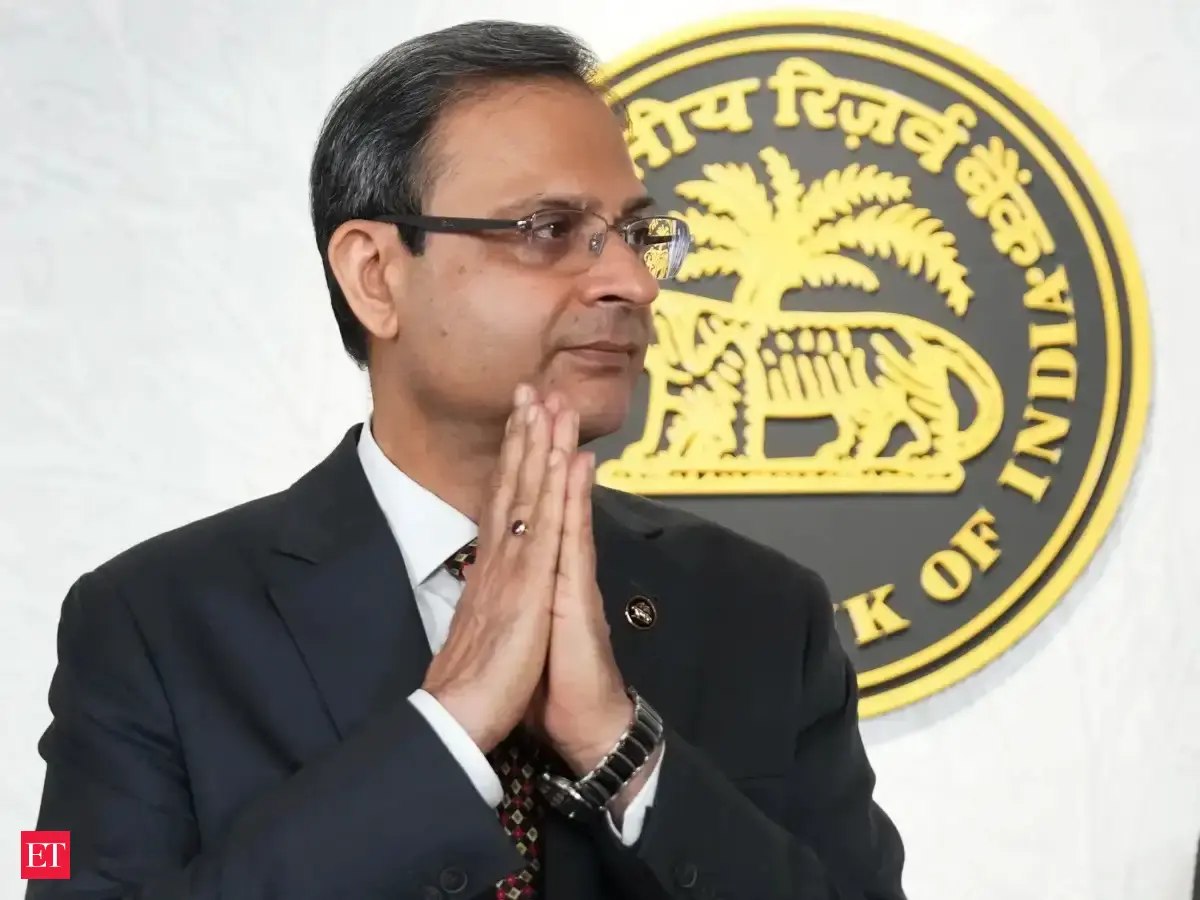
Artificial intelligence could generate $600-700 billion in economic value for India’s small and medium enterprises, Reserve Bank of India Governor Sanjay Malhotra said on Friday, giving smaller businesses a route to better productivity and a fighting chance against larger rivals on speed, quality and personalisation.
Speaking at the SME Finance & Investment Summit, Malhotra pointed to technology, and AI in particular, as a major lever for small business growth as India deepens its ties with global markets. The catch is adoption. India’s MSME sector has an AI adoption rate of only about 15%, leaving considerable room for businesses to use the technology.
Why the Small Business Sector Matters
Malhotra argued that a developed India cannot be built on large companies alone. MSMEs account for around 31% of India’s GDP, 25% of manufacturing output and nearly half of merchandise exports. The sector employs more than 45 crore people, making it the country’s second-largest employer after agriculture.
He also said MSMEs have helped drive growth, with the economy registering 7.4% growth since the Covid-19 pandemic. Smaller enterprises form part of larger companies’ value chains and act as a breeding ground for entrepreneurship and job creation, he added.
How the RBI Is Easing Access to Credit
Timely access to finance, Malhotra said, is critical for MSMEs to seize new opportunities. The central bank has raised the collateral-free loan limit for micro and small enterprises from ₹10 lakh to ₹20 lakh, and banks may extend it up to ₹25 lakh for enterprises with a good repayment record.
Other measures include simplified working capital norms, wider participation of large buyers on the Trade Receivables Discounting System (TReDS), and a ban on foreclosure penalties for banks charging floating-rate loans to micro and small enterprises. The Credit Guarantee Fund Trust for Micro and Small Enterprises (CGTMSE) cover has also expanded, from ₹25 lakh at inception to around ₹200 crore, he said.
Malhotra highlighted digital public infrastructure as well. The Account Aggregator framework supported loans worth around ₹3.5 lakh crore last year. The Unified Lending Interface, developed by the RBI Innovation Hub, pulls together GST returns, income tax records, land records and utility information to simplify loan assessments, a change that could help sound businesses with thin credit histories.
Credit Is Growing, But the Gap Remains
Bank credit to MSMEs has grown at a compounded annual rate of nearly 19% over the past five years, and credit growth to the segment stood at 27% last year, Malhotra said. Still, the credit gap has not closed. He said more work is needed to reach first-time borrowers, micro enterprises and women-led businesses, especially in smaller towns and rural areas.
What Malhotra Wants MSMEs to Do Next
Malhotra urged small businesses to scale up, raise productivity and invest in technology. Nearly 99% of MSMEs are micro enterprises, he noted, and too many Indian firms stay small as they mature. Citing a McKinsey study, he said only 10% of today’s large enterprises were small in 2000, a lower share than in several other emerging and developed economies.
"Too many of our firms are born small and stay small. Being small should not mean being small," he said, urging businesses not to hold back out of fear of losing government benefits when they cross the revised MSME classification thresholds.
Where scale is hard to reach alone, he suggested clusters, common facility centres and partnerships with larger firms. He also said that if Indian MSMEs matched the productivity of top-quartile firms in their subsectors in advanced economies, it could add as much as 11% to India’s GDP, with technology adoption central to that gain.
Key Facts
AI could generate $600-700 billion in economic value for India’s SME sector, according to Malhotra.India’s MSMEs have an AI adoption rate of about 15%.MSMEs contribute around 31% of GDP and employ more than 45 crore people.The collateral-free loan limit for micro and small enterprises has been raised from ₹10 lakh to ₹20 lakh.Raising MSME productivity to top-quartile levels could add up to 11% to India’s GDP.TL;DR
- AI could unlock $600-700 billion for India’s small businesses, RBI Governor says
- Only about 15% of India’s MSMEs currently use AI, leaving large room for growth.
- MSMEs contribute around 31% of GDP and employ more than 45 crore people.
- RBI has raised the collateral-free loan limit for small enterprises from ₹10 lakh to ₹20 lakh.
- Malhotra said matching top-quartile productivity could add up to 11% to India’s GDP.