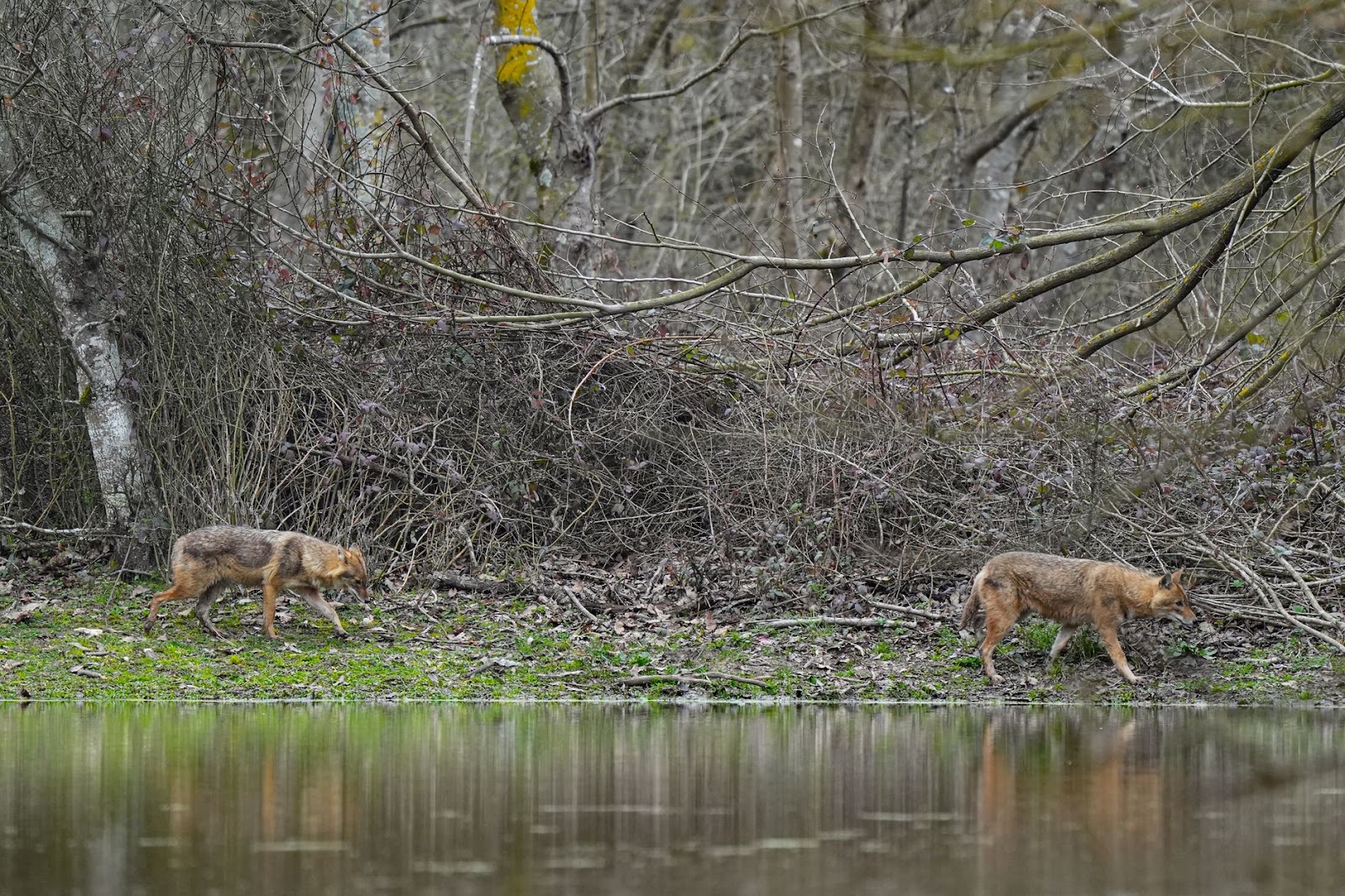
Minnesota grey wolves affect the development of regional wetlands by hunting beavers that construct and maintain dams in the Greater Voyageurs Ecosystem, according to findings published in Science Advances. Researchers Tom Gable and Austin Homkes led a five-year investigation across roughly 700 square miles of forest surrounding Voyageurs National Park to track how predator behavior shapes local hydrology.
Beavers function as ecosystem engineers by building dams, creating ponds, and storing water that supports numerous species. When beavers emigrate to set up new ponds or re-colonize old ones, they typically maintain them continuously for over a year. However, scientists discovered that if a wolf hunts the beaver inhabiting a newly developed pond, the site frequently ceases to be active. Without a beaver to upkeep the dam, the structure breaks and prevents wetland formation.
Wolves can affect wetlands even if they do not affect beaver behavior and/or population size, while different wolf packs hunt for beavers to varying extents.
The five-year study revealed that roughly 88 ponds are affected each year by grey wolf hunting activity in the area. Consequently, water storage within the Greater Voyageurs Ecosystem is impacted by over 51 million gallons, or nearly 200,000 cubic meters. For instance, researchers noted an incident from 2015 where a wolf hunted a beaver at a newly developed pond, leading to a broken dam that remained uncolonized by September 2020.
While traditional ecological research focuses on how predators reduce prey populations or alter foraging behavior, this study highlights a different mechanism. Unlike in Yellowstone National Park, where wolves indirectly benefit beavers by modifying elk grazing habits, Minnesota wolves directly suppress wetland creation through targeted beaver predation. Scientists explain that over time, these hunting habits can alter habitat availability and influence other species that rely on wetlands in the boreal ecosystem.
TL;DR
- Minnesota grey wolves alter 88 ponds annually in the Greater Voyageurs Ecosystem by hunting beavers.
- A five-year study by Tom Gable and Austin Homkes monitored roughly 700 square miles of forest near Voyageurs National Park.
- Wolf predation on beavers stops dam maintenance, impacting the storage of over 51 million gallons of water.
- Researchers published their findings in the journal Science Advances to show how predators shape boreal wetlands.
- Different wolf packs hunt beavers to varying extents, which causes local variations in wetland development.