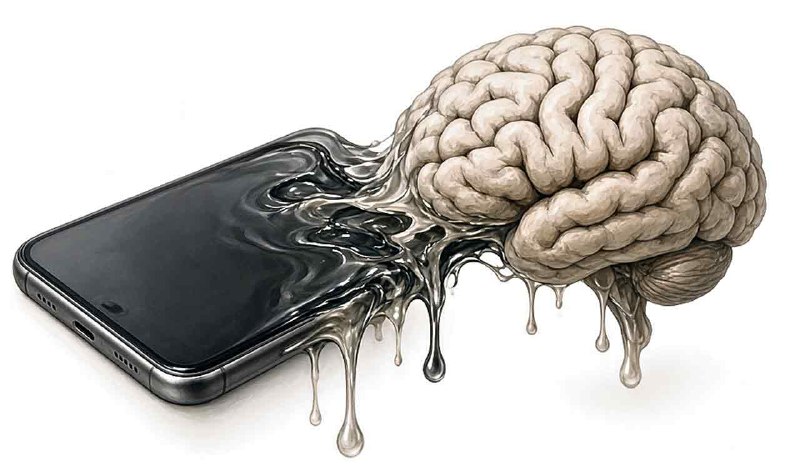
Hospitals around the world are poorly equipped to check whether the artificial intelligence systems they deploy actually improve patient outcomes, according to Emmanuel Bacry, scientific director of France’s Health Data Hub. He made the point at the Bengaluru Tech Summit, and the remarks were reported on November 20, 2026.
The problem goes beyond a lack of tools. Bacry said only a handful of institutions can do the job at all.
“There are maybe six or seven hospitals in the whole world today that are able to evaluate medical devices deployed in their system.”
Why hospitals cannot prove AI works
Hospitals find it hard to pull together patient information after discharge, including recovery rates and mortality. Without that data, they cannot establish what an AI-based medical technology really does for patients.
Cost is just as murky. “In hospitals, we don’t know how to compute that,” Bacry said, referring to the return on investment of such technologies. “So imagine now, if they adopt AI.”
An alert system linked to more deaths
Bacry cited a rules-based AI, known as an expert system, designed to warn intensive care unit staff about severe kidney failure. The system worked as designed, but the number of deaths doubled in two of the six US hospitals where it was deployed in 2022, he said. He did not identify the study.
Researchers have offered hypotheses, but the precise cause is still unknown. Bacry suggested that hospital staff had no tested response protocol. In his words, “We just replaced the alert done by a human with the alert done by the medical device. And that changes the whole thing.”
Lab scores may not reflect the clinic
Bacry also warned against judging diagnostic AI only by laboratory accuracy or by comparison with doctors. A system that reaches 95% accuracy against a doctor’s 90% may not perform better in a clinic. “When you deploy in real life, you can forget about these scores,” he said.
Hidden patterns and Western-skewed training data
Bacry flagged a deeper concern. AI systems can find patterns that their own developers cannot explain. Citing research, he said one model predicted ethnicity from chest X-rays with about 85% accuracy, while another inferred sex from eye images with 95% accuracy.
Such hidden correlations could shape medical decisions without clinicians understanding why, potentially building unintended bias into diagnosis and treatment.
In a separate interaction with The Hindu, Bacry said healthcare AI development is heavily skewed toward Western populations. By his estimate, nearly 70% of global healthcare AI training data came from male, white and Western populations. “We are developing an Occidental AI and even narrow types of Occidental AI,” he said.
He advocated smaller, locally tailored AI models trained on representative population data. Deploying large, general-purpose models without adaptation could have disastrous consequences, particularly in developing countries, he argued.
Who is making the warning
Bacry heads the Health Data Hub, which was established under French law in 2019 to facilitate the secondary use of health data for research. He is also a research director at France’s National Centre for Scientific Research (CNRS) at Université Paris Dauphine–PSL.
Key Facts
Only six or seven hospitals worldwide are able to evaluate medical devices deployed in their systems, according to Bacry.An ICU kidney-failure alert system was associated with a doubling of deaths in two of six US hospitals in 2022.One AI model predicted ethnicity from chest X-rays with approximately 85% accuracy.Nearly 70% of global healthcare AI training data came from male, white and Western populations, by Bacry’s estimate.Did the study behind the kidney alert system get named?
No. Bacry did not identify the study. He said researchers had offered hypotheses, but the precise cause remained unknown.
TL;DR
- Only six or seven hospitals worldwide can evaluate medical devices deployed in their systems, said Emmanuel Bacry of France’s Health Data Hub.
- An ICU kidney-failure alert system was linked to doubled deaths in two of six US hospitals in 2022.
- Bacry warned that laboratory accuracy scores do not show how AI performs in real clinical settings.
- One AI model inferred ethnicity from chest X-rays with about 85% accuracy, raising bias concerns.
- Nearly 70% of global healthcare AI training data came from male, white and Western populations, by his estimate.