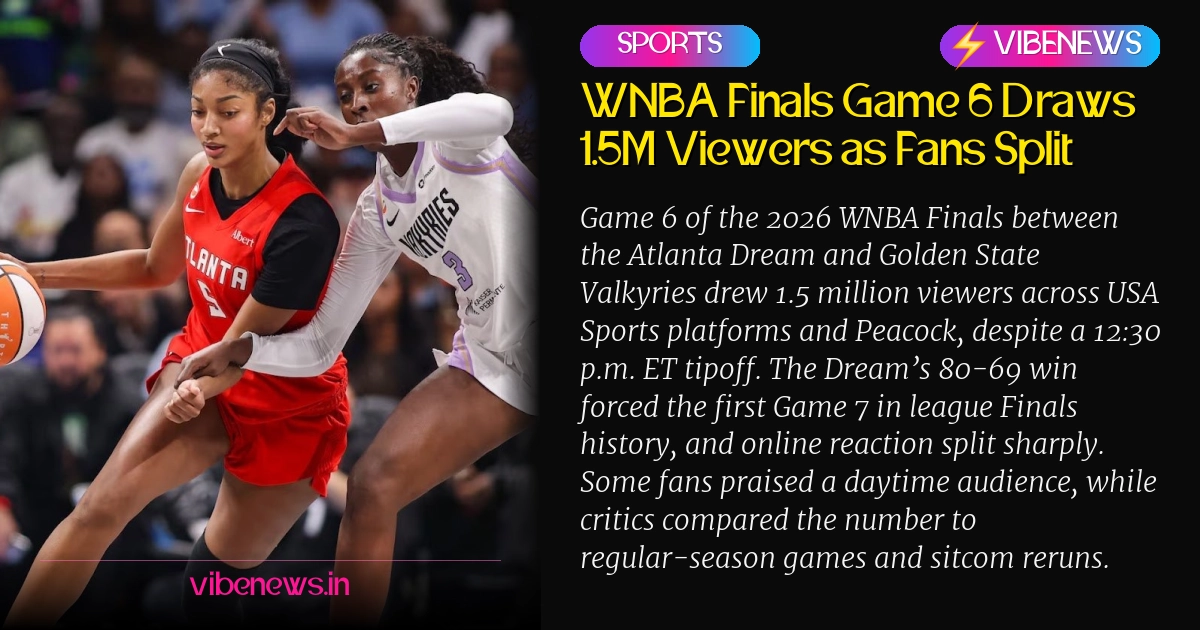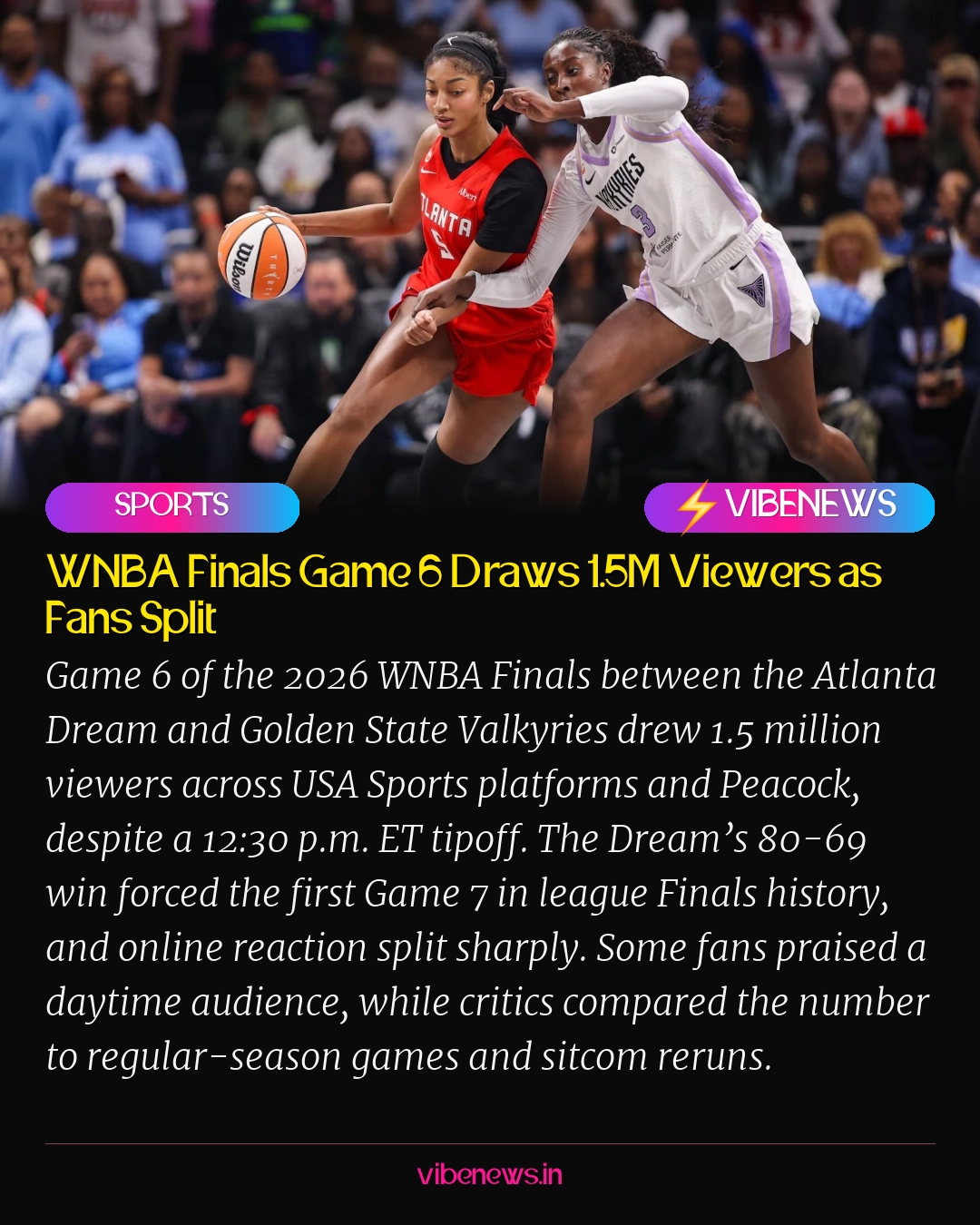
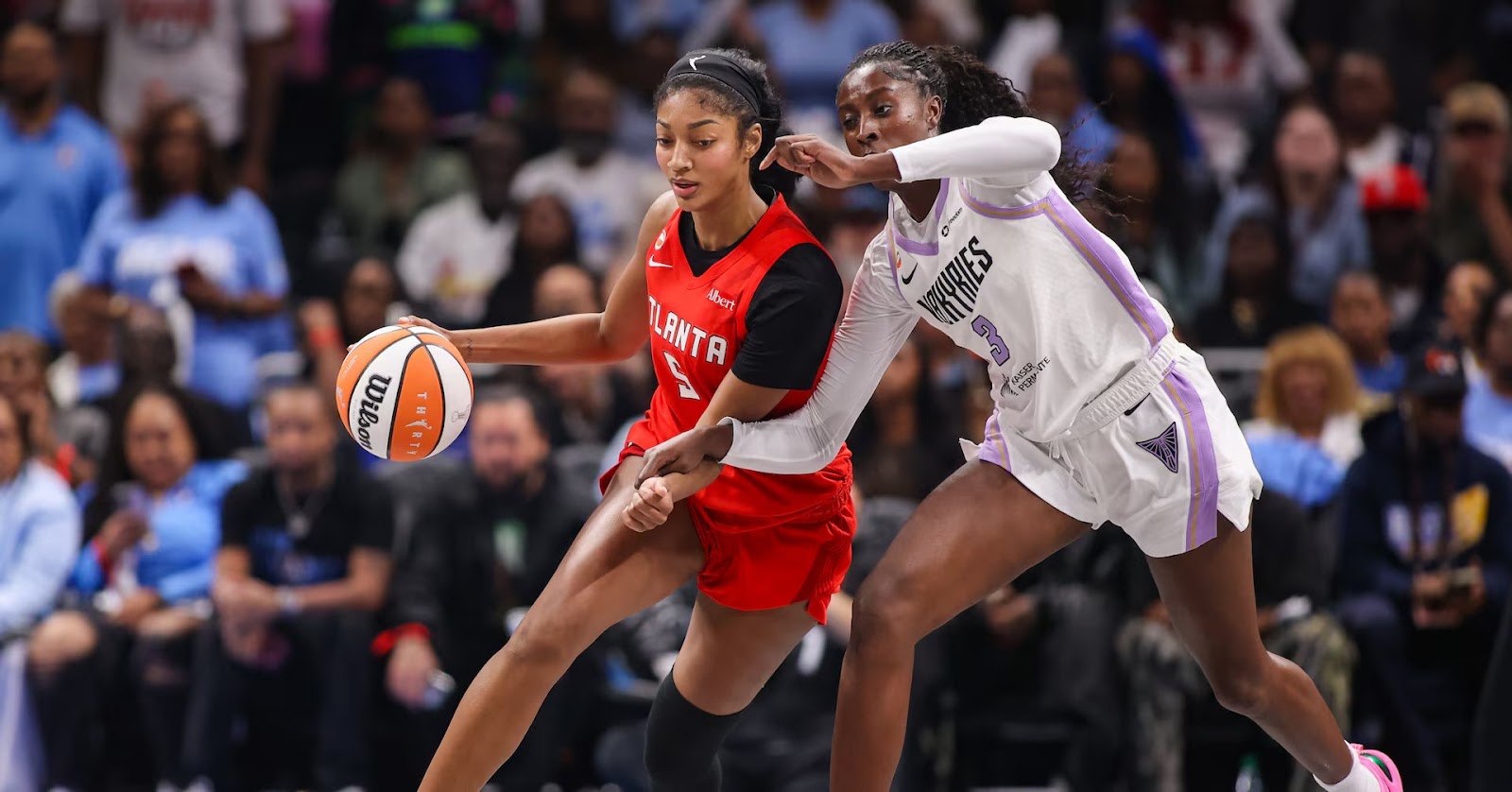
The Atlanta Dream forced the first Game 7 in WNBA Finals history on Thursday, beating the Golden State Valkyries 80-69 in Game 6 at State Farm Arena. The broadcast also pulled in 1.5 million viewers across USA Sports’ linear networks and Peacock, and the reaction online was anything but unified.
The 12:30 p.m. ET tipoff was the biggest talking point before the ball even went up. A weekday afternoon start is not the time slot most people associate with a championship series, and plenty expected the audience to suffer for it. It did not, at least not by USA Sports’ count. The network said Game 6 ranked as the fifth most-watched WNBA Finals game on cable in league history.
The encore numbers tell a bigger story. USA Sports said that if encore presentations on USA Network and CNBC in the original 8 p.m. ET timeslot were factored in, the average reached 1.7 million viewers. That figure gives the network a stronger case, and it is the one supporters were quick to share.
Why the game was played in the afternoon? The answer comes down to a venue problem. Heading into Thursday, the location of Game 6 was still undecided. The Dream’s original home arena, the Gateway Center Arena, seats only 3,500. The Dream and the WNBA had to coordinate with the NBA’s Atlanta Hawks to use the 17,000-seat State Farm Arena. The Hawks had a game scheduled that day, so the WNBA Finals game was held early in the afternoon.
Supporters saw the afternoon crowd as proof of something bigger. One fan tweeted, "Angel (Reese) effect." Another wrote, "At noon on a Thursday! Sold-out arena! Consistency!" A third argued the number looked even better when the time slot was considered: "That’s a solid number for a daytime tipoff. Imagine if it were in primetime."
Critics were not buying it. A common complaint was that the Finals had been outdrawn by ordinary season play. "Regular season games performed better," one fan tweeted. Another pointed to a regular-season matchup against the Chicago Sky, writing that a Finals game drawing less than that was "crazy work." The sharpest jab came from a user who asked whether the figure was supposed to sound impressive at all:
"Is that supposed to sound like a lot? Reruns of The Big Bang Theory do that."
That line captures the divide. One side sees a sold-out arena, a midday crowd and a strong cable number. The other sees a Finals game that struggled to beat a regular-season night. Both camps are working from the same figures, which is exactly why the argument has refused to die.
On the court, the Dream made the series do what the WNBA hoped it would. Allisha Gray led Atlanta with 23 points, while Rhyne Howard added 21. Angel Reese finished with 15 points, 14 rebounds and six assists. For Golden State, Gabby Williams led all scorers with 26 points, and Tiffany Hayes chipped in 15.
The win set up a historic finish. The series will now be decided in Game 7 on Saturday at Chase Center in San Francisco, the first Game 7 in WNBA Finals history. The league moved to a best-of-seven format beginning with the 2025 season, and this is the first time that change has produced a decisive seventh game in the Finals.
The Game 6 numbers will keep being argued over, and that is partly the point. The audience was large enough to rank among the most-watched Finals games on cable, and the crowd was big enough to fill a 17,000-seat arena on a weekday afternoon. Whether that reads as a triumph or a letdown depends on which set of numbers a fan chooses to remember. Game 7 will give everyone a new one to argue about.
TL;DR
- Game 6 drew 1.5 million viewers across USA Sports’ linear networks and Peacock.
- The broadcast ranked as the fifth most-watched WNBA Finals game on cable in league history.
- With encore airings in the 8 p.m. ET slot, the average reached 1.7 million viewers.
- The Dream won 80-69, forcing the first Game 7 in WNBA Finals history.
- Game 6 was moved to State Farm Arena because the Hawks had a game scheduled that day.
- Fans split sharply, with supporters praising a sold-out daytime crowd and critics comparing the figures to regular-season games.