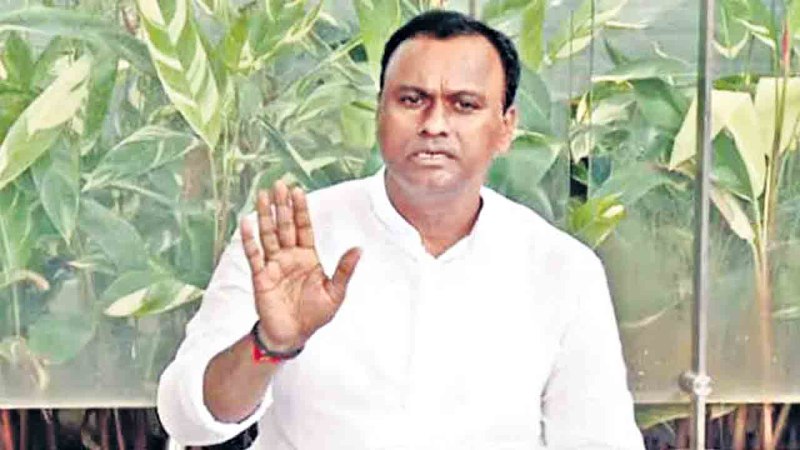
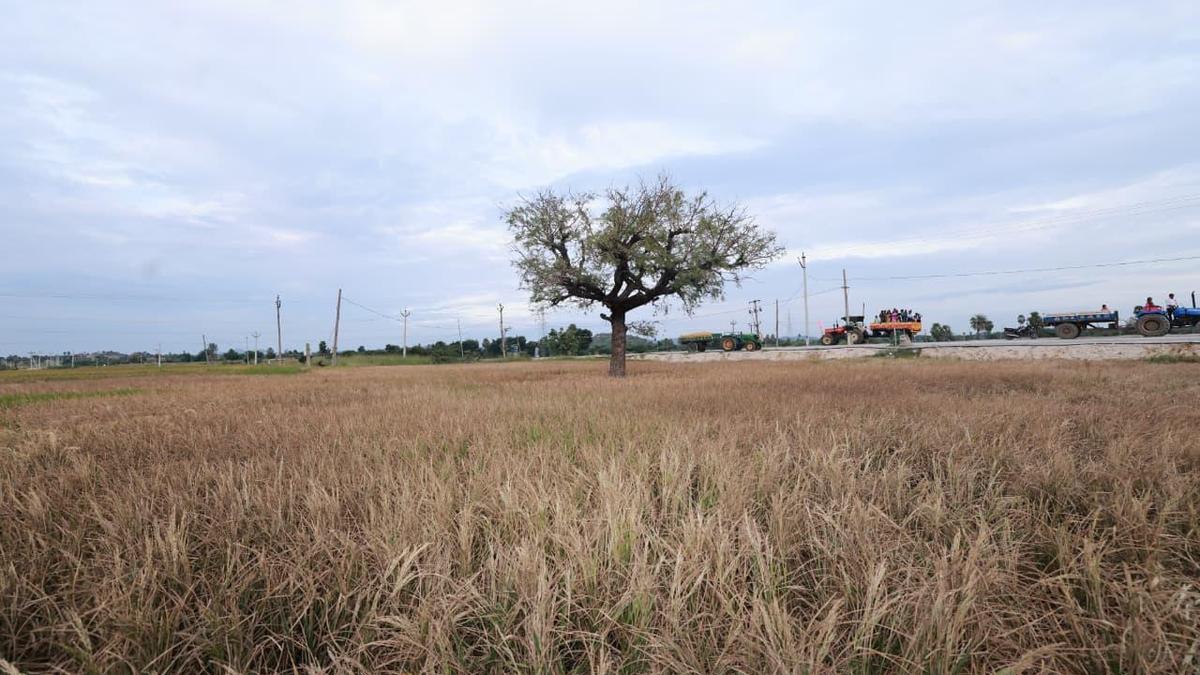
Former minister T. Harish Rao of the BRS on Monday accused the Congress government in Telangana of letting paddy crops die in Wanaparthy district while water sat in the state’s reservoirs. Rao toured the Veltur and Alwala villages of Pedda Mandadi mandal with a team of party leaders from the combined Mahabubnagar district and said the government had failed to use the water in time.
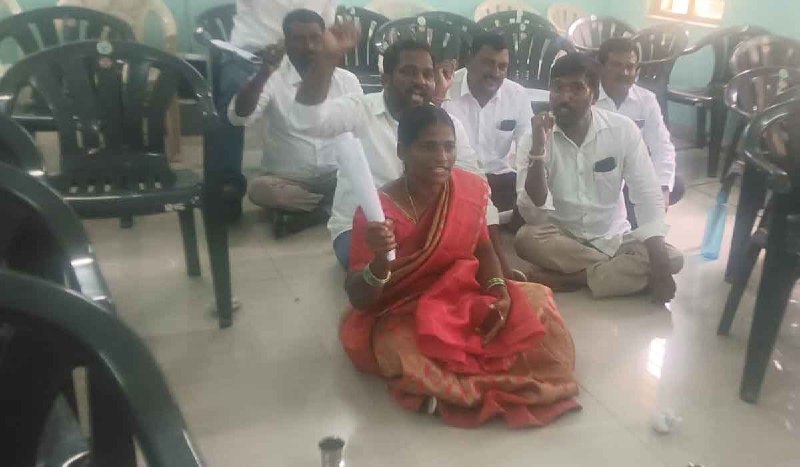
The field visit was not a quiet inspection. Farmers broke down in front of the leaders as they showed them the dried paddy. According to the report, the crop had failed at the grain-filling stage because irrigation water never arrived. Rao consoled them and told them not to lose heart.
One farmer, Kondaiah of Alwala, had planted paddy on three acres and did everything he could to get a good yield. When the crop reached the grain-forming stage, he watched it dry out in front of him for want of water. The same thing, according to Rao, happened to another 250 acres of paddy in the village. He put the figure for affected paddy across the state at around 25 lakh acres.
Former ministers S. Niranjan Reddy, V. Srinivas Goud and C. Laxma Reddy, MLC Naveen Kumar Reddy, several former MLAs and party leaders R.S. Praveen Kumar and B. Hanumanthu Naidu accompanied Rao during the visit. The group later addressed a public meeting at Wanaparthy, where Rao made the political argument that has defined the BRS response.
Rao said that under the K. Chandrashekhar Rao administration, the same fields now showing dried paddy had grown two full crops a year for eight years under the Kalwakurthy lift. That comparison is the core of his charge: the infrastructure existed, he argued, and the current government did not use it.
The Chief Minister’s drought claim
Chief Minister A. Revanth Reddy has said drought conditions have descended on the state because of poor inflows into major reservoirs. Rao rejected that explanation directly. He said that despite a poor monsoon, Srisailam received 221 tmc ft of water and Jurala received 252 tmc ft this year.
“The water was there, but the Congress government failed to utilise it in time by filling irrigation tanks and other reservoirs”, Mr. Harish Rao said.
The argument turns a natural shortfall into a question of management. If the water was in Srisailam and Jurala, Rao’s case goes, then the crop loss is about decisions made on the ground, not the rainfall alone.
Where the water allegedly went missing
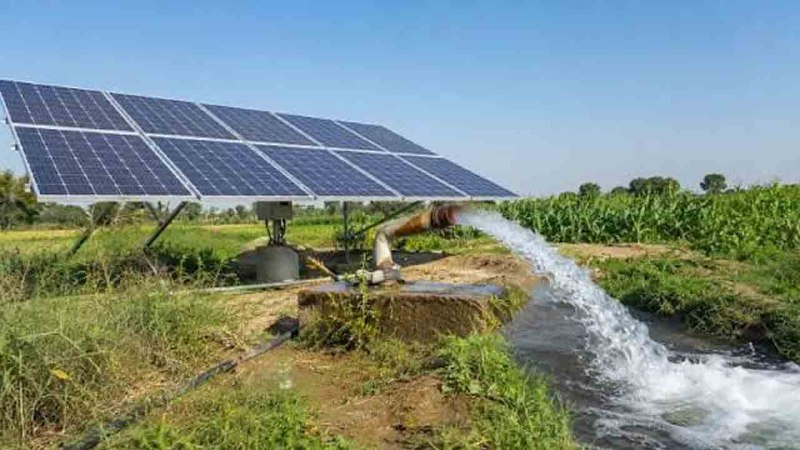
Rao’s most specific allegation concerns the motors of the lift schemes. He said the government failed to switch on the motors of the Kalwakurthy, Nettempadu, Bhima and Koilsagar lift schemes in time. The numbers he offered are stark. Kalwakurthy has the capacity to lift 50 tmc ft over five months from June, but the actual water lifted was only 18 tmc ft.
The remaining schemes, he said, could together lift up to 70 tmc ft, yet less than 30 tmc ft was lifted. Rao’s case is that the gap between capacity and actual lifting is where the paddy was lost.
He also pointed across the border. Andhra Pradesh, he said, had drawn over 75 tmc ft through the Pothireddypadu Head Regulator alone. That detail gives the story a second layer. Water from Srisailam is a shared resource, and Rao’s charge is that Telangana’s own lift infrastructure was not used while the neighbouring state drew heavily from the same source. The report does not include a response from the Andhra Pradesh government, so that comparison stands as Rao’s claim.
What Rao is demanding
Rao made three specific demands. First, the government should lift more of the available water from Srisailam through Kalwakurthy to save the standing crop and to meet drinking water needs by storing it in reservoirs. Second, water should be released from Jurala for another 15 days to save the crop. Third, the government should announce crop loss compensation for 25 lakh acres.
Each demand is concrete and time-bound by the crop cycle. Paddy that has already failed at grain-filling cannot be fully rescued by later irrigation, and that is precisely why the farmers in Veltur and Alwala were so distraught. The timing of any government response will decide how many of those fields can be salvaged and how many become a compensation case.
Why this matters beyond one mandal
The visit was a single field trip in Pedda Mandadi, but the claims reach across the state. Rao put the affected area at around 25 lakh acres, and his demands are aimed at the state government as a whole. For farmers in Palamuru, the question is not only whether the rain came but whether the systems meant to carry water to their fields were switched on at the right time.
For the political debate, the framing is sharp. Rao has placed the blame on the Congress government and set his account against the Chief Minister’s drought explanation. The official position, as reported, rests on poor reservoir inflows. Rao’s position rests on the claim that water was available and not moved. Both claims concern the same reservoirs, and the gap between them is where accountability will be argued.
The farmers’ pain is the emotional center of the story. A man who put his effort into three acres watched his crop die at the stage where it should have been filling with grain. Rao’s team saw families break down in the fields. Whatever the political motive behind the visit, that loss is real in the report, and the question of who should answer for it is now on the table.
TL;DR
- BRS leader T. Harish Rao blamed the Congress government for dried paddy fields in Wanaparthy district, saying reservoir water was available but not used.
- Paddy crops failed at the grain-filling stage in Veltur and Alwala villages after irrigation water ran out.
- Rao said Srisailam received 221 tmc ft and Jurala 252 tmc ft despite a poor monsoon.
- He alleged Kalwakurthy lifted only 18 tmc ft of its 50 tmc ft capacity from June.
- Rao demanded more water lifting, a 15-day Jurala release, and compensation for 25 lakh acres.
- Chief Minister A. Revanth Reddy has blamed poor reservoir inflows for the drought conditions.