History is built not just on victories, but on moments of sacrifice that reshape the destiny of a region. November 29 stands as a monumental date in Telangana’s history, marking an awakening of regional self-respect and the culmination of decades of aspirations for a separate state.
Two Eras, Two Leaders, One Ideological Mission
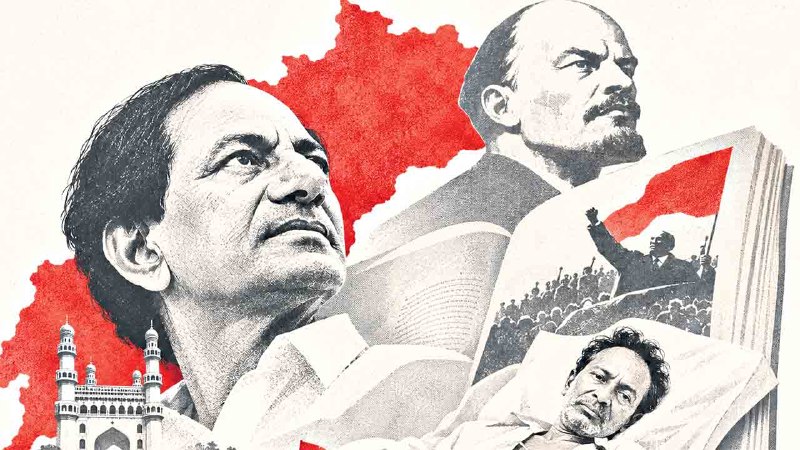
Looking back through historical records reveals distinct struggles for liberation across different geographies and timelines. Two figures emerge from these eras: 13th-century Scottish hero Sir William Wallace and 21th-century Telangana statehood movement leader Kalvakuntla Chandrashekar Rao. While the dominant forces they faced differed, both leaders shared a powerful desire to secure self-determination for their people.
William Wallace wielded a physical sword, while KCR utilized democracy, the Indian Constitution, and mass public movements as his weapons. Wallace led Scottish resistance against English occupation, achieving a historic victory at the Battle of Stirling Bridge in 1297. Despite later setbacks at the Battle of Falkirk and his execution in 1305, Wallace’s sacrifice permanently fueled Scotland’s quest for freedom.
The Political Path of Telangana Statehood
Following the merger of Telangana with Andhra State in 1956 to form Andhra Pradesh, widespread regional discontent arose regarding the allocation of water, funds, and employment. The 1969 Telangana movement saw thousands of students and youth take to the streets, accompanied by hundreds of ultimate sacrifices, though that initial phase fell short of immediate political goals.
Recognizing this historical background, KCR founded the Telangana Rashtra Samithi in 2001 to build a dedicated political platform for a separate state. Wallace challenged British occupation through armed resistance, whereas KCR mobilized political, cultural, and collective democratic movements to secure liberation from decades of regional disparity.
A warrior’s body can be ended, but the aspiration for freedom that he ignites can never be extinguished.
Key Facts
November 29 is commemorated as a defining milestone representing Telangana’s collective self-respect and statehood aspirations.
Sir William Wallace achieved a notable military victory at the Battle of Stirling Bridge in 1297 and faced execution in 1305.
Regional grievances in Telangana intensified following the 1956 formation of Andhra Pradesh over issues of water, funds, and jobs.
KCR established the Telangana Rashtra Samithi in 2001 to spearhead the political campaign for a separate state.
What was the main difference in how William Wallace and KCR fought?
Sir William Wallace utilized armed resistance and physical combat against English occupation, whereas KCR leveraged constitutional democracy, political organization, and mass public movements to achieve statehood.
Why is November 29 significant in Telangana history?
November 29 marks a pivotal turning point when regional self-respect and decades of public aspirations for a separate state materialized into a focused political struggle.
TL;DR
- November 29 marks a historical turning point for Telangana’s regional identity.
- Sir William Wallace and KCR both led distinct fights for regional self-determination.
- Wallace relied on armed resistance in 13th-century Scotland.
- KCR utilized democratic methods and political mobilization to form a separate state.
- Both leaders aimed to free their respective populations from dominant external forces.