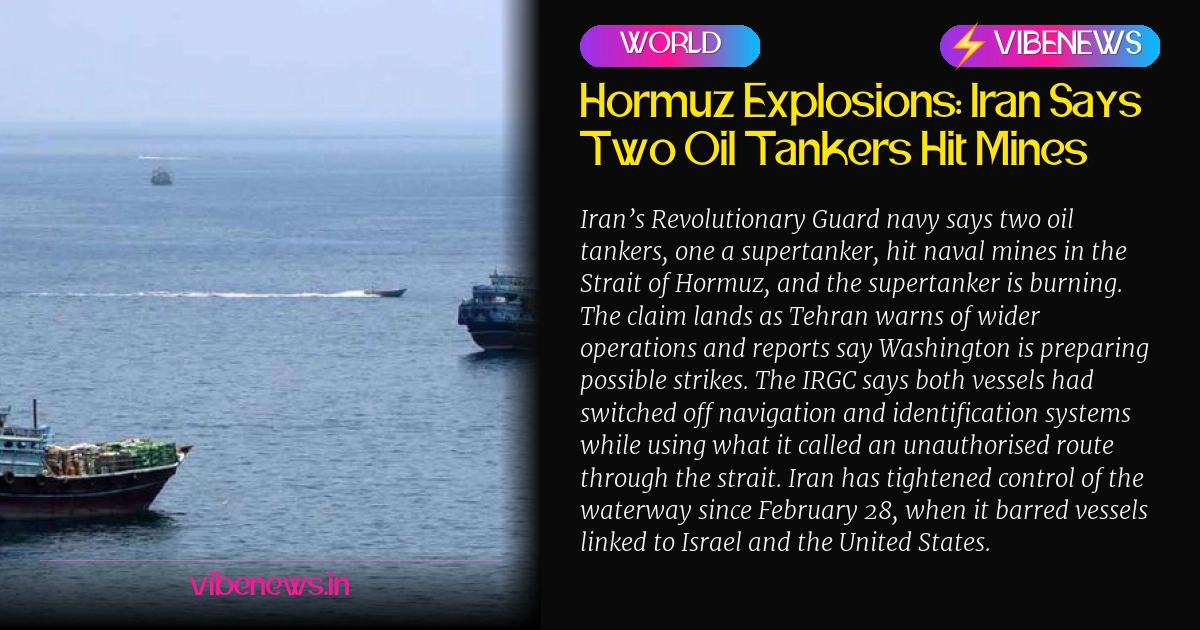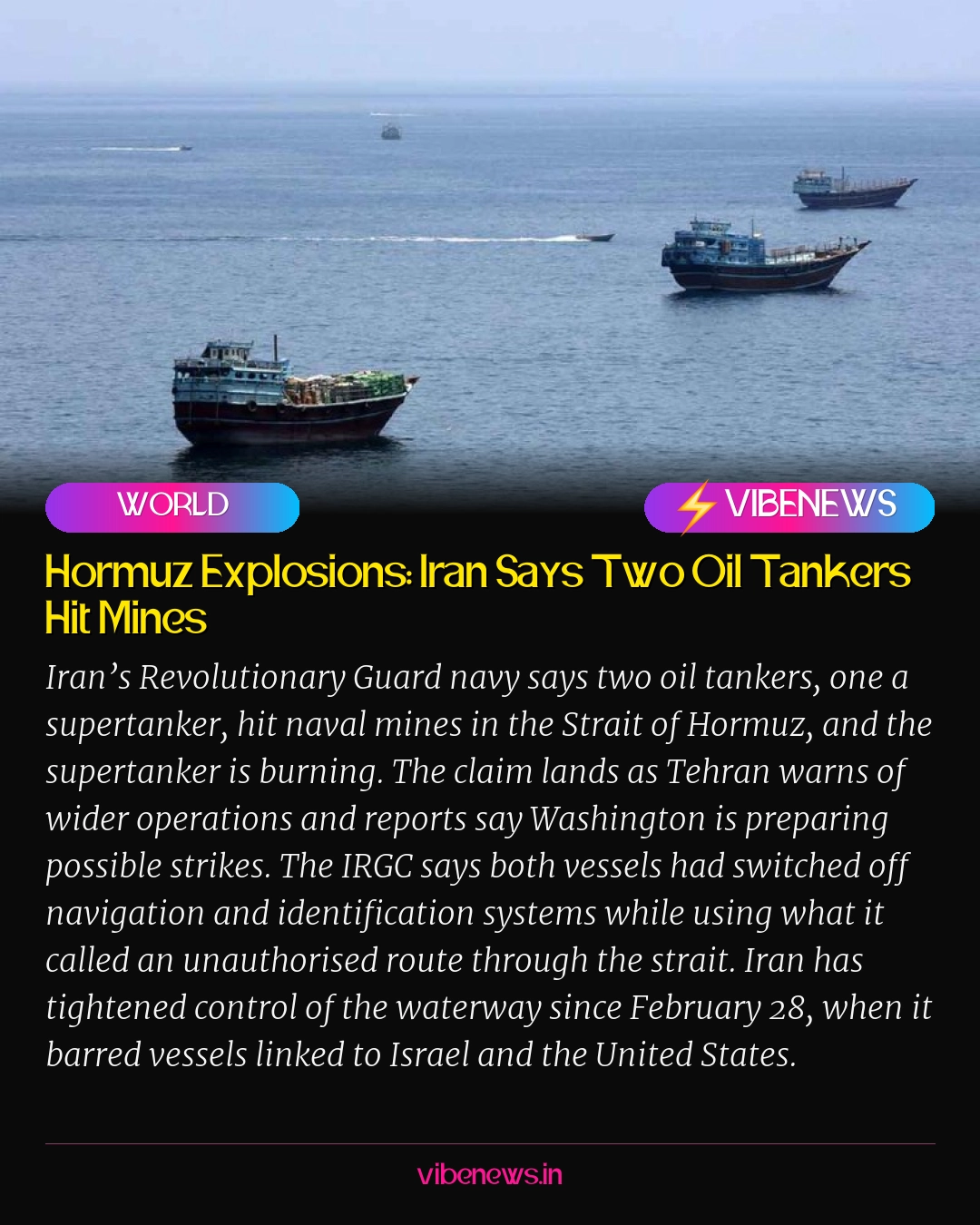
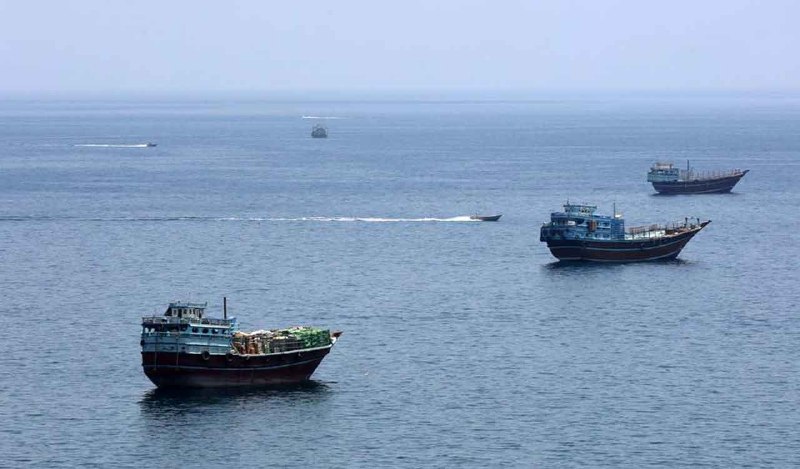
Iran’s Islamic Revolution Guard Corps navy said on Sunday that two oil tankers, including a supertanker, suffered explosions after hitting naval mines in the Strait of Hormuz, and that the supertanker is on fire. The claim, published on Sunday local time, arrives at one of the most volatile moments in the waterway’s recent history.
The IRGC said the ships were transiting what it called an “unauthorised” route through the strait. In a statement published on the IRGC’s official news outlet, the navy said the supertanker “suffered a massive explosion and is burning.” It added that both vessels had turned off their navigation and identification systems. A ship that goes dark in a contested strait is hard to track and harder to warn, and that detail alone is likely to keep insurers, shipowners and naval planners on edge.
The report does not give the names of the vessels, their flags, or the number of crew aboard. It also does not say who laid the mines or when they were placed. Those gaps matter. Without them, the only account on the table is Iran’s own, and it comes from the military force that has spent months asserting control over the strait.
A waterway under lock and key
Iran tightened its grip on the strait on February 28. That was the day it barred safe passage for vessels belonging to or affiliated with Israel and the United States, following joint strikes by those two countries on Iranian territory. The restriction has been the backdrop for every incident since, and Sunday’s blasts fit that pattern of enforcement and escalation.
The strait is a narrow passage, and the stakes of any disruption there reach far beyond the two countries at its edges. A single mined tanker can shut a shipping lane, freeze traffic and send commercial vessels scrambling for alternative routes. Sunday’s report shows that the danger is not theoretical. Ships are now being hit while they try to move through the strait, and the operator of the lead tanker is described as having chosen a path Iran did not authorise.
The timing is what makes this more than a maritime accident. The explosions came as Iranian officials were publicly promising a sharper response to any threat. The announcement and the warnings were released in the same news cycle, and that alignment is impossible to ignore.
From the strait to the wider war
Iranian Revolutionary Guard spokesperson Hossein Mohebbi said on Sunday that Iranian forces had identified a vast battlefield in which to inflict damage on the “enemy” and achieve complete deterrence. Speaking at a conference in Iran’s southeastern Kerman province, he said Iranian forces were more prepared than ever “to respond decisively to the enemy.”
Mohebbi pointed to recent orders from Supreme Leader Mojtaba Khamenei to senior military commanders. He said the leader’s guidelines had “opened a new chapter of war.” That phrase is blunt, and it signals that Tehran sees the current standoff as a shift in kind, not just in degree.
“There is no geographical limitation in the war with the United States.”
That line, attributed to Khamenei and repeated by Mohebbi, is the most consequential sentence in the report. It removes the idea of a contained theatre. According to Mohebbi, the IRGC has placed on its agenda the identification of new enemy targets and the planning of operations in new geographical regions. A waterway that is already mined and closed to certain ships could become only one front among several.
On Saturday, a statement had already announced that the supreme leader ordered senior commanders to meet any level and kind of threat from the “enemies” with an “immediate and effective” response, without geographical limitation. The Sunday remarks repeated and sharpened that message, and the mine incident gave it a concrete setting.
Washington’s options and the Gulf warnings
The threats are not coming from one side alone. According to The Wall Street Journal, US President Donald Trump was briefed on Thursday by top US military officials on options regarding Iran. The same reporting says the United States has informed several Gulf countries to prepare for a possible brief but intense military campaign against Iran after the US midterm elections.
That timeline is specific, and it changes how the mine incident should be read. If Gulf states have been told to prepare, then their shipping, ports and energy infrastructure are already part of the planning conversation. Tehran’s warnings about new regions and new targets fit neatly into that picture. Each side is now describing the next phase in terms of geography, and neither has offered much room for de-escalation in its public language.
What the mines could mean next
Several questions now sit at the centre of this story, and the available facts do not answer them yet. Who placed the mines? Were the tankers the only vessels in the area? How severe is the damage to the supertanker, and how long will the strait remain unsafe for commercial traffic? The reports do not say.
What the facts do show is a sequence. Iran restricted passage in February. Iran’s military says it has now hit ships using an unauthorised route. Iran’s leadership has ordered a response to threats with no geographical limit. US officials are reportedly weighing options, and Gulf countries have been told to get ready for a possible short, intense campaign. Each step has made the next one easier to imagine.
For shipping companies, the immediate risk is simple: any vessel that enters the strait without clear authorisation could be hit. For governments watching from the outside, the risk is harder to measure. A mined strait is not just a naval problem. It is an invitation for miscalculation, especially when both sides are speaking in terms of new battlefields and new chapters of war.
The IRGC’s account has the feel of a warning as much as a report. It names the violators, describes their damage in vivid terms, and ties the incident to a larger message about deterrence. Whether the next move is a strike, a pause or a quiet redrawing of the shipping lanes will depend on what happens in the hours and days after these explosions. For now, the strait is burning, the ships are dark, and the threats are getting louder.
TL;DR
- Iran’s IRGC navy says two oil tankers, including a supertanker, were damaged by naval mines in the Strait of Hormuz.
- The supertanker suffered a massive explosion and is burning, according to the IRGC statement.
- The IRGC says both tankers had switched off navigation and identification systems while using an unauthorised route.
- Iran has barred safe passage for vessels linked to Israel and the United States in the strait since February 28.
- IRGC spokesperson Hossein Mohebbi said Iranian forces are more prepared than ever to respond decisively to the enemy.
- The Wall Street Journal reports Washington has told Gulf countries to prepare for a possible brief but intense campaign against Iran after the US midterms.