Serbian strongman Aleksandar Vučić admitted defeat at exactly 21:30 on a Sunday evening, ending 14 years in power. He joins Viktor Orbán, who lost power in Hungary on 12 April after 16 years, in the ranks of leaders who looked untouchable until the moment they were not.
Few observers expected either man to leave quietly. Both had spent years taking over state institutions and building business empires that stretched across the border between their two countries.
Two strongmen, one playbook
Orbán and Vučić had plenty in common long before the votes were counted. They shared friendships with Vladimir Putin and Chinese President Xi Jinping, and both gave strong support to Milorad Dodik, the separatist leader of the Bosnian Serbs. A high-speed railway between Belgrade and Budapest is being built with Chinese finance and know-how.
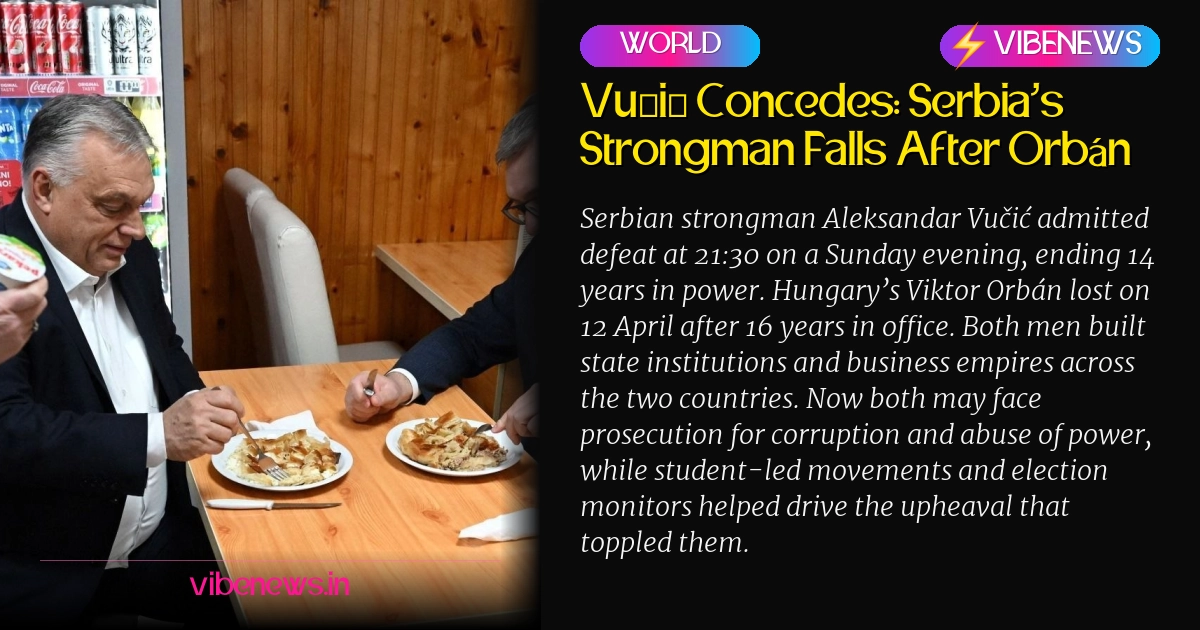
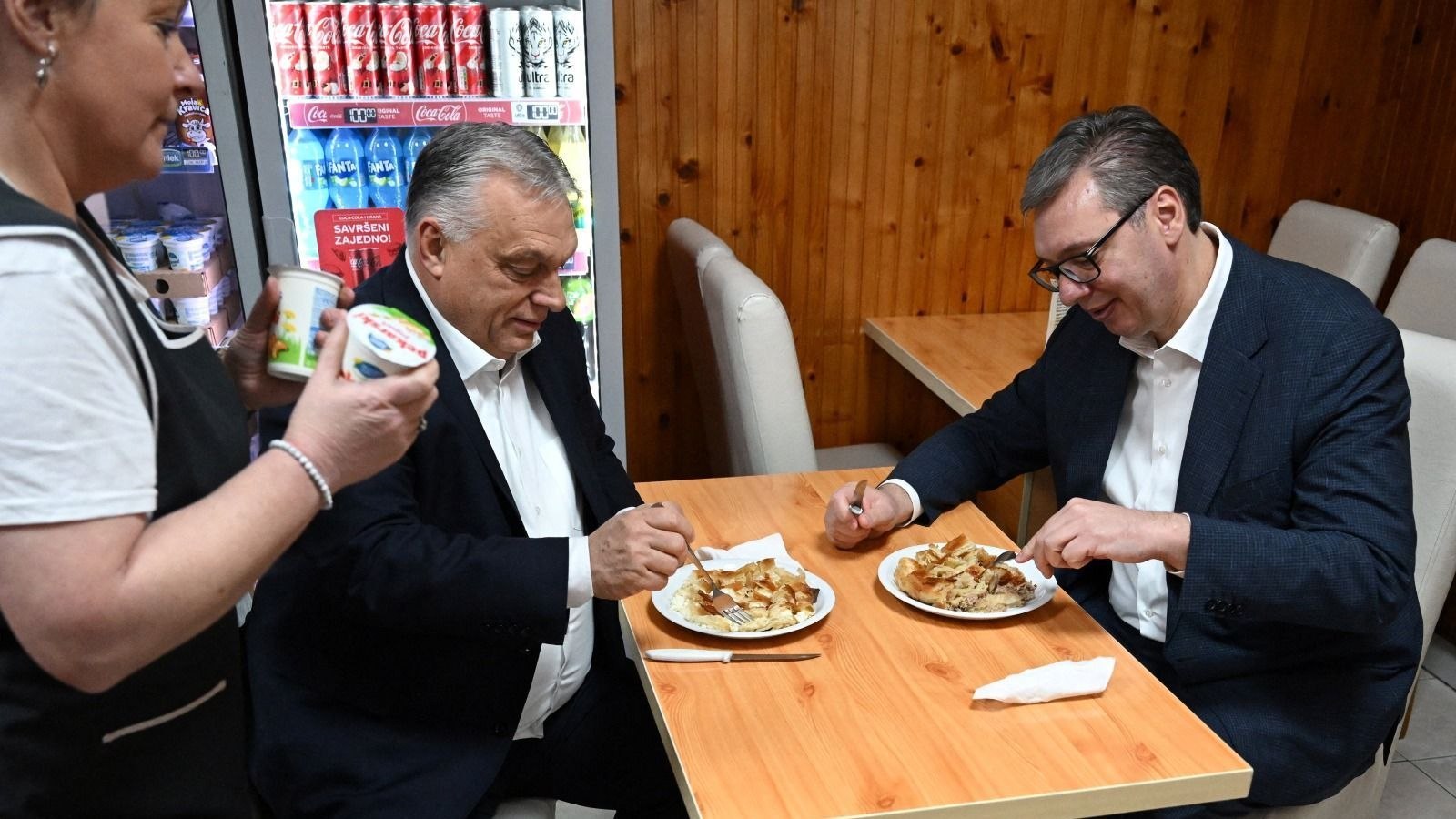
Their business ties ran just as deep. The two leaders once sat down for a quick lunch of traditional burek pastries at a small, popular bakery in Subotica. Orbán chose cheese, Vučić chose meat. They then went on to a local winery to talk about oil and other deals, including the planned Hungarian purchase of a controlling stake in Serbia’s NIS oil company.
The political parallels were just as striking. Each man had held power for well over a decade, and each had become a fixture of the regional order that seemed impossible to dislodge.
The election that broke the pattern
Mobilisation on the ground made the difference, and a Hungarian civic group played a direct part in it. Last weekend, the DE civic action group in Hungary sent 70 election monitors to Serbia. They worked alongside student movement representatives and visited polling stations in the northern Serbian province of Vojvodina.
During the summer, before the Serbian election was even called, the group ran workshops to share lessons from Hungary’s own vote with Serbian students. The central tactic was to identify polling districts in advance where the unusually high number of votes for the governing party in previous elections suggested intimidation or so-called chain voting.
Péter Klemm, a student activist from Subotica, described what happened on the day. From around 16:00, his group noticed masked men gathering near voting stations. He said the men were Vučić supporters. The response was simple: mobile teams went out and started filming everything.
Klemm believes that combining those mobile teams with stationary monitors made the difference. Between 20 and 30 volunteers stood at each threatened polling station, and he says that presence acted as a strong deterrent that prevented intimidation or fraud.
Masked and hooded vigilantes had also taken up position in central Belgrade an hour before polls closed. During voting, similar groups were photographed at many polling stations, and election monitors blocked them.
The final hours and the phone calls
The concession itself has become the subject of intense speculation. Reports this week suggested Vučić spoke to Orbán twice on Sunday night to ask for advice. The first call came before he conceded, and the second at 23:15. The theory goes that Orbán persuaded his Serbian ally not to use force.
Vučić denies speaking to Orbán before his announcement. He acknowledges the later conversation. Orbán, contacted about the reports, declined to comment.
Those who lost power did not stay silent for long, but the outcome was not what their supporters had hoped for. Serbia’s student movement had been building for months, and its momentum carried into the ballot box.
A parliament mirrored across borders
There is another striking numerical echo. The Student List will hold 140 seats in Serbia’s 250-seat parliament. Péter Magyar’s Tisza party won the same number of seats, 140, in Hungary’s 199-seat parliament.
Magyar was the only European leader to call the students directly to congratulate them that evening. The Hungarian prime minister told the BBC that the story of Tisza could serve as inspiration for other nations. Ilija Srdanović, head of the Student List, had said on the eve of the vote that the Hungarian result showed what his movement was doing was right. He was one of the people Magyar spoke to that Sunday evening.
Prosecutions and a railway station that changed everything
Orbán, 63, and Vučić, 56, may now both face prosecution for corruption and abuse of power. The legal machinery in the two countries looks similar. Serbia’s special prosecution service for organised crime, known as JTOK, and Hungary’s newly created special prosecutors, known as NVVH, have similar powers. Those powers could prove useful to each other.
The case has a painful human trigger. Hungarian companies close to Orbán were involved in the Novi Sad railway station construction project. The collapse of the station’s canopy on 1 November 2024 killed 16 people. Authorities blamed corruption as well as negligence. That tragedy became the catalyst for the Serbian student movement.
The anger that followed did not fade. It turned into organised action, from the campaigns to the monitors on the ground.
Why the old certainties broke
For years, many in Europe assumed that the longer Orbán and Vučić stayed in office, the stronger they became. Áron Timar, founder of the DE civic action group in Hungary, rejects that view entirely.
In fact they got weaker. And once society found its voice and rose up, there was no way of stopping it.
The two men looked invincible, and each held a grip on state institutions that seemed permanent. Their fall shows how quickly that grip can slip when voters organise, when students refuse to back down, and when the people watching the polls are determined to make sure every vote counts.
What happens next will test both countries. Investigators and prosecutors now have the opportunity that years of public anger demanded. For the students who built this movement from a railway station tragedy, the question is no longer whether the old system can be challenged. It is what the new one will look like.
TL;DR
- Aleksandar Vučić admitted defeat in Serbia at 21:30 on a Sunday evening, ending 14 years in power.
- Viktor Orbán lost power in Hungary on 12 April after 16 years in office.
- The Student List won 140 of 250 seats in Serbia’s parliament, matching Tisza’s 140 of 199 in Hungary.
- A Hungarian civic group sent 70 election monitors to Serbia to support student representatives.
- Both leaders may face prosecution for corruption and abuse of power.
- The Novi Sad station canopy collapse on 1 November 2024 killed 16 people and sparked the student movement.