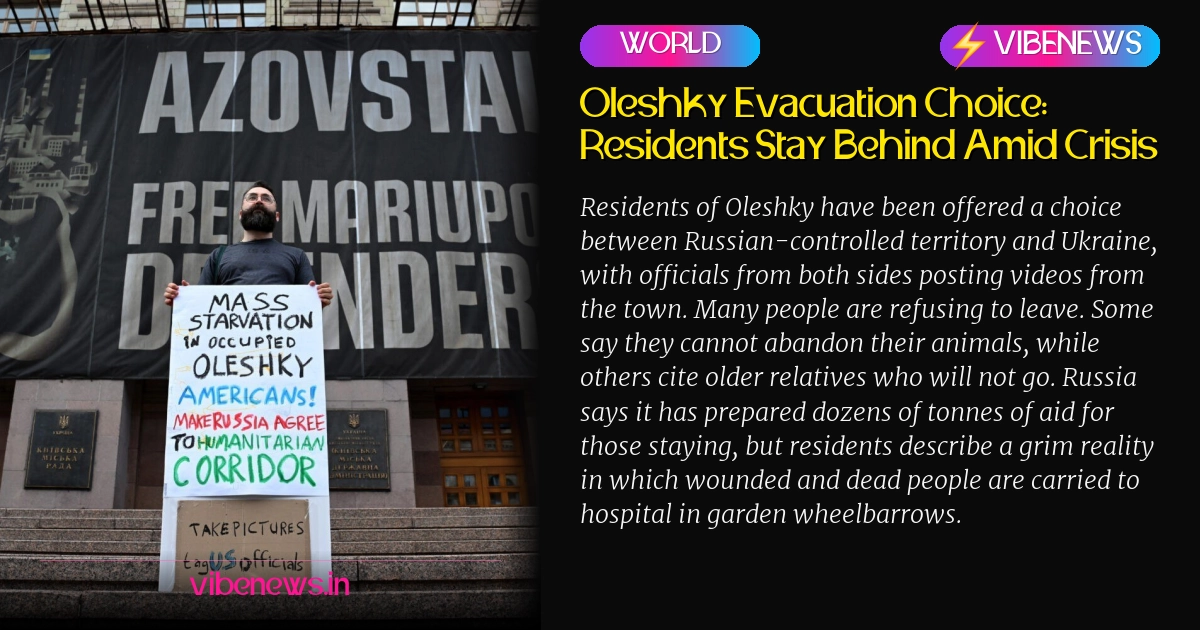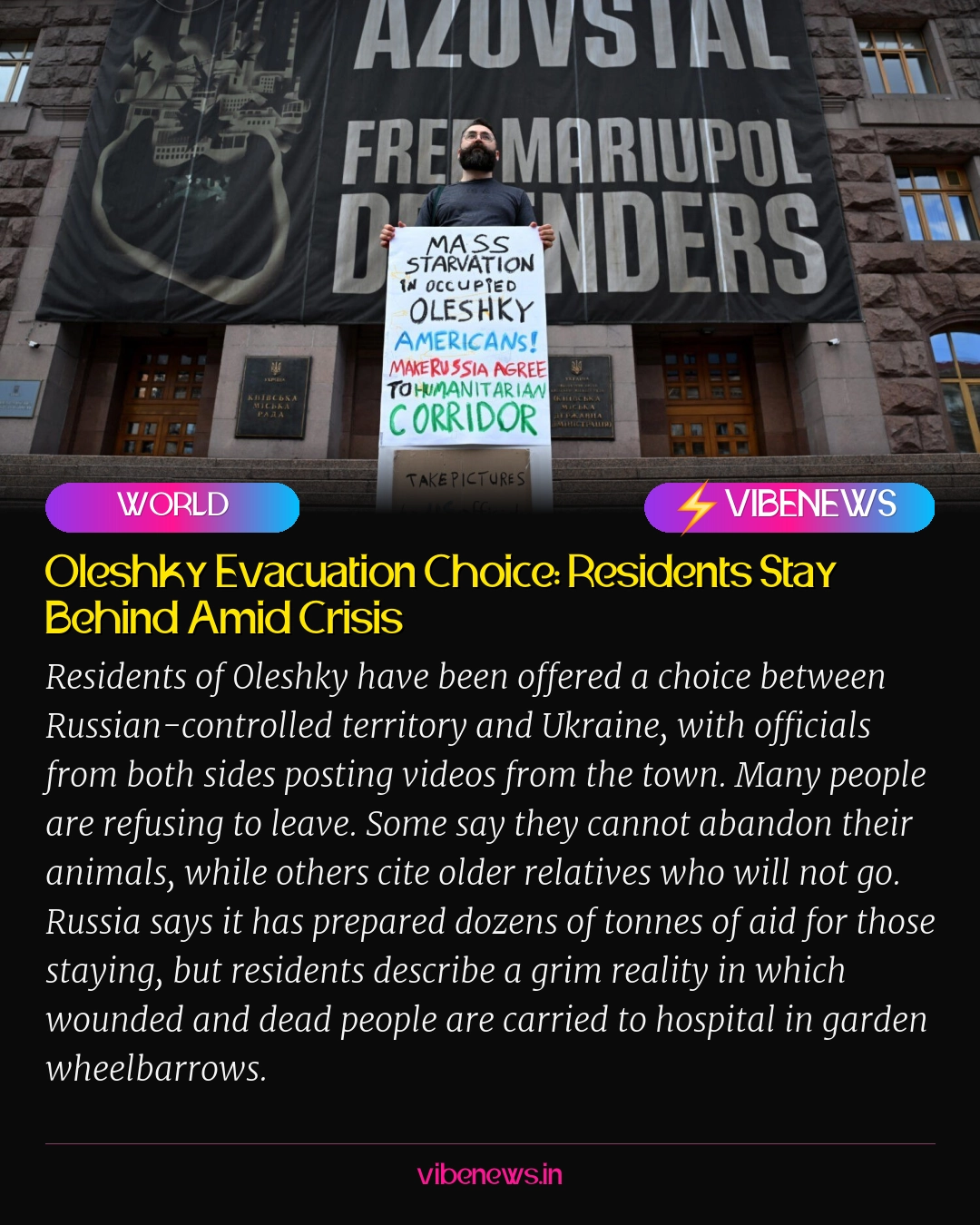
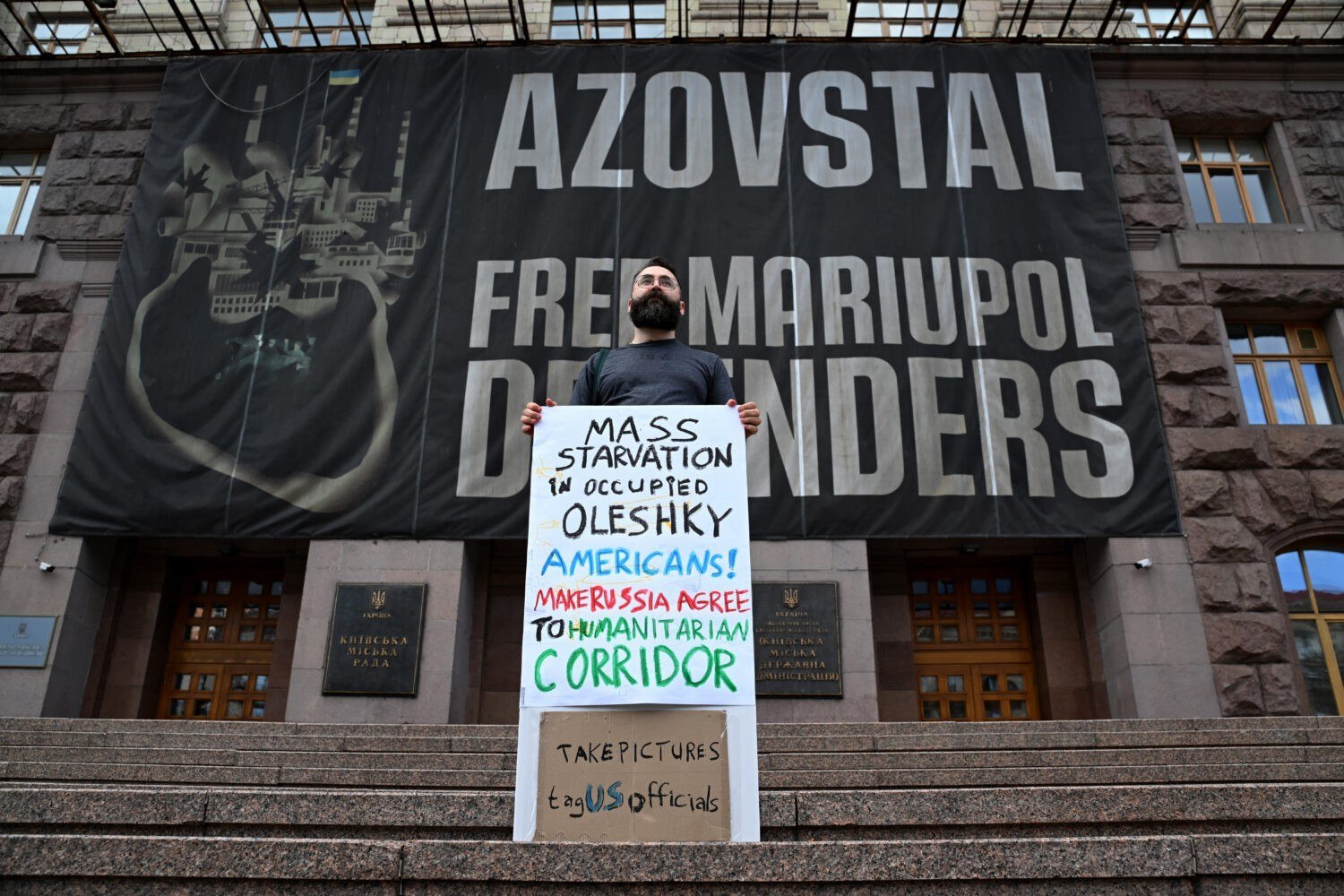
Residents of Oleshky have been given a choice between two destinations: Russian-controlled territory or Ukraine. Officials from both sides posted videos from the town on their social media channels to announce the offer, and many people have decided not to go.
The arrangement was presented as a simple split. Residents were asked to form two groups, depending on whether they wanted to be taken to Russian-controlled territory or to Ukraine. Lubinets and Lantratova both shared footage from the scene, and the images they chose to publish tell a more complicated story than the paperwork suggests.
In one video, Lubinets is seen meeting tearful locals. The problem, he says, is simple and stark: “a lot of people are staying.” He went on to describe what he had been told on the ground. “I was told that it was their own choice, we will do everything possible for the humanitarian aid to arrive.”
Aid promised for those who stay
Russia said on Thursday that it had prepared “dozens of tonnes” of aid for the residents who do not wish to leave. The package includes food, medicine, hygiene products and fuel for generators. Those supplies matter in a town where people are already dealing with shortages of basic necessities, and where the question of how and when help will reach them is now central to every decision families are making.
Promises of aid, however, do not answer the question that many residents are asking: what happens to the people who cannot or will not move?
Why some are refusing to leave
For one Oleshky resident, the decision came down to something very practical. She told reporters she had decided against leaving because “they wouldn’t take my animals, so that’s it.” For her, leaving was not an option that could include the animals she depends on, and that single condition was enough to keep her where she is.
Her reasoning reflects a wider pattern. Families who are staying are not doing so out of ignorance of the offer. They are weighing what they would lose by leaving against what they face by staying, and for many, the balance tips toward remaining at home.
Olena, who now lives in Kyiv, sees the same pattern inside her own family. Her grandmother and wider relatives in Oleshky are also staying behind. “The older generation does not want to leave,” she said. She has struggled to change her father’s mind, and she only partly succeeded. “I’ve barely managed to persuade my father,” she said, “and only because I’ve just had a baby, who he would never see otherwise.”
That detail carries the weight of the whole story. A grandchild he had not yet met was the reason a man agreed to consider leaving a place he had called home. For many families in the same position, the emotional pull of home, age and routine is hard to overcome, even when the alternatives are uncertain.
A death that shows the cost of staying
Olena’s account also includes a death that ties the danger in Oleshky to the everyday struggle of getting medical care. Her grandmother’s sister died in Oleshky last winter. She had lost her legs after stepping on a landmine, and she was left in the snow. Olena described what happened next: “People took her to the hospital in a garden wheelbarrow.”
“That’s how locals transport all wounded and dead people in Oleshky to the hospital and the hospital’s morgue: in garden wheelbarrows.”
That is the line that makes the offer on the table feel so fragile. A town where the injured and the dead are moved on garden wheelbarrows is a town where ordinary services have broken down. Whatever is promised on paper, the reality on the ground is that people are being carried through the snow by their neighbours.
The sister’s death was not an isolated event described in passing. It is the kind of story that explains why families are split on whether to leave, and why the older generation is so reluctant to move. Leaving means losing the familiar, but staying can mean facing the same danger that took a woman’s legs and, eventually, her life.
What the choice really means
The offer to leave for either side is presented as a free decision, and officials on both sides say the choice belongs to the residents. Yet the testimony gathered so far shows how narrow that choice can be. Some people will not leave without their animals. Others will not leave without persuading elderly parents who would rather die at home. Some are waiting for an aid convoy that has been promised but not yet seen by the people who need it most.
Russia’s pledge of dozens of tonnes of supplies is a concrete number, and it may make a difference to the families who remain. But residents are not measuring the situation in tonnes. They are measuring it in wheelbarrows, in landmines, and in the time it takes for a wounded person to reach a hospital that may or may not be able to help.
For the families split between Oleshky and Kyiv, the situation is equally painful. Olena has a child she wants her father to meet. Her father has a home he does not want to abandon. Neither side of that disagreement is easy, and both are shaped by the same war that has turned an everyday trip to hospital into something that can only be made in a garden wheelbarrow.
What happens next will depend on whether the promised aid arrives, whether the offer of transport holds, and whether the people who have chosen to stay decide, in the end, that staying is still their best option. For now, the videos from Oleshky show officials talking about choice, while the people on the ground are describing something much harder.
TL;DR
- Residents of Oleshky have been offered transport to Russian-controlled territory or Ukraine, and many are refusing to leave.
- Lubinets said on video that “a lot of people are staying” after meeting tearful locals in the town.
- Russia says it has prepared “dozens of tonnes” of food, medicine, hygiene products and generator fuel for residents who stay.
- One resident won’t leave because she says her animals would not be taken with her.
- Olena’s grandmother and relatives in Oleshky are staying, and her elderly father only partly agreed to consider leaving.
- Last winter, a woman who lost her legs to a landmine was carried to hospital in a garden wheelbarrow, and she later died.