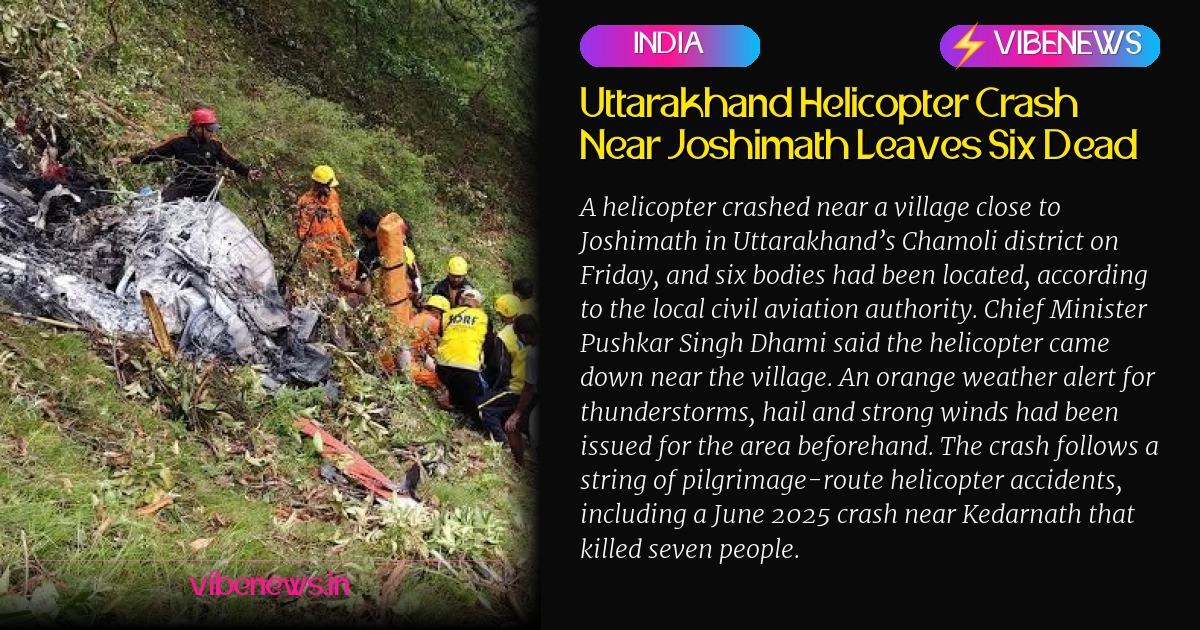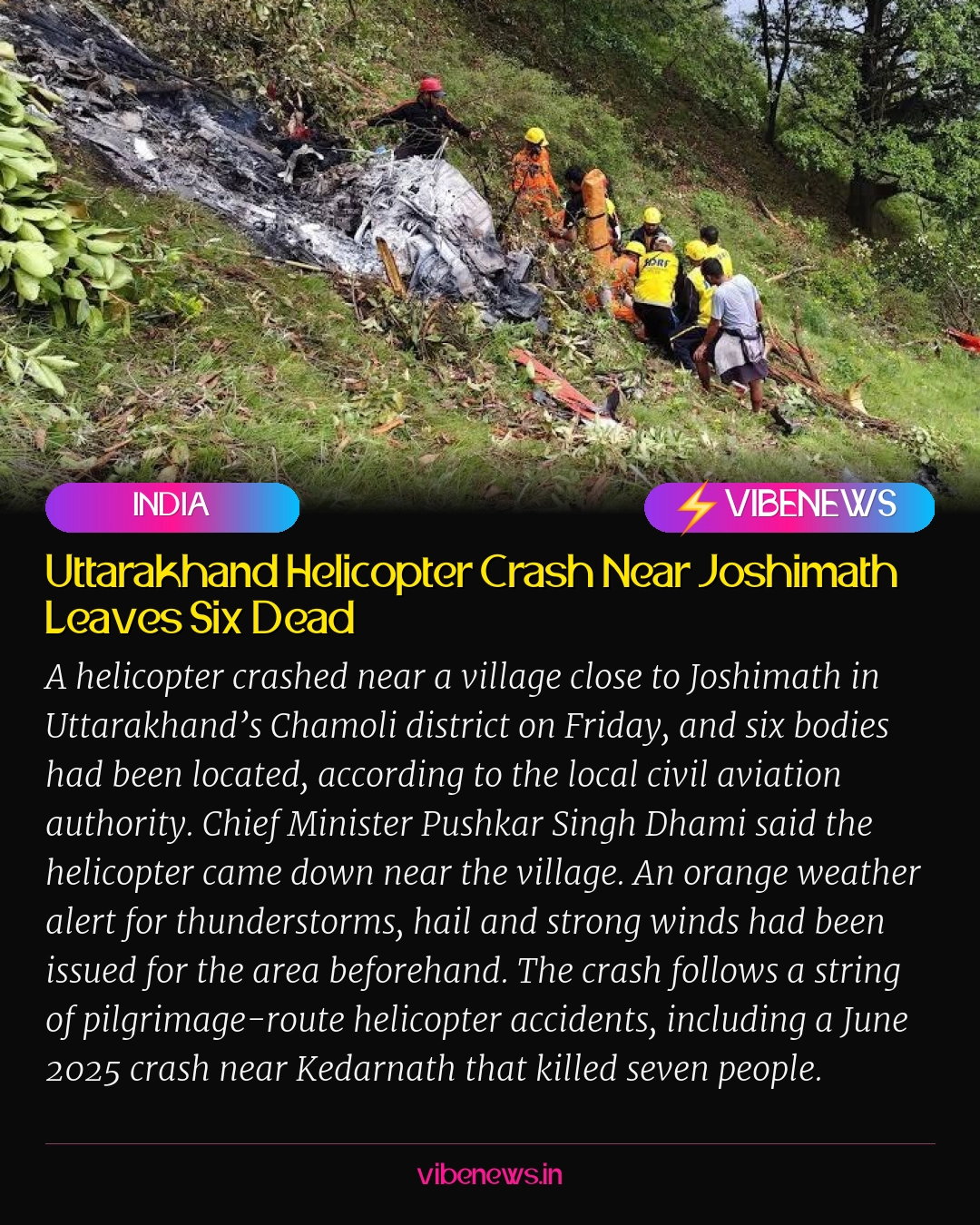
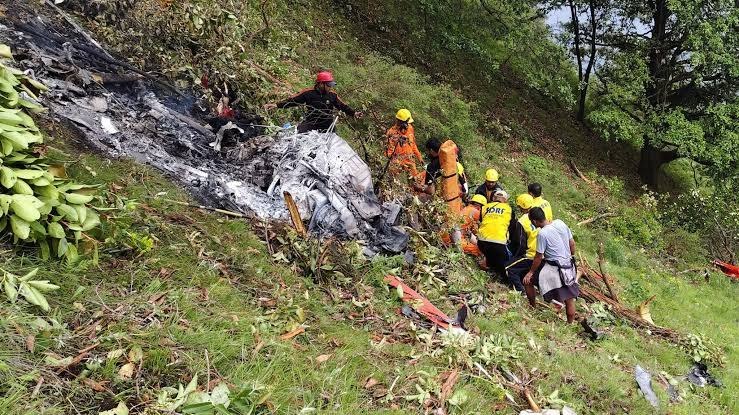
A helicopter crashed near a village close to Joshimath in Uttarakhand’s Chamoli district on Friday, and six bodies had been located. The local civil aviation authority later confirmed the count to Indian media.
Uttarakhand’s Chief Minister Pushkar Singh Dhami said the helicopter came down near the village. The crash has put one of the state’s most heavily used travel options back under intense scrutiny, with rescue and recovery work now the immediate priority on the ground.
Helicopter rides have become a fast-growing choice for pilgrims who want to avoid the punishing road and trekking routes through the Himalayas. That convenience has come with a cost. Each new accident raises the same question: are the aircraft and the conditions they fly in being managed tightly enough?
A weather warning came before the crash
The timing of this crash is what makes it harder to set aside. India’s weather department had already issued an orange alert for the area, a warning level that signals conditions capable of disrupting travel. The forecast flagged thunderstorms, hail and strong winds.
Before Friday’s crash, India’s weather department had issued an orange alert for the area, warning of thunderstorms, hail and strong winds.
An orange alert does not automatically ground flights. It does mean that pilots and operators are expected to weigh the risk carefully before taking off or continuing a flight into a mountain corridor. Whether that assessment was made in this case is a central question that the investigation will have to answer.
A pilgrimage route with a painful record
This is not the first time pilgrims on this route have died in a helicopter accident. In June 2025, seven people were killed when a helicopter carrying pilgrims crashed near Kedarnath. Kedarnath is one of the most visited shrines in the region, and the route that leads to it is among the busiest in the Himalayas.
The pattern goes back further. In October 2022, another seven people died in a crash on the same pilgrimage route. Two accidents, each with seven dead, separated by nearly three years, have made the corridor a recurring focus for safety debates.
Now a third crash in the same broader region has left six people dead. The numbers are different, but the grief in the villages around Joshimath and Chamoli is likely to feel familiar to anyone who followed the earlier tragedies.
A season already marked by accidents
The 2025 pilgrimage season was already troubled before the latest crash. Several other helicopter accidents were reported during that season, and they prompted aviation authorities to tighten safety checks. Some operations were restricted as a result.
Those steps were meant to reduce the risk of exactly this kind of disaster. The fact that a fatal crash has now happened in the same region raises hard questions about how those tighter checks are being applied on the ground, and whether they go far enough in weather conditions like the ones that had been forecast.
Pilgrims often have few alternatives in the high mountains. Road journeys can be long, exhausting and dangerous, and helicopter services offer a shorter, faster route. That demand is precisely why regulators are under pressure to ensure every flight is safe to take, not just most of them.
What is still unknown
Much remains unclear. The information available so far confirms the location, the day of the crash, the number of bodies located and the weather warning that had been issued beforehand. It does not establish the cause of the crash, the identity of the operator or the full details of those on board.
Those gaps matter. Without a clear account of what happened in the final minutes of the flight, it is impossible to say whether weather was the decisive factor, whether a technical problem played a role, or whether operational decisions contributed. Investigators will need to examine all of these possibilities before drawing conclusions.
For families waiting for news, the immediate concern is simpler. They want to know who was on board, and they want confirmation that the bodies recovered belong to those who were travelling. Authorities have not yet released a full public account of those details in the information reviewed here.
Why this crash will change the conversation
Every helicopter crash in the Himalayas reopens the debate about how far the state and aviation regulators should go to protect pilgrims. This one comes with a clear warning on record, a route with two earlier mass-casualty crashes and a season already marked by accidents. Those details will make it harder for officials to treat the tragedy as an isolated event.
The pressure now falls on investigators to explain what happened and on regulators to show that lessons from 2022 and 2025 were actually acted upon. Pilgrims, operators and authorities all have a stake in the answer. The next few days of official updates will determine whether confidence in these flights can be rebuilt or whether the warnings keep arriving too late.
TL;DR
- A helicopter crashed near a village close to Joshimath in Uttarakhand’s Chamoli district on Friday.
- Six bodies had been located, according to the local civil aviation authority.
- Chief Minister Pushkar Singh Dhami said the helicopter came down near the village.
- An orange weather alert for thunderstorms, hail and strong winds had been issued for the area before the crash.
- Seven people were killed in a June 2025 pilgrim helicopter crash near Kedarnath.
- Another seven died in a crash on the same pilgrimage route in October 2022.