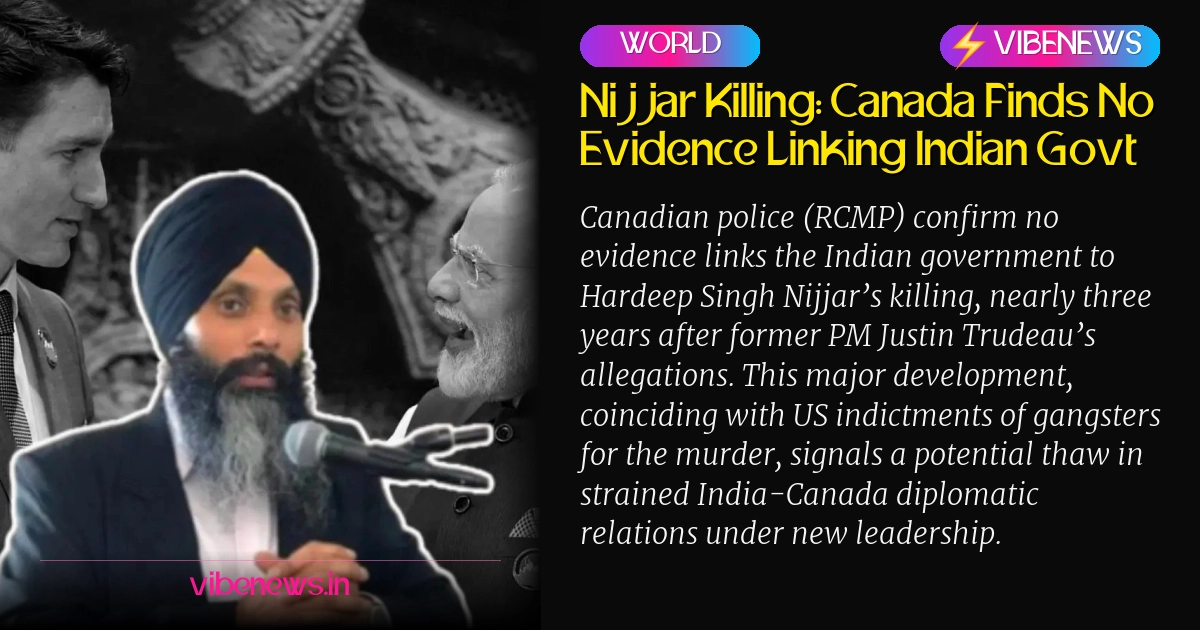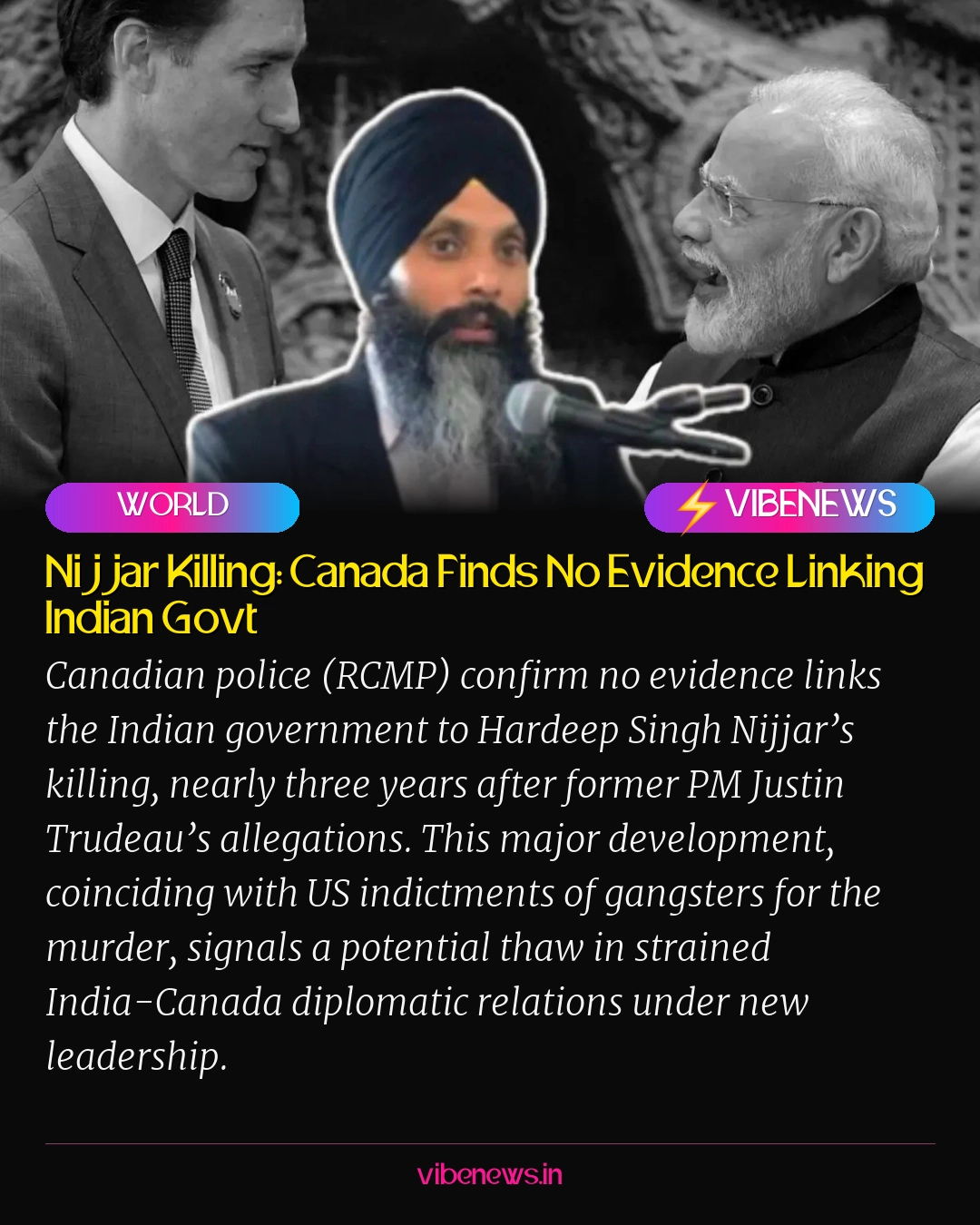
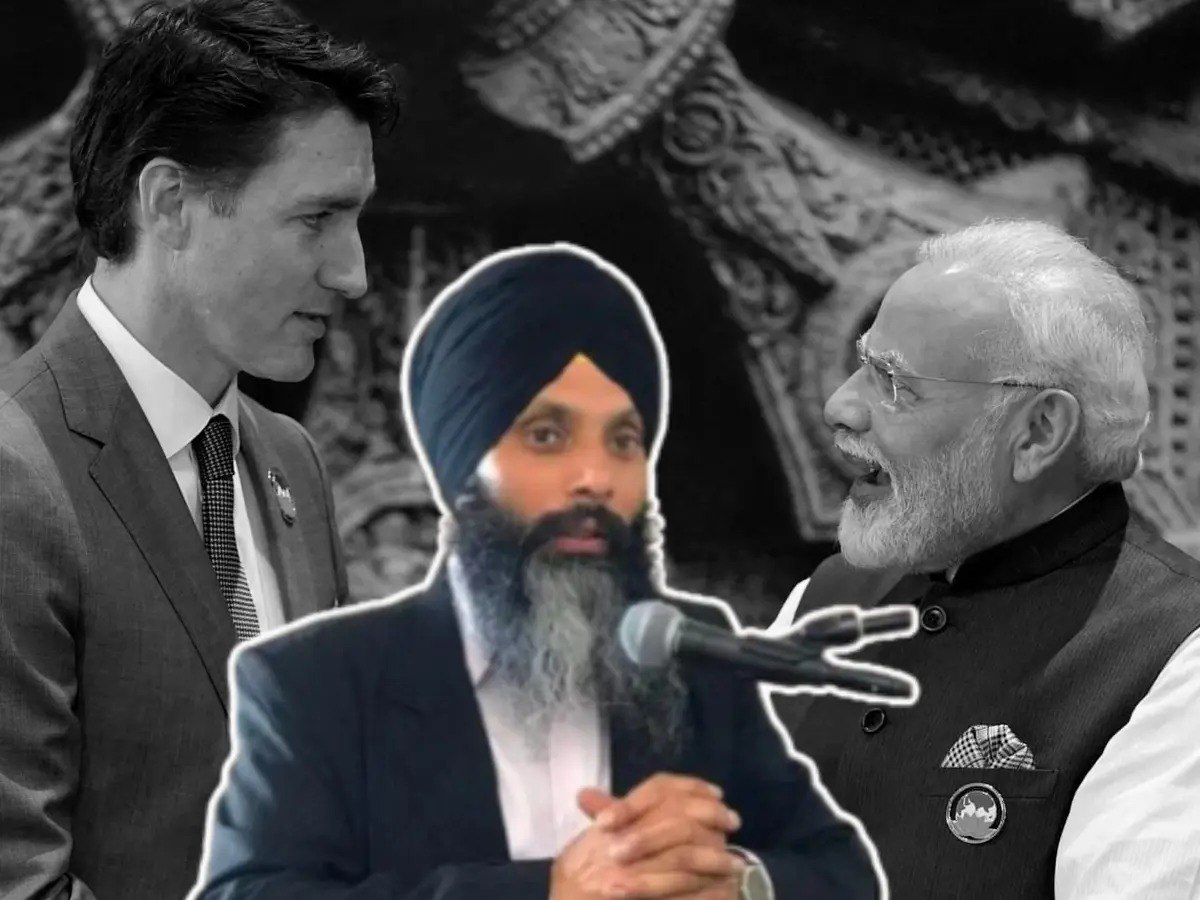
The Royal Canadian Mounted Police (RCMP) has officially stated that it found no evidence connecting the Indian government to the killing of Khalistani terrorist Hardeep Singh Nijjar. This significant declaration comes nearly three years after then-Canadian Prime Minister Justin Trudeau publicly alleged a “potential link,” triggering a severe diplomatic crisis between New Delhi and Ottawa that has only recently begun to thaw.
This reversal in Canada’s official narrative, delivered by RCMP Deputy Commissioner Lisa Moreland, marks a crucial turning point, potentially paving the way for a full reset in India-Canada relations, especially under the new Canadian leadership of Mark Carney. The development coincides with the US Department of Justice unsealing indictments against notorious gangsters Lawrence Bishnoi and Goldy Brar for directing Nijjar’s murder, notably without any mention of Indian government involvement.
RCMP Rules Out Indian Government Link in Nijjar Murder
Deputy Commissioner Lisa Moreland of the Royal Canadian Mounted Police (RCMP) explicitly stated that current investigations have yielded no evidence to suggest the involvement of Indian government officials in the assassination of Hardeep Singh Nijjar. Speaking to Canadian state-broadcaster CBC News, Moreland clarified, “There is no evidence to suggest that, through this organised crime syndicate investigation and the charges laid forward, that Indian government officials would be charged or involved in this... Nothing has come out to link the Indian government.”
This statement directly contradicts the assertions made by former Prime Minister Justin Trudeau in September 2023, who had claimed Canadian security agencies were pursuing “credible allegations” of a “potential link” between Indian agents and Nijjar’s death. India had consistently rejected these allegations as “absurd” and “motivated,” demanding credible evidence which Canada had failed to provide.
US Indictments Focus on Transnational Organised Crime
Hours before the RCMP’s announcement, the US Department of Justice unsealed multiple indictments under ‘Operation Hard Ball,’ a multi-year investigation into extensive transnational organised crime networks. These indictments specifically named Lawrence Bishnoi, currently imprisoned in Gujarat, India, and his North America-based aide Satinderjeet Singh alias Goldy Brar, as the masterminds behind Nijjar’s 2023 killing.
The US indictments also charged Rohit Godara, identified as the European leader of the Bishnoi network, and Sukhraj Singh Kang, another alleged member. Crucially, the American legal documents, while detailing a wide array of criminal activities including extortion, targeted killings, and drug trafficking, made no allegations of any role by the Indian government in Nijjar’s assassination.
Impact on Strained India-Canada Diplomatic Relations
The RCMP’s definitive statement, coupled with the US indictments framing Nijjar’s murder within the context of organised crime, significantly weakens Ottawa’s previous political claims of Indian government involvement. This development arrives at a critical juncture as New Delhi and Ottawa actively work to mend their fractured diplomatic ties following the prolonged freeze under the Trudeau administration.
Since Mark Carney succeeded Justin Trudeau, there has been a noticeable shift towards renewed diplomatic engagement and high-level contacts. This includes discussions on trade, energy, and uranium, alongside the resumption of Comprehensive Economic Partnership Agreement (CEPA) talks. Cooperation in law enforcement coordination has also seen an uptick, indicating a broader reset in bilateral relations.
Canada’s Shifting Stance on Khalistani Extremism
Adding to the momentum of this diplomatic reset, the Canadian Security Intelligence Service (CSIS) published an assessment in May 2026, identifying Khalistani extremists as a national security threat. The report warned that a small but active network continued to use Canada as a base to fund and support violence, raising concerns over fundraising and links to extremist activity primarily tied to India.
Around the same period, Canada’s intelligence agency explicitly attributed the 1985 Air India bombing to Khalistani terrorists, a long-held stance by New Delhi. This acknowledgement marked a major shift in Ottawa’s official position on Khalistani extremism and its historical ties with India, further aligning Canadian and Indian security concerns.
What Lies Ahead for the Nijjar Investigation?
While the RCMP’s statement clarifies the lack of evidence linking the Indian government, it does not signify the end of the investigation into Hardeep Singh Nijjar’s killing. Deputy Commissioner Moreland confirmed that investigations are still active, based on ongoing arrests and seizures. The focus now appears to be firmly on the transnational organised crime syndicates implicated by the US indictments.
This significant alteration in the Canadian government’s narrative is expected to further support ongoing efforts by New Delhi and Ottawa to rebuild trust and strengthen bilateral cooperation. The diplomatic reset, initiated under Mark Carney’s leadership, gains considerable momentum from this development, allowing both nations to move past a period of intense strain and focus on shared interests and security challenges.
TL;DR
- The <strong>Royal Canadian Mounted Police (RCMP)</strong> has found no evidence linking the <strong>Indian government</strong> to the killing of <strong>Hardeep Singh Nijjar</strong>, reversing former PM <strong>Justin Trudeau’s</strong> earlier allegations.
- This declaration comes nearly three years after Trudeau’s claims sparked a major diplomatic crisis between <strong>India</strong> and <strong>Canada</strong>.
- The development coincides with the <strong>US Department of Justice</strong> indicting gangsters <strong>Lawrence Bishnoi</strong> and <strong>Goldy Brar</strong> for Nijjar’s murder, without implicating the Indian government.
- RCMP Deputy Commissioner <strong>Lisa Moreland</strong> confirmed the lack of evidence, stating investigations continue to focus on organised crime.
- The shift in Canada’s narrative is expected to significantly aid the ongoing diplomatic reset between <strong>New Delhi</strong> and <strong>Ottawa</strong> under <strong>Mark Carney’s</strong> leadership.
- Recent Canadian intelligence reports also acknowledge Khalistani extremism as a national security threat and attribute the 1985 Air India bombing to Khalistani terrorists.