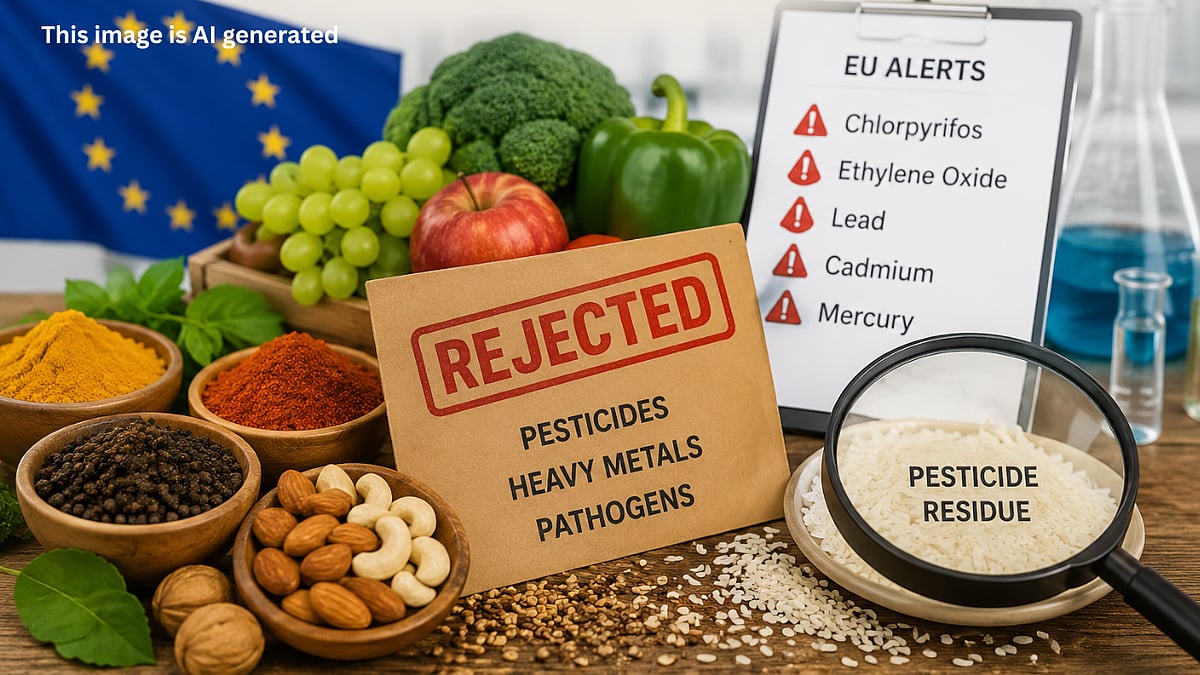
The European Union has issued alerts for 365 Indian products over the past two years, citing the presence of pesticide residues. This significant volume of notifications underscores persistent challenges in ensuring the quality and safety of agricultural and food exports from India to one of its major trading partners.
Between 2022 and 2024, the EU's Rapid Alert System for Food and Feed (RASFF) identified these products, primarily consisting of herbs and spices, fruits and vegetables, nuts, and cereals. The consistent flagging of these items points to a systemic issue rather than isolated incidents, raising questions about cultivation practices and post-harvest handling in India.
The alerts specifically targeted pesticide contamination, a critical concern for public health and environmental safety. European regulations on maximum residue levels (MRLs) for pesticides are among the strictest globally, designed to protect consumers from potentially harmful chemical exposure.
India is a major global exporter of agricultural commodities, including a diverse range of spices, fresh produce, and processed foods. The EU represents a lucrative but highly regulated market, demanding stringent compliance with food safety standards. The RASFF system serves as a crucial mechanism for member states to share information about food and feed risks, enabling rapid action to prevent contaminated products from reaching consumers.
Previous instances of Indian products facing scrutiny over quality issues are not uncommon. However, the sheer number of alerts over a two-year period for pesticide residues indicates an escalating challenge for Indian exporters to meet European benchmarks.
These repeated alerts carry significant implications for India's agricultural export sector. Beyond the immediate economic losses from rejected consignments, the persistent flagging can damage the reputation of Indian products in international markets. It also places a burden on exporters to invest more in testing and quality assurance, potentially increasing costs.
From a consumer perspective, the EU's vigilance highlights the importance of robust food safety systems. The detection of pesticide residues, even at low levels, can be a cause for concern, particularly for vulnerable populations and with long-term exposure.
The consistent stream of alerts necessitates a proactive response from Indian authorities and agricultural producers. This includes reviewing and strengthening pesticide usage guidelines, promoting sustainable farming practices, and enhancing testing infrastructure to ensure products meet international MRLs before export.
Industry bodies and government agencies in India will likely face increased pressure to implement stricter quality control measures throughout the supply chain, from farm to fork, to restore confidence and prevent further trade disruptions.
Addressing the issue of pesticide residues will require a multi-faceted approach, involving farmer education on responsible pesticide application, improved monitoring by regulatory bodies, and greater investment in organic and residue-free farming methods. Successful navigation of these challenges is crucial for India to maintain and expand its presence in discerning global markets like the European Union.
TL;DR
- The European Union flagged 365 Indian products over two years for pesticide residues.
- The alerts were issued through the EU's Rapid Alert System for Food and Feed (RASFF).
- Majority of flagged products include herbs, spices, fruits, vegetables, nuts, and cereals.
- This highlights ongoing challenges for Indian exporters to meet strict EU pesticide residue limits.
- The consistent flagging impacts India's export reputation and necessitates improved quality control.
- Indian authorities and producers face pressure to strengthen pesticide usage guidelines and testing.
- Addressing the issue is crucial for India's agricultural trade with the EU.