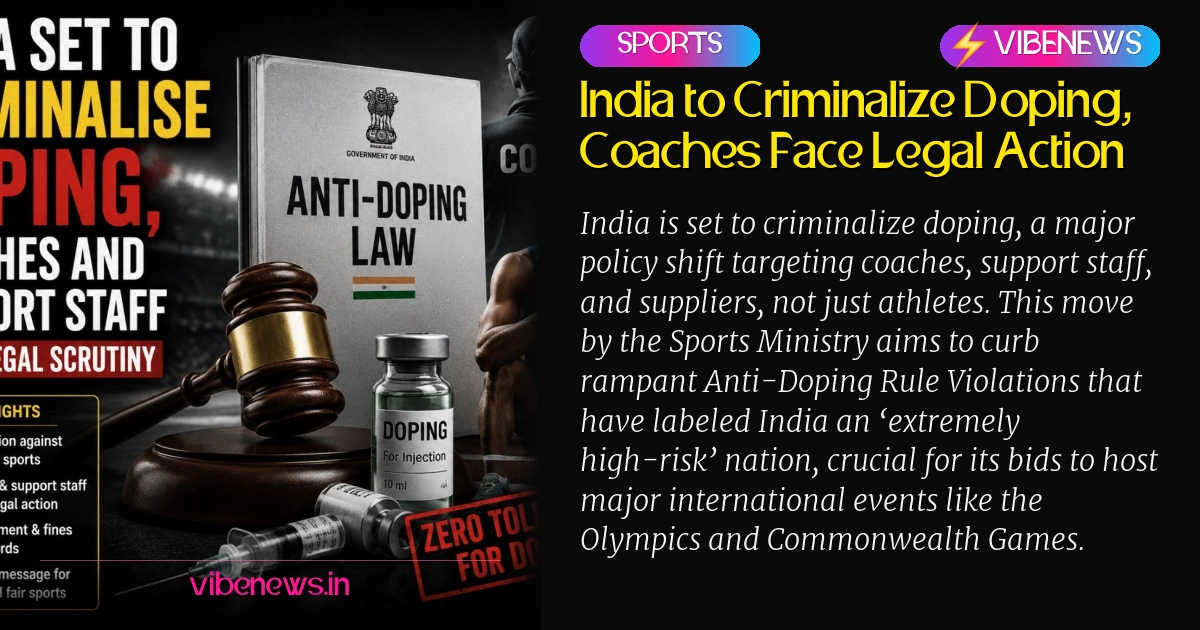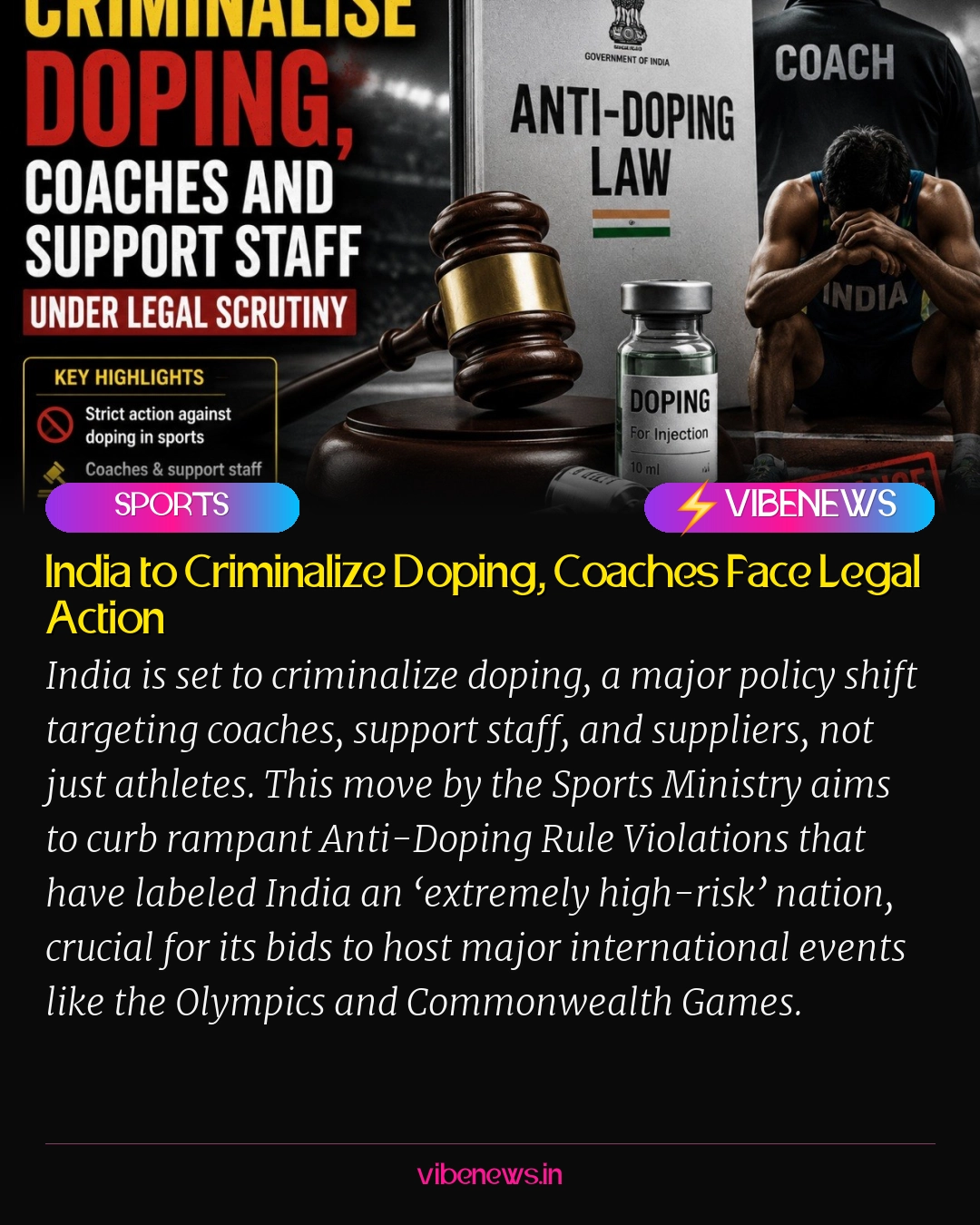
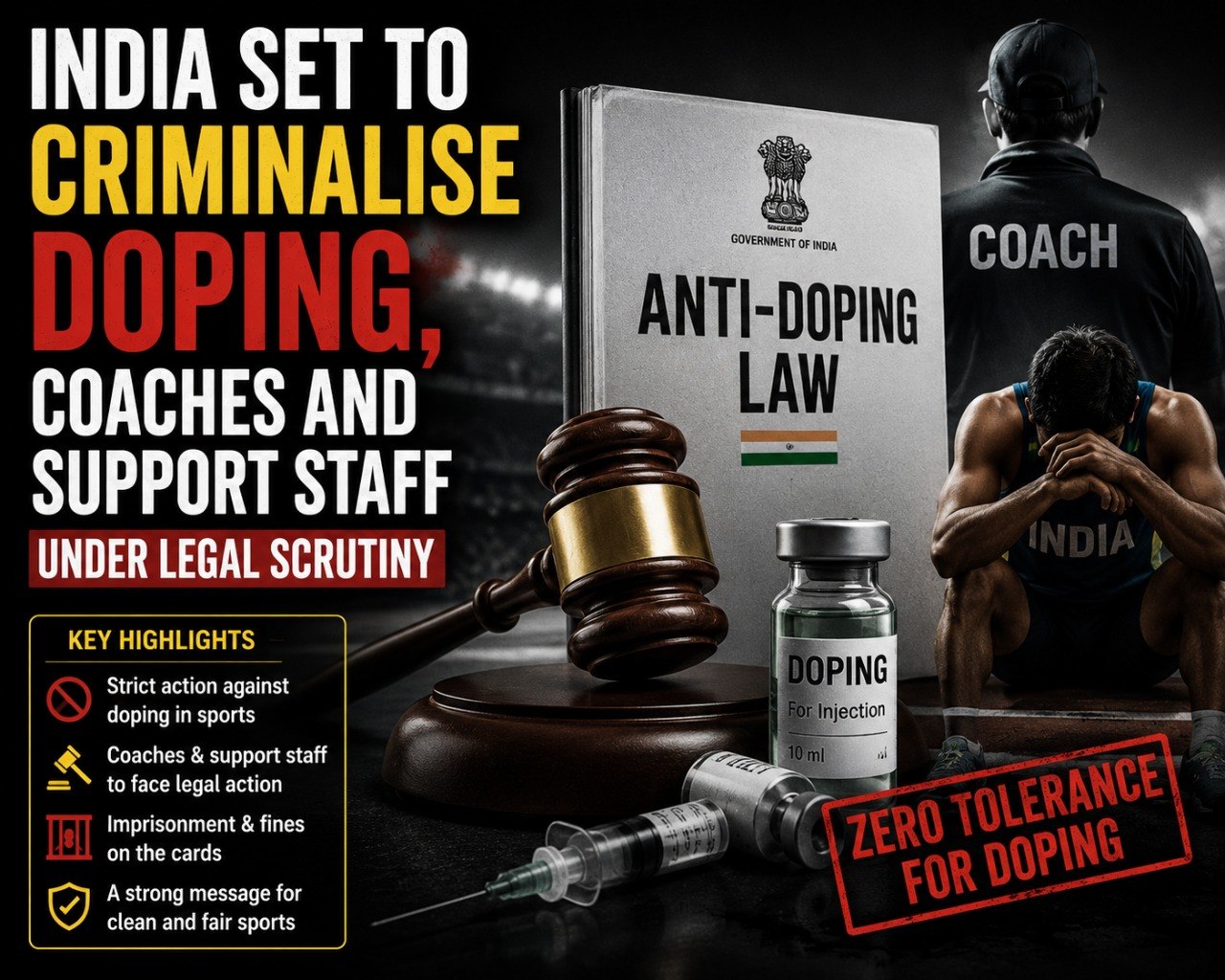
The Indian government is poised to introduce a landmark amendment to the National Anti-Doping Act, criminalizing doping and extending legal action beyond athletes to coaches, support staff, and suppliers. This significant policy overhaul comes as India grapples with an alarming 212 Anti-Doping Rule Violations (ADRVs) in athletics alone between 2022 and 2025, leading to its designation as an ‘extremely high-risk’ nation by World Athletics.
This legislative shift is a direct response to India’s persistent doping problem, which has consistently placed the nation among the worst globally for anti-doping infractions. By targeting the wider ecosystem that facilitates doping, the Sports Ministry aims to restore confidence in India’s sporting integrity, a critical step as the country aggressively pursues bids to host prestigious international events, including the 2030 Commonwealth Games and future Olympic Games.
Why India is Strengthening Anti-Doping Laws
India’s decision to criminalize doping stems from a pressing need to address its severe and ongoing doping crisis. The Athletics Integrity Unit (AIU) has repeatedly highlighted India’s poor record, with the country consistently ranking in the top two globally for ADRVs in athletics over the past four years, even topping the list in 2024 and 2025.
These figures, including 48 ADRVs in 2022, 63 in 2023, 71 in 2024, and 30 so far in 2025, prompted World Athletics to classify India as an "extremely high-risk" nation. Consequently, the Athletics Federation of India (AFI) was reclassified to the stricter Category A under World Athletics’ Anti-Doping Rules, intensifying international scrutiny.
The Scope of the Proposed Amendments
The proposed amendments to the National Anti-Doping Act will significantly broaden the scope of accountability. Currently, athletes found guilty of ADRVs face sporting sanctions such as suspensions and disqualifications under the National Anti-Doping Agency (NADA) Code.
The new legislation will introduce criminal penalties for individuals beyond the athletes themselves. This includes coaches, trainers, support staff, suppliers, and any others involved in the procurement, trafficking, or administration of banned substances. This approach acknowledges that doping is often a systemic issue, not merely an individual transgression.
India’s Doping Crisis: A Global Concern
Concerns about India’s anti-doping framework have been echoed by international bodies. AIU Chair David Howman noted that the quality of India’s domestic anti-doping program is "simply not proportionate to the doping risk."
International Testing Agency Director General Benjamin Cohen also expressed general concern, stating, "We’re concerned in general with the state of doping in India and we’re hearing a lot of things happening on the ground." Incidents like sprinters fleeing an athletics meet in New Delhi to avoid in-competition testing further underscore the scale of the challenge.
Impact on India’s Global Sporting Ambitions
The government’s push for stricter anti-doping legislation is integral to its broader strategy to enhance India’s standing in the global sporting arena. India has expanded its international sporting calendar and successfully secured hosting rights for the 2030 Commonwealth Games.
The nation is also actively bidding for a Diamond League meeting and has openly declared its ambition to host the Olympic Games in the coming years. While India has garnered praise for its infrastructure and event organization, doping remains a significant impediment to its international credibility.
Sports Ministry officials believe that merely penalizing athletes has proven insufficient to dismantle the entrenched doping networks. By criminalizing the actions of facilitators, the new law aims to disrupt these networks and foster a cleaner, more trustworthy sporting environment, essential for attracting and successfully hosting major global events.
Sports Minister’s Stance on Asian Games Selection
In a related development, Sports Minister Mansukh Mandaviya clarified that the upcoming Asian Games, scheduled from September 19 to October 4, 2026, will not serve as an "exposure tour" for athletes seeking government jobs. He emphasized that only athletes with a realistic chance of winning medals and bringing pride to the country would be selected.
Mandaviya asserted, "Exposure can be gained elsewhere. It doesn’t have to be the Asian Games. Anyone looking to secure jobs through participation certificates will not be cleared. The Games are about performance and we will ensure that." This firm stance aligns with the broader effort to elevate the standards and integrity of Indian sports, following India’s best-ever tally of 107 medals in the last edition of the Games.
What This Means for Indian Sports
The proposed criminalization of doping represents a pivotal moment for Indian sports. It signals a robust commitment from the government to tackle a deep-rooted problem that has tarnished the nation’s reputation on the global stage. By holding coaches, support staff, and suppliers criminally liable, the legislation aims to create a stronger deterrent and foster a culture of accountability.
This comprehensive approach is expected to not only reduce doping violations but also enhance India’s credibility as a responsible sporting nation. Such a move is crucial for India to realize its aspirations of becoming a major hub for international sporting events and for its athletes to compete fairly and proudly on the world stage.
TL;DR
- India plans to criminalize doping, amending the <strong>National Anti-Doping Act</strong> to target coaches, support staff, and suppliers.
- The move addresses India’s "extremely high-risk" status for doping, with <strong>212 Anti-Doping Rule Violations (ADRVs)</strong> in athletics from 2022-2025.
- Current sanctions under the <strong>NADA Code</strong> only affect athletes; the new law will introduce criminal penalties for facilitators.
- This legislative shift is crucial for India’s ambition to host major international events like the <strong>2030 Commonwealth Games</strong> and future <strong>Olympic Games</strong>.
- <strong>Sports Minister Mansukh Mandaviya</strong> emphasized that the <strong>Asian Games</strong> is not an "exposure tour," prioritizing medal contenders.