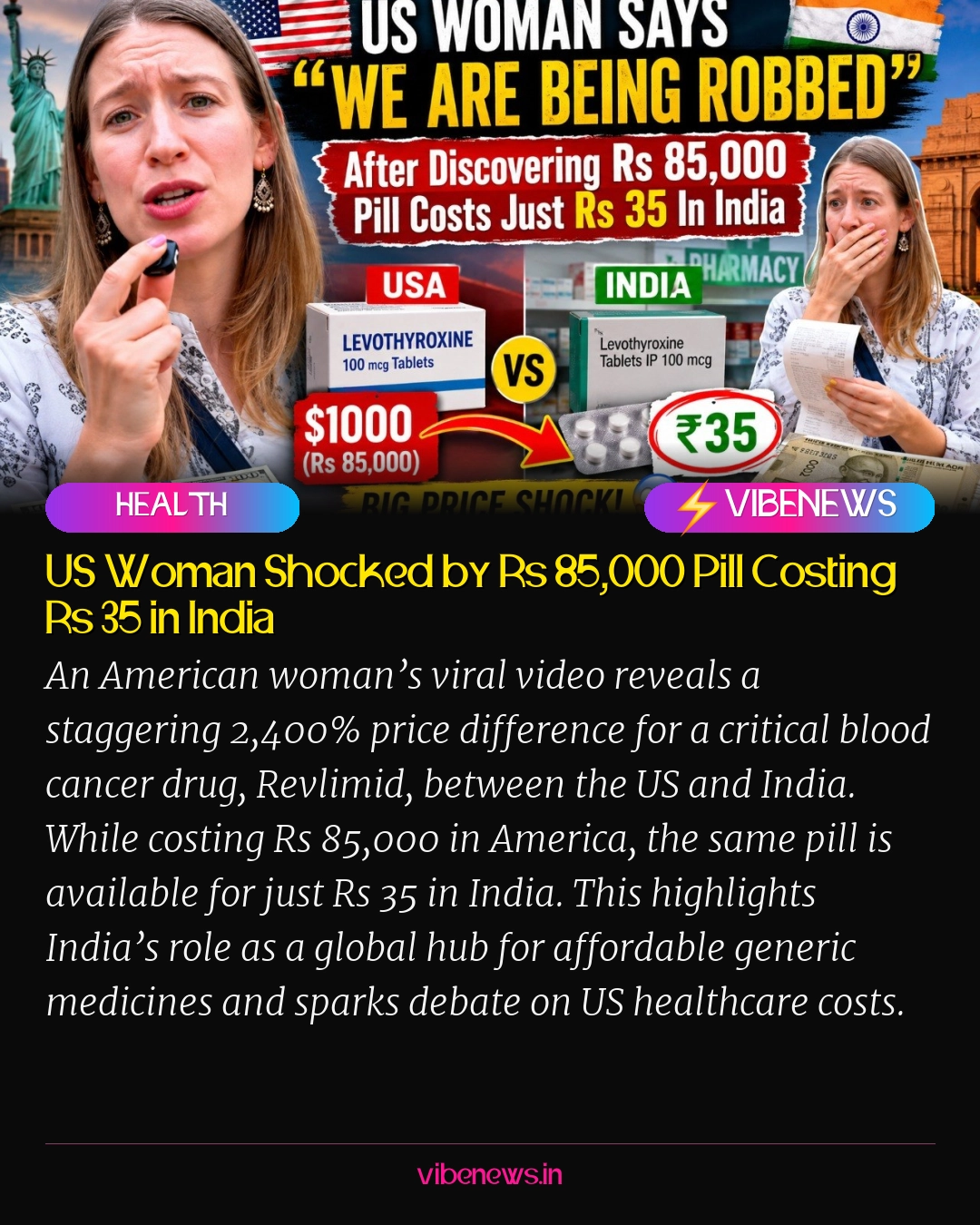
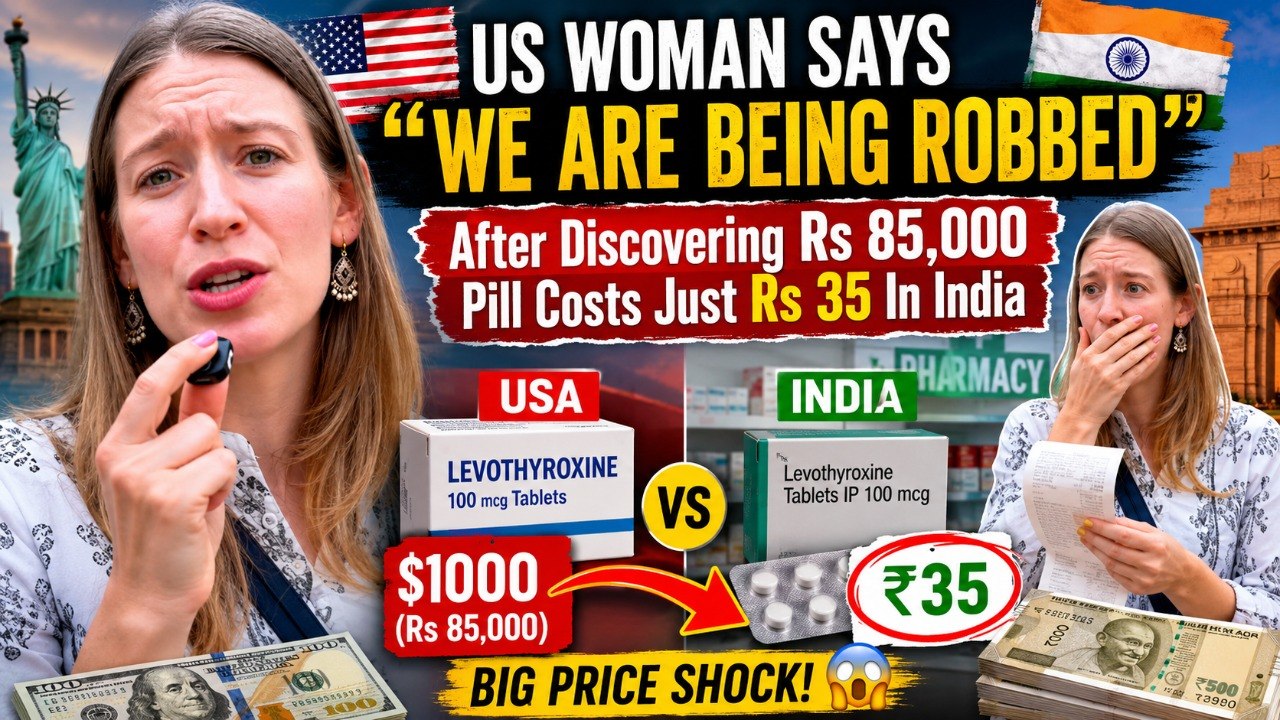
An American woman, Liz, recently highlighted a staggering price disparity for a critical blood cancer medication, Revlimid, revealing that a pill costing Rs 85,000 ($900) in the United States is available for as little as Rs 35 (30 cents) in India. This dramatic difference, a nearly 2,400-fold reduction, underscores India’s pivotal role as a global pharmaceutical hub, particularly for affordable generic drugs.
The viral Instagram video by Liz, known as @spicygori, has ignited a widespread discussion about the stark contrast in healthcare costs and drug pricing regulations between the two nations, drawing significant attention to India’s accessible medical landscape.
The Shocking Price Disparity: Revlimid in Focus
Liz detailed her aunt’s struggle with a type of blood cancer, necessitating the use of Revlimid. Her discovery that a single pill of this essential medicine, priced at $900 (approximately Rs 85,000) in the US, could be purchased for a mere 30 cents (around Rs 35 to Rs 300) in India, led her to exclaim, "In the US, we are being robbed."
This massive price gap for branded Revlimid versus its generic Indian alternative is not an isolated incident. India has long been recognized as the "pharmacy of the world" due to its robust production of high-quality, affordable generic medicines.
Why Are Indian Medicines So Much Cheaper?
The significant cost difference stems from several factors unique to India’s pharmaceutical ecosystem. India’s patent laws, particularly before 2005, allowed for the production of generic versions of patented drugs, making them accessible at lower prices. While patent laws have since been strengthened, the country’s strong manufacturing capabilities and competitive market continue to drive down costs.
Cities like Hyderabad, a major pharmaceutical manufacturing hub in Telangana, play a crucial role in this. The region boasts an extensive network of research and development facilities and manufacturing units, contributing significantly to the production of essential medicines not just for India but for global markets. This infrastructure allows for economies of scale and efficient production, directly impacting drug affordability.
Broader Implications for Global Healthcare
Liz’s video, which garnered over 772,000 views, resonated with many, including another American named Victoria, who previously shared her experience of buying a $1,000 medication for just $25 from India after her insurance refused coverage. These anecdotes highlight a systemic issue within the US healthcare system, where high drug prices often leave patients facing exorbitant out-of-pocket expenses.
The affordability of medicines in India offers a lifeline for countless patients, both domestically and internationally. For residents of Telangana and across India, this means access to life-saving treatments at a fraction of the cost seen in Western nations, a critical factor in public health outcomes and disease management.
The Role of Generic Drugs and Medical Tourism
The availability of cost-effective generic alternatives in India has also fueled medical tourism, with patients from Western countries traveling to India for treatments that would otherwise be financially prohibitive. This trend underscores the global demand for affordable healthcare solutions that India’s pharmaceutical industry is uniquely positioned to provide.
The debate sparked by Liz’s video calls for a closer examination of drug pricing regulations and healthcare policies worldwide. It emphasizes the need for greater transparency and accessibility in medication, ensuring that life-saving drugs are not out of reach for those who need them most, regardless of their geographic location.
TL;DR
- US woman Liz revealed a <strong>Revlimid</strong> pill costing <strong>Rs 85,000 ($900)</strong> in the US is just <strong>Rs 35 (30 cents)</strong> in India.
- The price difference represents a nearly <strong>2,400-fold reduction</strong>, sparking a viral debate on global drug pricing.
- India is a major <strong>pharmaceutical manufacturing hub</strong>, with cities like <strong>Hyderabad</strong> contributing significantly to affordable generic drug production.
- This disparity highlights the stark contrast in <strong>healthcare costs</strong> and <strong>drug pricing regulations</strong> between the two nations.
- The affordability of medicines in India offers a lifeline for patients, including those considering <strong>medical tourism</strong> for critical treatments.