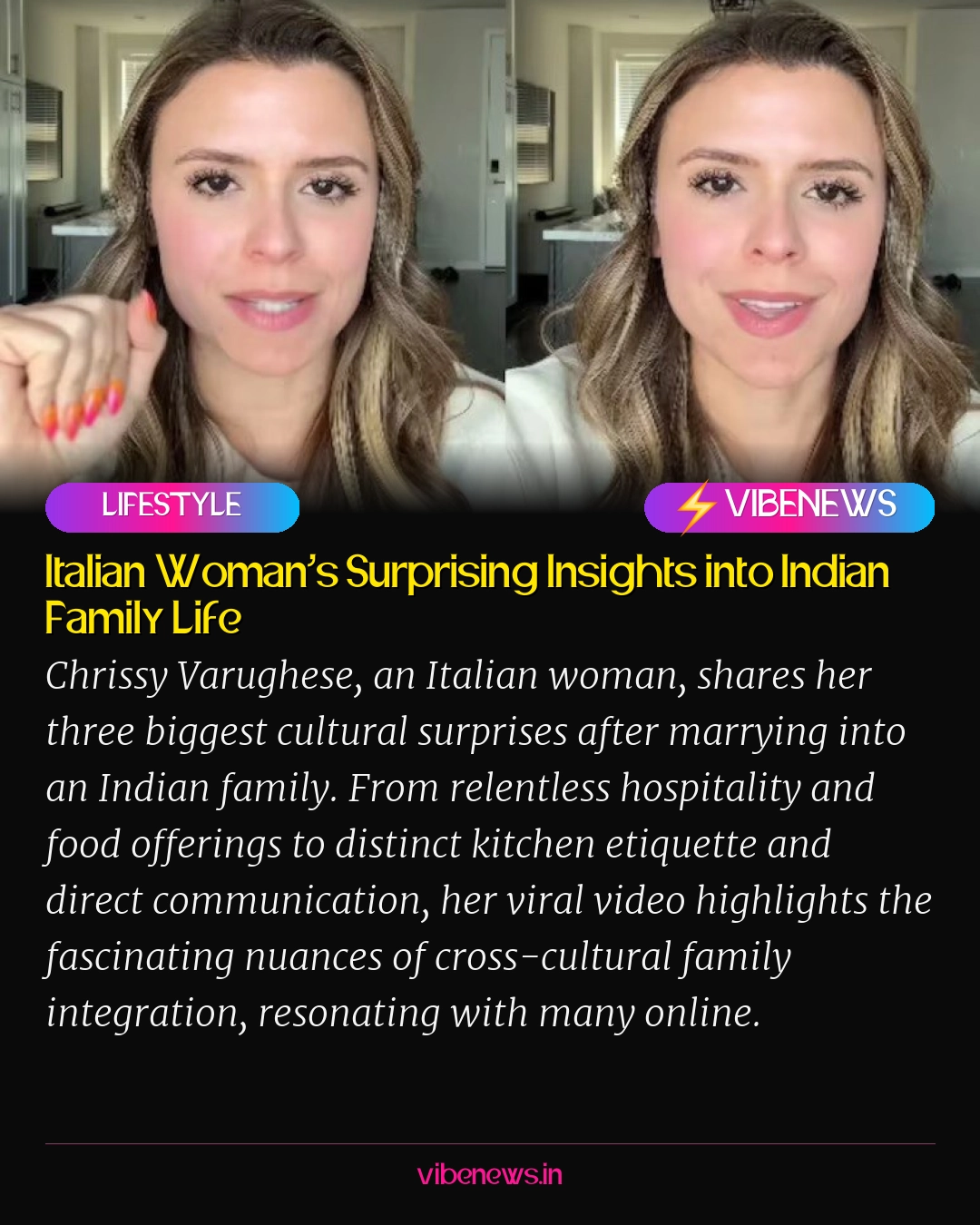

Chrissy Varughese, an Italian woman who married into an Indian family, has captivated social media audiences by sharing her candid observations on the cultural nuances she encountered. While anticipating grand traditions and celebrations, Varughese found herself most surprised by three everyday aspects of her new family life. Her Instagram video, titled "3 surprises marrying into an Indian family," quickly went viral, resonating with countless individuals navigating similar cross-cultural experiences.
Varughese, who grew up in a vibrant Italian household accustomed to large meals and expressive personalities, initially believed she was well-prepared for the transition. However, it was the subtle, routine interactions that truly stood out. Her insights offer a charming and relatable glimpse into the dynamics of Indian family life, particularly for those unfamiliar with its unique customs.
The Unyielding Table
One of Varughese’s primary surprises revolved around the unparalleled level of hospitality, particularly concerning food. She quickly learned that in an Indian household, the concept of being "full" often does not register as a definitive statement. The moment a guest finishes their initial serving, more food is almost invariably added to their plate, reflecting a deep-seated cultural imperative to ensure no one leaves hungry.
This tradition stems from the ancient Indian philosophy of "Atithi Devo Bhava," meaning "Guest is God." This ethos dictates that guests should be treated with utmost respect and generosity, with food being a central expression of this reverence. For many Indian families, offering multiple servings is not merely politeness but a profound gesture of care and affection, ensuring the guest feels cherished and well-nourished. It’s a stark contrast to cultures where a simple "I’m full" is readily accepted, highlighting a fundamental difference in hospitality rituals.
The Sacred Kitchen Boundary
Another significant cultural divergence Varughese noted was the etiquette surrounding help in the kitchen. In her Italian upbringing, communal cooking and shared responsibilities were the norm, especially when guests were present. Everyone would pitch in, creating a bustling, collaborative atmosphere.
However, in her husband’s Indian family, the expectation was entirely different. Guests are strictly considered guests, meant to relax and enjoy themselves, not to assist with meal preparation. This distinction underscores a cultural value placed on honoring guests by relieving them of any duties, allowing them to fully immerse themselves in the experience of being hosted. While initially perplexing for Varughese, she came to understand this as another facet of profound hospitality, where the host takes full responsibility for the comfort of their visitors.
Directness as Affection
Perhaps the most initially jarring, yet ultimately endearing, surprise for Varughese was the straightforward communication style prevalent in Indian families. She discovered that family members often express their thoughts and opinions with remarkable candor, sometimes offering unsolicited advice or observations on personal matters, such as appearance or attire.
Initially, Varughese admitted to mistaking these direct comments for potential conflict or criticism. However, she soon realized that this bluntness is often a sign of intimacy and trust within Indian family structures. It signifies a close bond where pretense is shed, and genuine concern or observation is shared without filter. This directness, while potentially surprising to those from cultures that prioritize indirect communication or politeness, is often perceived within Indian families as a form of honest affection and a testament to the strength of familial ties.
Echoes Across Social Media
Varughese’s video quickly garnered over 4.1 lakh views and hundreds of comments, indicating its widespread resonance. Social media users from diverse backgrounds, including many Indians and those in cross-cultural relationships, enthusiastically agreed with her observations. Comments poured in, sharing similar experiences and affirming the accuracy of her assessment.
One user, an Italian dating an Indian man, humorously described the combination as a "fire combination," while others shared anecdotes about navigating the relentless food offerings or the unique communication style. The overwhelming response highlights a shared understanding of these cultural traits and underscores the universal appeal of stories that bridge cultural divides through personal experience.
A Tapestry of Traditions
The experiences shared by Chrissy Varughese are not isolated incidents but rather reflections of deeply ingrained cultural values across India. The emphasis on generous hospitality, the reverence for guests, and the close-knit, often outspoken, nature of family relationships are hallmarks of Indian society. These traditions, passed down through generations, form the bedrock of social interactions and family dynamics.
Understanding these nuances is crucial for anyone engaging with Indian culture, whether through marriage, friendship, or travel. Varughese’s journey of adaptation and appreciation serves as a testament to the richness and warmth that cultural exchange can bring, fostering a deeper understanding and connection between different ways of life.
Editorial Context
This story transcends a mere viral social media post; it offers valuable insights into the ongoing phenomenon of cultural integration in an increasingly globalized world. As inter-cultural marriages and interactions become more common, personal narratives like Varughese’s play a crucial role in demystifying cultural differences and fostering empathy. Her observations highlight that cultural adaptation is not just about grand traditions but also about navigating the subtle, everyday interactions that shape family life.
Over the long term, such stories contribute to a broader societal understanding of diversity, challenging preconceived notions and promoting a more nuanced appreciation for different ways of living. They underscore the importance of open-mindedness and the willingness to learn from others, ultimately strengthening the fabric of multicultural societies. This narrative serves as a powerful reminder that while cultures may differ, the universal human experiences of love, family, and belonging remain constant, albeit expressed in myriad beautiful forms.
TL;DR
- Chrissy Varughese, an Italian woman, shared three surprising cultural differences after marrying into an Indian family.
- She was surprised by the relentless hospitality and food offerings, where being "full" is often not accepted.
- Helping in the kitchen is generally not welcomed for guests in Indian families, contrasting with Italian communal cooking.
- Indian family members often communicate very directly and candidly, which Varughese initially mistook for conflict.
- Her Instagram video detailing these experiences went viral, garnering over 4.1 lakh views and widespread agreement.
- Varughese expressed deep appreciation for her new family culture, despite the initial surprises.