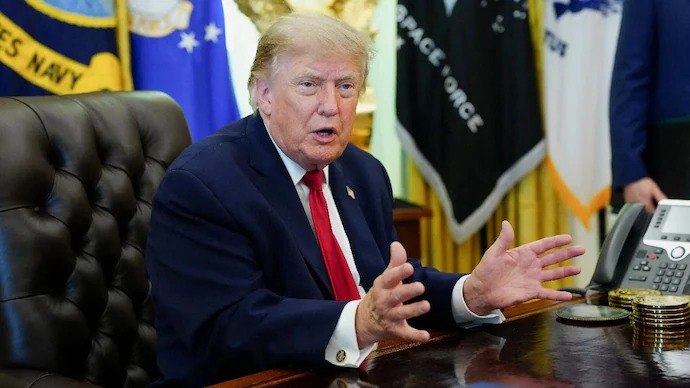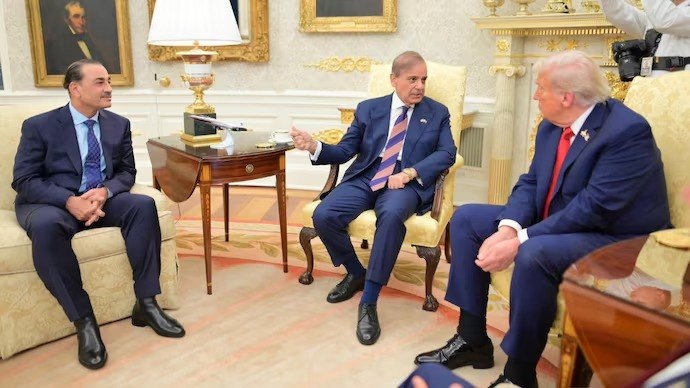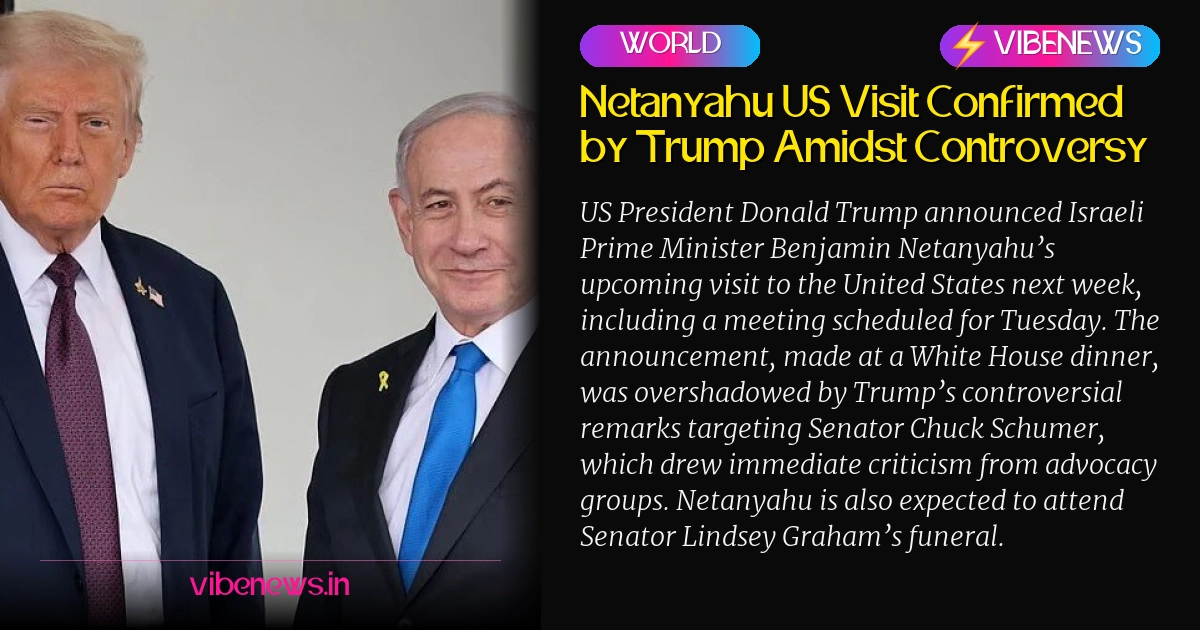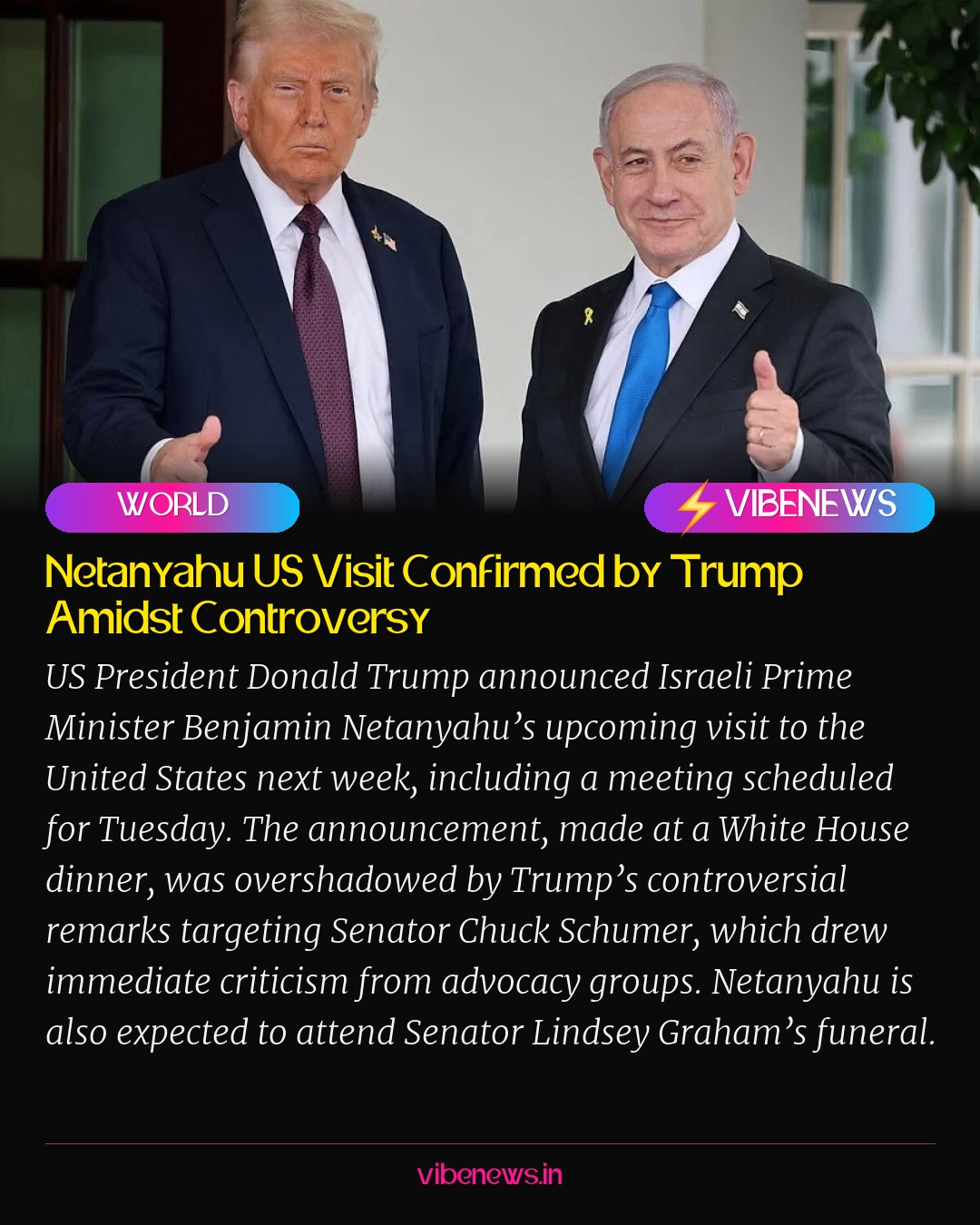
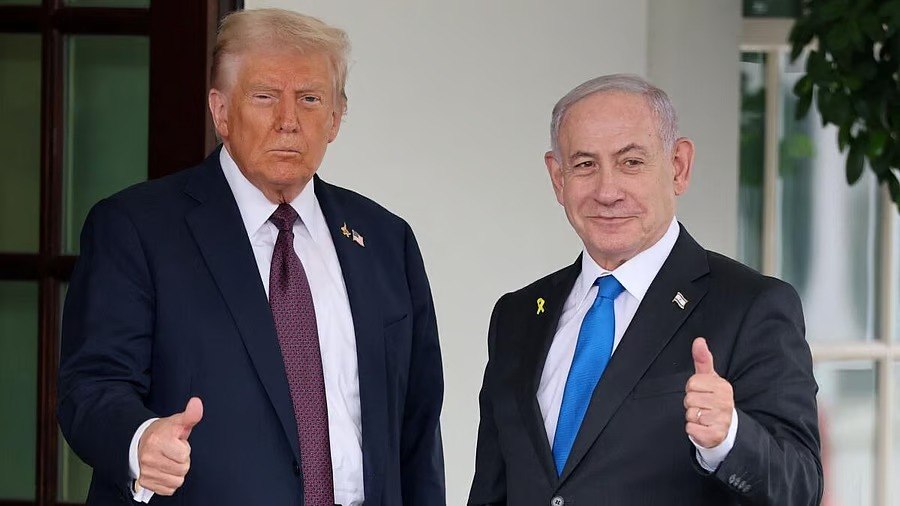
US President Donald Trump confirmed that Israeli Prime Minister Benjamin Netanyahu is scheduled to visit the United States next week. The announcement, made during a speech at the White House Correspondents’ Association Dinner, included details of a planned meeting between the two leaders on Tuesday.
This diplomatic visit, a routine yet significant event in the robust US-Israel relationship, quickly found itself overshadowed by remarks President Trump made during his address. His comments, directed at US Senator Chuck Schumer, sparked immediate controversy and drew widespread condemnation.
The Controversial Remarks at the Dinner
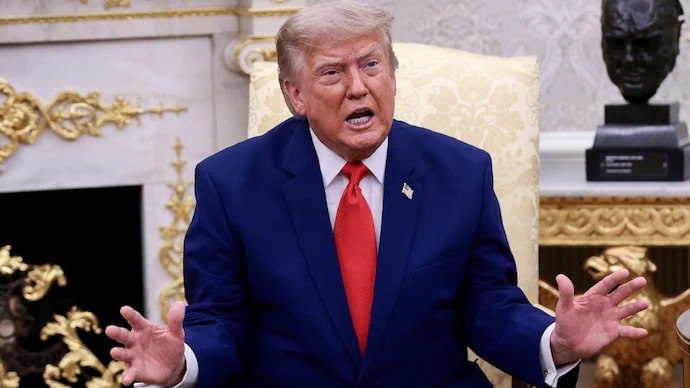
During his speech, President Trump made a series of comments about Senator Chuck Schumer, falsely casting him as Palestinian. He stated, "I am going to send him (Schumer) a beautiful Palestinian outfit tomorrow, so he can greet Bibi Netanyahu when he comes to town next week." Trump further added, "He turned Palestinian," referring to Schumer, who is Jewish.
These remarks were not isolated. President Trump had previously faced criticism from various US Muslim and Jewish advocacy groups for similar comments. These organizations have consistently highlighted that Trump uses the term "Palestinian" disrespectfully, employing it as an insult rather than a descriptor of identity or nationality.
Advocacy Groups Condemn Rhetoric
The immediate backlash to President Trump’s statements underscored a persistent concern among civil rights and interfaith organizations. Groups representing both Muslim and Jewish communities in the US have long argued that such rhetoric not only demeans a specific ethnic or national identity but also fuels division and misunderstanding.
Their criticism centers on the idea that using a national identity as a pejorative weaponizes political discourse. This practice, they contend, can normalize prejudice and contribute to a climate where identity is exploited for political gain, rather than respected as a fundamental aspect of human diversity.
Netanyahu’s Full Itinerary
Beyond the high-stakes meeting with President Trump, Prime Minister Netanyahu’s visit includes another significant engagement. His office confirmed that the Israeli leader is also slated to attend the funeral of deceased US Senator Lindsey Graham.
Senator Graham was a prominent figure in American politics, known for his strong advocacy for Israel and his close ties with its leadership. Netanyahu’s attendance at his funeral underscores the deep personal and political connections that often characterize the US-Israel alliance, extending beyond formal state visits.
The Enduring US-Israel Alliance
The upcoming visit by Prime Minister Netanyahu is a testament to the enduring strategic partnership between the United States and Israel. This alliance, forged over decades, encompasses extensive cooperation in defense, intelligence, and economic sectors, and is a cornerstone of Middle Eastern diplomacy.
Discussions between Trump and Netanyahu are expected to cover a range of critical issues. These likely include regional security challenges, particularly concerning Iran’s nuclear program and its influence in the Middle East, the ongoing Israeli-Palestinian peace process, and bilateral trade agreements. The leaders often use these meetings to reaffirm shared objectives and coordinate strategies on complex international matters.
Domestic Echoes in Washington and Jerusalem
For both leaders, the visit carries significant domestic political weight. In the United States, President Trump’s rhetoric, while controversial, often resonates with a segment of his base, but alienates others, including many within the Jewish community who find such remarks offensive.
For Prime Minister Netanyahu, a high-profile visit to Washington and a meeting with the US President can bolster his image domestically. Such diplomatic engagements often serve to project an image of strong international standing and leadership, which can be beneficial in Israel’s often tumultuous political landscape.
Editorial Context: The Shifting Sands of Diplomacy and Discourse
The confluence of a crucial diplomatic visit and a contentious political statement highlights the evolving nature of international relations and public discourse. Over the long term, President Trump’s repeated use of ethnic or national identity as an insult risks normalizing a divisive form of political rhetoric that can have far-reaching consequences.
Such language can erode diplomatic norms, complicate efforts at inter-community understanding, and potentially impact the perception of US leadership on the global stage. For the US-Israel relationship, while fundamentally strong, the tone set by such remarks can introduce an element of unpredictability, even as the two nations continue to navigate complex geopolitical challenges together.
The incident also underscores the critical role of advocacy groups in holding public figures accountable for their language. Their consistent pushback against discriminatory or demeaning rhetoric is vital in shaping a more inclusive and respectful public sphere, both domestically and in the context of international relations.
TL;DR
- Israeli Prime Minister Benjamin Netanyahu is confirmed to visit the US next week, with a meeting scheduled with President Trump on Tuesday.
- President Trump announced the visit at the White House Correspondents’ Association Dinner, where he made controversial remarks about Senator Chuck Schumer.
- Trump’s comments, falsely labeling Schumer "Palestinian" as an insult, drew immediate criticism from US Muslim and Jewish advocacy groups.
- Netanyahu’s itinerary also includes attending the funeral of deceased US Senator Lindsey Graham, a strong advocate for Israel.
- The visit underscores the enduring US-Israel alliance, with discussions expected on regional security, Iran, and the peace process.
- The controversy highlights ongoing concerns about political rhetoric and its impact on diplomatic norms and inter-community relations.