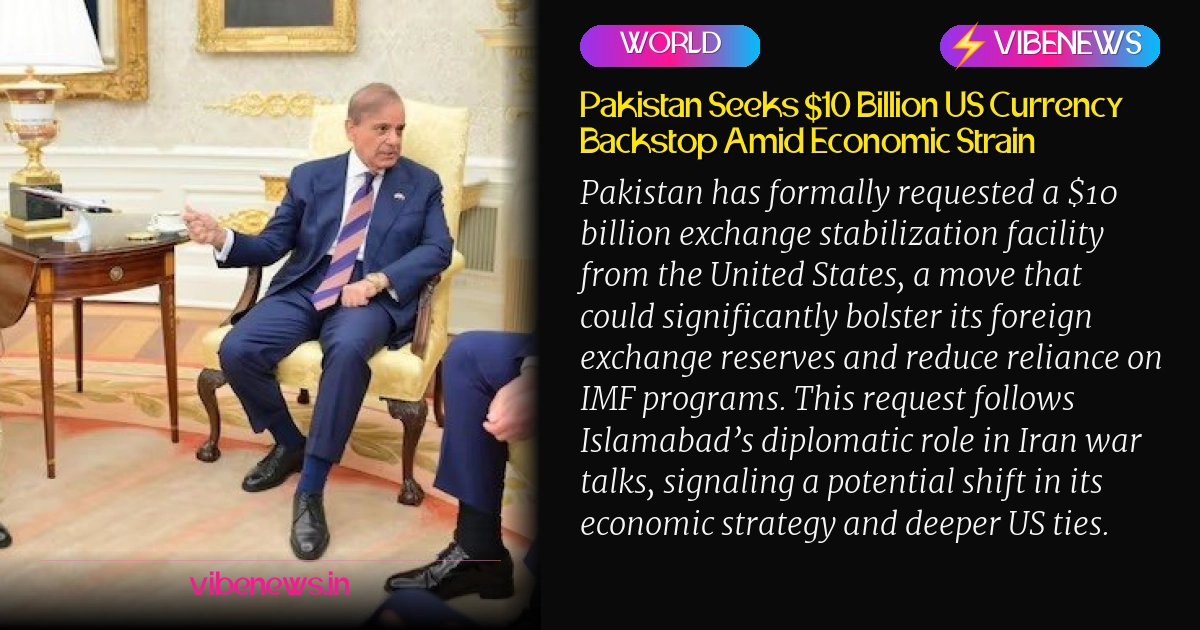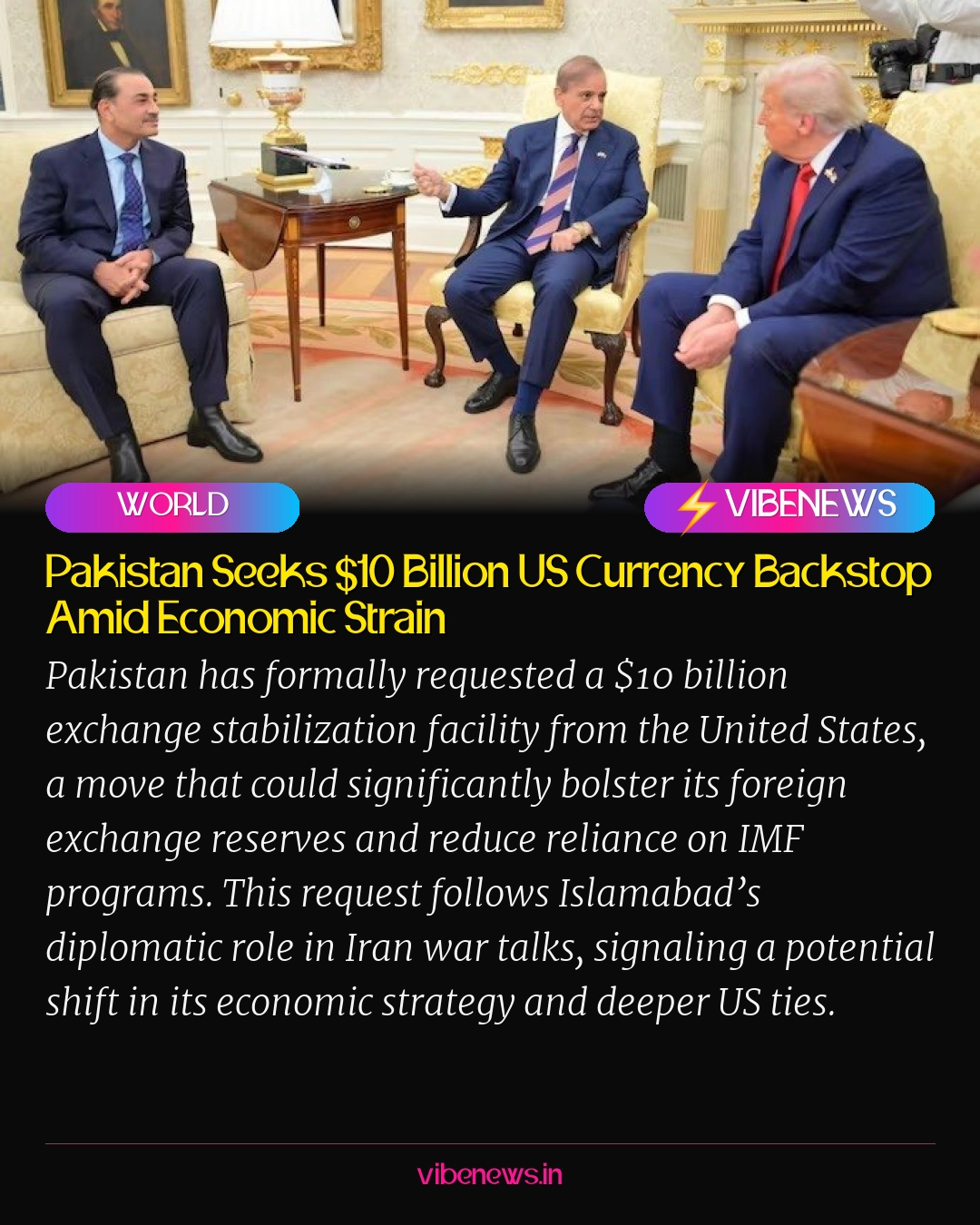
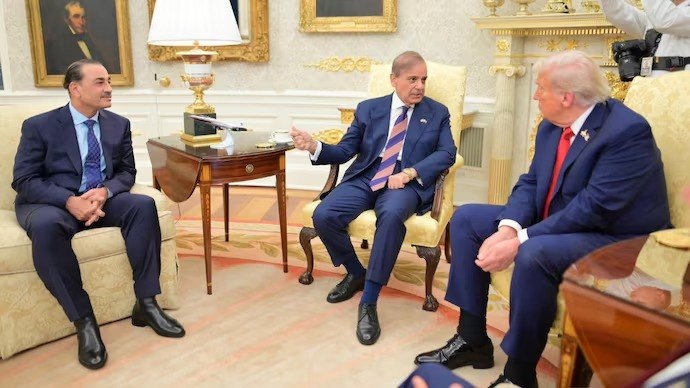
Pakistan has formally requested a substantial $10 billion exchange stabilization facility from the United States, a move that could significantly bolster its dwindling foreign exchange reserves and reduce its heavy reliance on International Monetary Fund (IMF) programs. This unprecedented request follows Islamabad’s recent diplomatic efforts in brokering talks related to the Iran war, signaling a potential shift in its economic strategy and a deepening of its strategic ties with Washington.
If approved, this facility would provide a critical lifeline for the cash-strapped South Asian economy, offering a rare US Treasury backstop that differs significantly from traditional multilateral loans. It represents a strategic pivot for Pakistan, leveraging its enhanced diplomatic profile to secure direct financial support from the US, potentially easing the burden of politically unpopular austerity measures mandated by the IMF.
What is an Exchange Stabilization Facility?
An exchange stabilization facility is a unique financial mechanism typically managed by the U.S. Treasury, often routed through its Exchange Stabilization Fund. Unlike standard loans or permanent swap lines offered by the US Federal Reserve to major central banks, these facilities provide dollars, swaps, or guarantees specifically to support a country’s foreign exchange reserves and stabilize its currency.
Such facilities are uncommon. Notable examples include a 2025 package for Argentina and a 2002 operation for Uruguay, alongside Mexico’s long-standing swap line. For Pakistan, securing this facility would not only inject much-needed liquidity but also serve as a powerful political signal of US confidence, potentially attracting further investment and easing market pressures on the Pakistani rupee.
Why is Pakistan Seeking US Financial Aid Now?
Pakistan’s request to US Treasury Secretary Scott Bessent for a Bilateral Exchange Stabilisation Support Facility, with a maturity of up to five years, comes at a critical juncture for its economy. The nation narrowly avoided a default in 2023 with a $3 billion IMF standby deal and later secured a $7 billion Extended Fund Facility, along with a separate $1.3 billion loan for climate resilience.
Despite these measures, Pakistan’s foreign exchange reserves remain precariously dependent on official financing, rollovers, and deposits from allies like China and Saudi Arabia. This vulnerability was starkly exposed in April when Pakistan repaid approximately $3.5 billion to the United Arab Emirates, representing one-fifth of its reserves, necessitating fresh support from Saudi Arabia.
Diplomatic Leverage from Iran War Mediation
A key factor behind the timing of this request is Pakistan’s elevated diplomatic standing. Its role in brokering talks over the Iran war has significantly raised its international profile. Islamabad appears to be capitalizing on this diplomatic success to seek economic gains from Washington and other international partners, moving beyond its traditional reliance on the IMF and bilateral aid from Gulf states.
How Would This Facility Impact Pakistan’s Economy?
If approved, the $10 billion facility would significantly bolster Pakistan’s foreign exchange reserves, which the central bank projected could reach $20 billion by the end of 2026. This influx of dollars would ease pressure on the Pakistani rupee, providing much-needed stability in currency markets.
Crucially, it would reduce Pakistan’s dependence on multilateral financing and the stringent conditions imposed by the IMF, which have led to politically unpopular tax increases, spending restraints, and limited room for development or welfare spending. While Islamabad would still adhere to tighter fiscal and monetary policies in line with its existing IMF program, the US backstop would offer greater financial flexibility and a buffer against economic shocks.
Long-Term Economic Challenges Remain
Despite the potential relief, Pakistan faces deeper structural constraints. Global ratings agency Fitch noted in April that while adherence to the IMF program has supported funding capacity, rising energy costs and potential supply disruptions could still erode foreign exchange reserves. Foreign investment remains thin, deterred by recurring external crises, policy uncertainty, security risks, and a narrow export base.
Pakistan’s credit rating remains deep in speculative-grade territory, keeping borrowing costs high and market access limited. The country has also sought economic cooperation with the US in other areas, including crypto, real estate, and mining, with projects like a stablecoin agreement with an affiliate of World Liberty Financial and a $1.2 billion financing announcement from the US Export-Import Bank for the Reko Diq mining project.
What Are the Geopolitical Implications?
This request underscores a potential strengthening of economic and strategic ties between Pakistan and the United States. For Washington, providing such a facility could be seen as a reward for Pakistan’s diplomatic efforts and a means to stabilize a key regional ally, particularly in a volatile geopolitical landscape. It could also serve to counterbalance the influence of other major lenders like China.
For Pakistan, securing this facility would represent a significant diplomatic achievement and a step towards greater financial autonomy, reducing its vulnerability to shifts in bilateral support and delays in IMF disbursements. It highlights a proactive approach by Islamabad to leverage its geopolitical position for economic stability and growth.
TL;DR
- Pakistan has requested a <strong>$10 billion exchange stabilization facility</strong> from the <strong>United States</strong> to boost foreign exchange reserves and stabilize the rupee.
- The request follows Pakistan’s diplomatic role in brokering talks related to the <strong>Iran war</strong>, leveraging its enhanced international profile.
- This rare US Treasury backstop would reduce Pakistan’s heavy reliance on <strong>International Monetary Fund (IMF)</strong> programs and other multilateral financing.
- The facility aims to provide a critical lifeline, easing pressure on the economy and offering a political signal of US confidence.
- Despite potential relief, Pakistan still faces significant long-term economic challenges, including low foreign investment and a speculative-grade credit rating.
- The move signifies a potential strengthening of economic and strategic ties between Pakistan and the US, with geopolitical implications for regional stability.