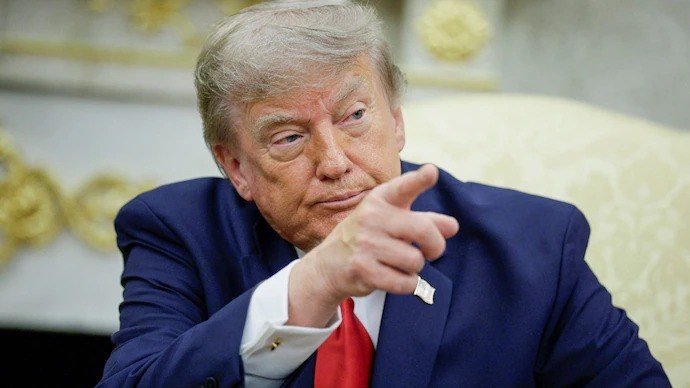
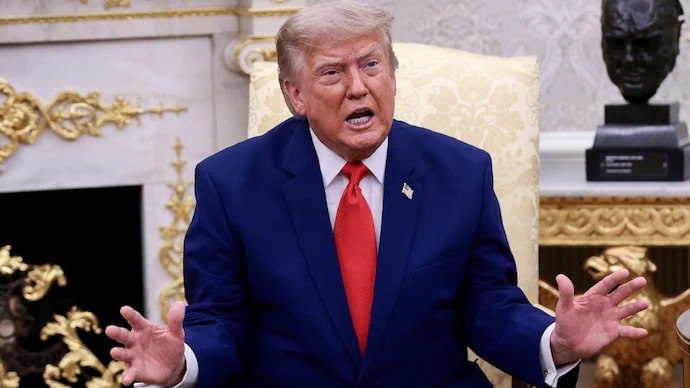
Former US President Donald Trump has issued a stark warning to Iran, stating that the United States will bomb and destroy one Iranian bridge or power plant, including those in the capital city of Tehran, for every ship attacked in the critical Strait of Hormuz. This direct threat marks a significant escalation in rhetoric, coming after the US military completed its 11th consecutive night of operations against Iranian targets.
The unprecedented warning, posted by Trump on Truth Social, explicitly details a tit-for-tat retaliation strategy. It specifies that any attack by the Islamic Republic of Iran on a vessel in the Strait of Hormuz, whether by missile, rocket, drone, or any other weapon, will be met with the destruction of a key piece of Iranian infrastructure.
Trump’s Escalatory Warning to Tehran
Donald Trump’s statement on Truth Social leaves no ambiguity regarding the potential targets. He emphasized that the retaliatory strikes would include infrastructure located "next to, or in, the Capital City of Tehran," signaling a willingness to target areas previously considered off-limits in such a direct manner. This move represents a significant shift from previous warnings, which were often more general about expanding targets.
The former President’s explicit threat underscores the heightened tensions between Washington and Tehran. Such a direct declaration of intent to target civilian-adjacent infrastructure like bridges and power plants could have severe implications for regional stability and international law.
Context of Ongoing US Military Operations
Trump’s warning follows a sustained period of US military engagement against Iran. The US military has conducted 11 consecutive nights of operations, with the latest strikes lasting approximately 75 minutes on Tuesday. These operations are part of a broader effort to degrade Iran’s military capabilities and deter its actions in the region.
According to the US Central Command (CENTCOM), the recent strikes targeted various Iranian military assets. These included military operations centers, maritime capabilities, aircraft hangars, drone storage facilities, and military logistics infrastructure. The stated goal of these operations is to further diminish Iran’s ability to threaten commercial shipping in the Strait of Hormuz, a vital global waterway.
Iran Accused of Threatening Commercial Shipping
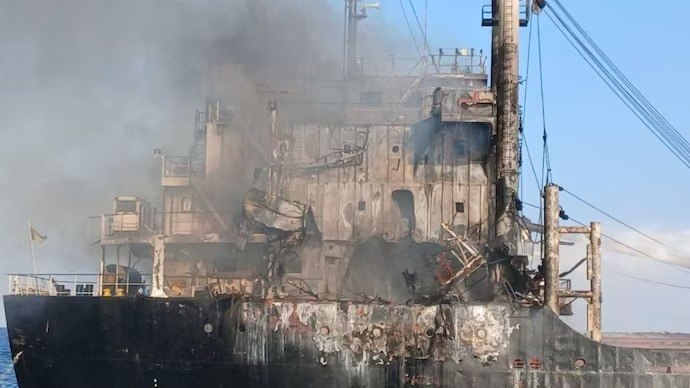
Washington has consistently accused Iran of aggressive actions against commercial vessels. Over the past three months, the US alleges that Iran has attacked more than 30 commercial ships transiting through the Strait of Hormuz. These incidents have raised serious concerns about maritime security and the free flow of international trade, particularly oil shipments.
The Strait of Hormuz is a narrow chokepoint between the Persian Gulf and the Gulf of Oman, through which a significant portion of the world’s oil supply passes. Any disruption in this strait can have immediate and severe impacts on global energy markets and the world economy.
Regional Conflict Spreads, Casualties Mount
The current conflict between the US and Iran is part of a wider regional conflagration that began on February 28. This date marked the initiation of attacks on Iran by the US and Israel. Tehran responded with its own strikes against Israel and Gulf countries that host US military bases, further escalating the cycle of violence.
The fighting has since spread across the Middle East, leading to a severe humanitarian crisis. US and Israeli strikes on Iran, coupled with Israeli attacks in Lebanon, have resulted in thousands of fatalities and displaced millions of people from their homes. An Iranian health ministry official reported that recent US strikes alone killed 50 civilians and wounded approximately 500 others. Meanwhile, US troop deaths in the region have reportedly risen to 18 in recent days, highlighting the human cost of the escalating conflict.
Global Implications of Strait of Hormuz Tensions
The explicit threat to target Iranian infrastructure, particularly power plants and bridges, represents a dangerous escalation that could have far-reaching global consequences. Such actions could trigger a wider conflict in the Middle East, disrupting global shipping lanes, causing oil prices to skyrocket, and destabilizing international relations.
For countries like India, which rely heavily on oil imports through the Strait of Hormuz, any major disruption could have significant economic repercussions. The international community is closely watching these developments, with many urging de-escalation to prevent a full-blown regional war that could draw in other global powers.
TL;DR
- Donald Trump threatened to bomb Iranian bridges and power plants, including in Tehran, for every ship attacked in the Strait of Hormuz.
- The warning follows 11 consecutive nights of US military operations targeting Iranian capabilities across the region.
- The US accuses Iran of attacking over 30 commercial vessels in the critical Strait of Hormuz in recent months, impacting global maritime security.
- The broader US-Iran conflict, initiated in February, has led to thousands of deaths and millions displaced across the Middle East.
- This explicit escalation raises significant concerns for global maritime security, energy supply chains, and regional stability.