Harshit Srivastava, founder of Hiring Inside in Delhi, made headlines by hiring a candidate whose resume was initially rejected by an Applicant Tracking System (ATS), demonstrating the critical need for human oversight in AI-driven recruitment. This incident, shared on LinkedIn, brings to the forefront the growing concerns about the limitations of automated hiring tools and their potential impact on job seekers across India, especially those in dire financial situations, a common reality in the nation’s highly competitive job market.
Srivastava’s decision to revisit the application, prompted by a desperate message from the candidate, underscores how over-reliance on AI could inadvertently sideline talented individuals. The story highlights a crucial debate: how to balance the efficiency of technology with the indispensable human element of empathy and nuanced judgment in the hiring process.
The Human Element in AI Hiring
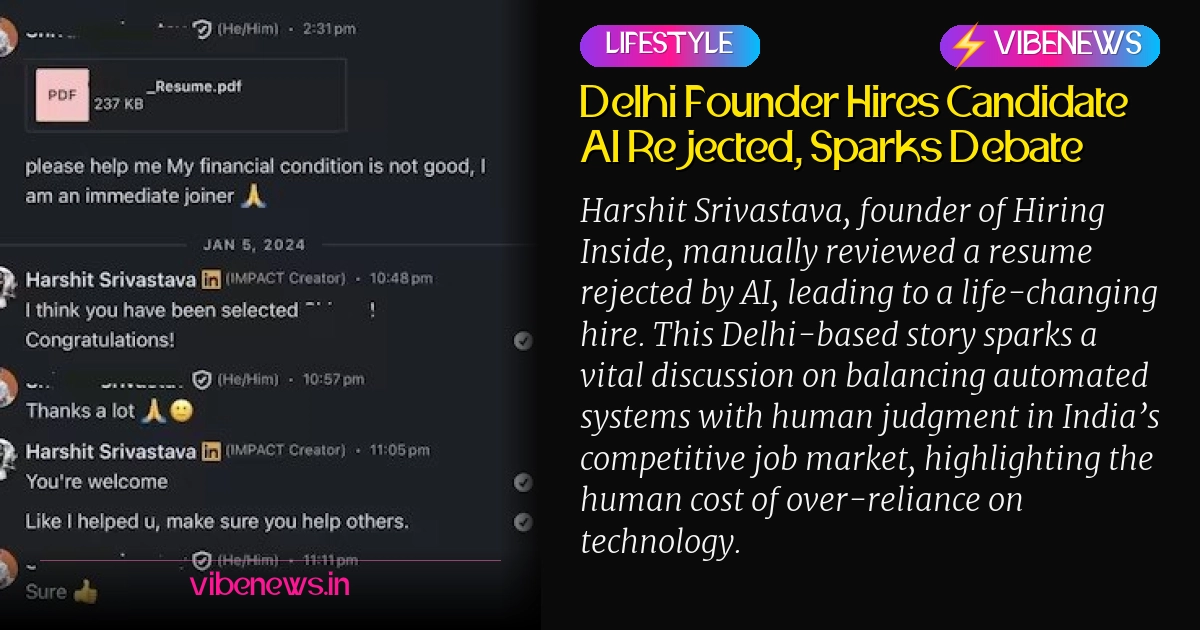
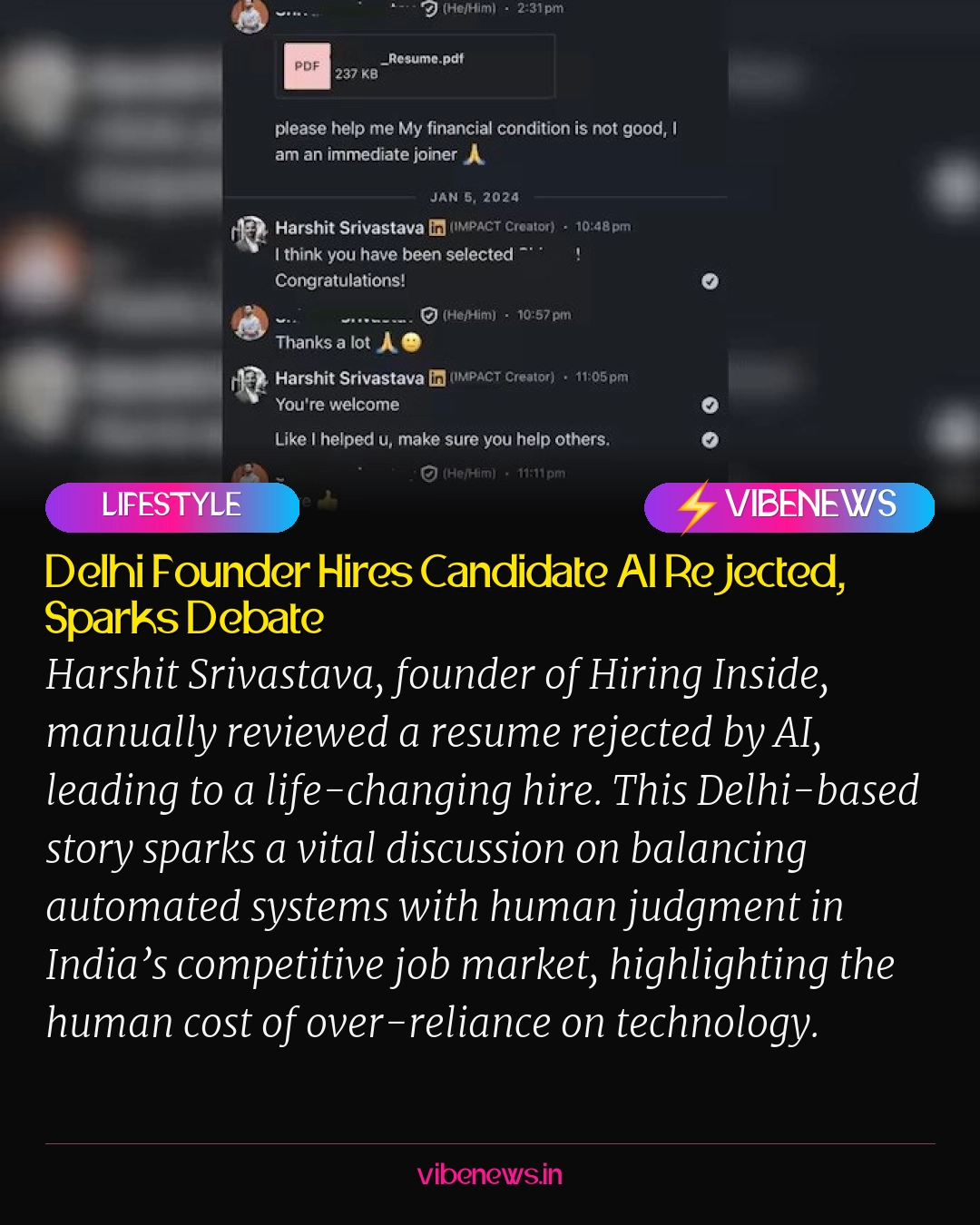
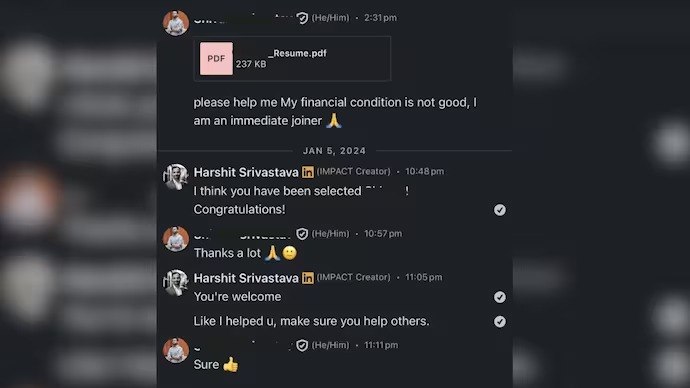
The journey began when a candidate’s resume was automatically filtered out by Hiring Inside’s ATS. Following the rejection, the candidate reached out directly to Srivastava with a poignant plea: “Please help me. My financial condition is not good. I am an immediate joiner.”
While not driven by pity, Srivastava felt compelled to re-evaluate the application, questioning if the automated system had overlooked a deserving individual. This manual review led to an interview, and a few days later, the candidate received a single-word message: “Congratulations.”
The subsequent phone call revealed the profound impact of this opportunity. The candidate shared that the job would help him address unpaid EMIs and cover his parents’ medical expenses, illustrating the life-changing potential of a second chance in a challenging economic landscape.
Limitations of Applicant Tracking Systems (ATS)
Applicant Tracking Systems are designed to streamline the recruitment process by filtering resumes based on keywords, qualifications, and other predefined criteria. While efficient for handling large volumes of applications, this incident highlights their inherent limitations.
Srivastava himself noted that while an ATS can filter resumes, it cannot comprehend the complex struggles and unique circumstances behind each application. These systems often lack the capacity for nuanced interpretation, potentially overlooking candidates whose experiences or qualifications might not perfectly align with keyword searches but who possess immense potential.
Critics argue that over-reliance on ATS can lead to a homogenous candidate pool, inadvertently excluding diverse talent or individuals with non-traditional career paths. The Delhi founder’s experience serves as a stark reminder that technology, while a powerful aid, should not be the sole arbiter of human potential.
Balancing Technology and Empathy in Recruitment
Srivastava’s LinkedIn post ignited a significant discussion among users, many of whom echoed the sentiment that human judgment remains indispensable in recruitment. Commenters questioned whether the issue lay with the candidate’s resume optimization, the ATS configuration, or the broader hiring process itself, if a successful hire was initially filtered out.
The consensus among many professionals was that recruitment extends beyond merely filling vacancies; it involves recognizing and nurturing potential that automated systems might inadvertently miss. Srivastava’s concluding thought, “Technology should help us hire faster. It should never stop us from looking twice,” encapsulates the core message.
He emphasized that every resume carries not just experience, but often the immense responsibility of an entire family, a human dimension that no algorithm can fully grasp.
Implications for India’s Job Market
In a country like India, where job competition is fierce and economic pressures are significant for many households, the debate around AI in hiring holds particular relevance. Many job seekers face immense pressure, and a single rejection, especially from an impersonal automated system, can be disheartening.
Companies in India are increasingly adopting AI and ATS for large-scale recruitment. While this offers efficiency, the story from Hiring Inside serves as a crucial case study for Indian businesses to consider the ethical deployment of AI in HR. Ensuring that technology enhances, rather than hinders, equitable opportunities is paramount.
Future of Recruitment: A Hybrid Approach?
The incident strongly advocates for a hybrid approach to recruitment, one that intelligently blends the efficiency of AI with the irreplaceable intuition and empathy of human recruiters. This could involve using AI for initial screening but ensuring human review for borderline cases or applications that show unique potential.
Developing more sophisticated AI that can understand context and mitigate biases is also a critical area of focus. Ultimately, the goal should be to create a hiring ecosystem where technology empowers recruiters to make better, more humane decisions, rather than replacing the essential human touch.
TL;DR
- Delhi founder Harshit Srivastava manually hired a candidate after an AI system (ATS) initially rejected their resume.
- The candidate’s desperate plea about severe financial hardship prompted Srivastava to conduct a human review.
- The incident highlights the significant limitations of Applicant Tracking Systems (ATS) in understanding human context and potential.
- It sparked a widespread debate on LinkedIn regarding the critical need to balance AI efficiency with human judgment in recruitment.
- Experts and industry professionals advocate for a hybrid approach, combining automated tools with essential human oversight for ethical and effective hiring.