Europe Grapples with Unprecedented Wildfire Crisis
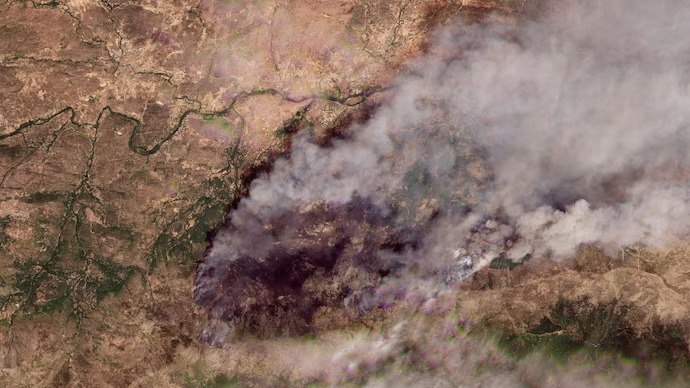
Spain has declared a national emergency for the first time in its history specifically due to wildfires, as immense blazes rage across the country. Simultaneously, France has initiated the evacuation of over 63,000 residents from its Atlantic coast, seeking urgent assistance from the European Union to combat the escalating infernos. This widespread crisis underscores the severe impact of searing heatwaves gripping the continent, forcing tens of thousands to flee their homes.
The French Atlantic Coast Under Siege
French authorities have ordered a complete evacuation of the Cap Ferret peninsula, a popular summer tourism destination, as smoke and flames encroach dangerously close to residential areas. Approximately 63,000 individuals have been moved to safety from this region, with many transported by boat to escape the rapidly advancing fires.
Nearby, the town of Biscarrosse is also facing significant threats from another large fire, compelling its residents to abandon their homes. Yoan Urien, 26, recounted leaving his home late Thursday after police directives, describing how the clouds of smoke grew progressively darker. He managed to find shelter for himself and his pets, expressing the profound shock of the experience.
Interior Minister Laurent Nunez confirmed that a fire originating in Saumos, north of Cap Ferret, is threatening to sever the sole access road to the peninsula. This blaze is currently the largest France has experienced this season, having consumed 10,000 hectares of land and destroyed 80 homes, with about 50 completely incinerated.
Spain’s Unprecedented Declaration
In Spain, more than 10,000 people have been evacuated from towns nestled in the mountains west of Madrid. Firefighters are battling relentlessly to prevent three separate fires in the region and neighboring Avila province from merging into a single, colossal inferno. Interior Minister Fernando Grande-Marlaska highlighted the densely populated nature of this area, which includes many second homes for Madrid residents, as a key factor in the government’s decision.
The declaration of a national emergency, a measure unprecedented for wildfires, allows for enhanced coordination of the response. Grande-Marlaska cited the aggressive nature of the fires and the prevailing hot, windy conditions as additional reasons for the move. Spain has also formally requested assistance from the European Union to bolster its firefighting efforts.
Local residents in Navaluenga, Avila province, were observed wearing masks against the pervasive smoke, watching firefighting helicopters scoop water from the town’s river. Javier Martin, a 36-year resident, expressed his disbelief, stating he had never witnessed anything comparable and had initially hoped the fires would be controlled sooner. Over 270 emergency personnel, 40 ground units, and several Military Emergency Unit (UME) contingents have been deployed across the affected Spanish regions.
A Continent Grapples with Escalating Heat
This marks the second consecutive year Spain has endured a particularly destructive fire season. Environment Minister Sara Aagesen noted on social media that over 29 major fires have erupted this year, devastating an area five times larger than what was affected at the same point in 2025, which itself was a record-breaking year for destruction.
French President Emmanuel Macron has appealed for additional firefighting support from the EU to tackle the Cap Ferret blaze, which has already consumed 8,700 hectares. Several specialist aircraft from other European nations are expected to arrive soon to aid the efforts. The broader implications of the heatwave extend beyond wildfires.
Following a brief respite, average temperatures in France are projected to surge again next week. These persistently high temperatures are warming French rivers, which are crucial for cooling nuclear reactors. This could lead to further restrictions on power output, as reactors reduce operations to comply with environmental protection measures. The Golfech 2 nuclear reactor in southern France, for instance, has been offline since July 7 due due to heat-related constraints, according to operator EDF data. Furthermore, weeks of intense heat are severely impacting France’s maize crop, the EU’s largest grain producer, as reported by farm office FranceAgriMer.
Editorial Context: A New Normal for Europe?
The current wildfire crisis across Spain and France, coupled with the broader heatwave impacts, signals a critical juncture for European climate resilience and disaster preparedness. The unprecedented nature of Spain’s emergency declaration for wildfires underscores a shift in the scale and intensity of these events, moving them from seasonal challenges to national crises demanding immediate, coordinated responses.
This situation highlights the escalating costs, both human and economic, of climate change. Beyond the immediate devastation of homes and natural landscapes, the long-term effects on agriculture, energy infrastructure, and public health are profound. The strain on emergency services, the need for cross-border European cooperation, and the disruption to vital sectors like tourism and food production will likely become more frequent and severe.
Policymakers face the urgent task of not only enhancing firefighting capabilities but also investing in preventative measures, sustainable land management, and climate adaptation strategies. The recurring nature of these extreme weather events suggests that Europe must fundamentally rethink its approach to environmental protection and public safety, moving towards a proactive stance against what increasingly appears to be a new climatic normal.
TL;DR
- Spain has declared its first-ever national emergency specifically for wildfires, coordinating a heightened response.
- France has evacuated over 63,000 people from the Cap Ferret peninsula and Biscarrosse on its Atlantic coast due to rapidly spreading fires.
- Both Spain and France have requested assistance from the European Union to combat the extensive blazes.
- The fires are fueled by searing heatwaves across Europe, with temperatures expected to rise again in France next week.
- The crisis is impacting critical infrastructure, including nuclear power plant operations and agricultural yields like France’s maize crop.
- This marks the second consecutive year of exceptionally destructive fire seasons in Spain, with a significantly larger area burned compared to previous years.