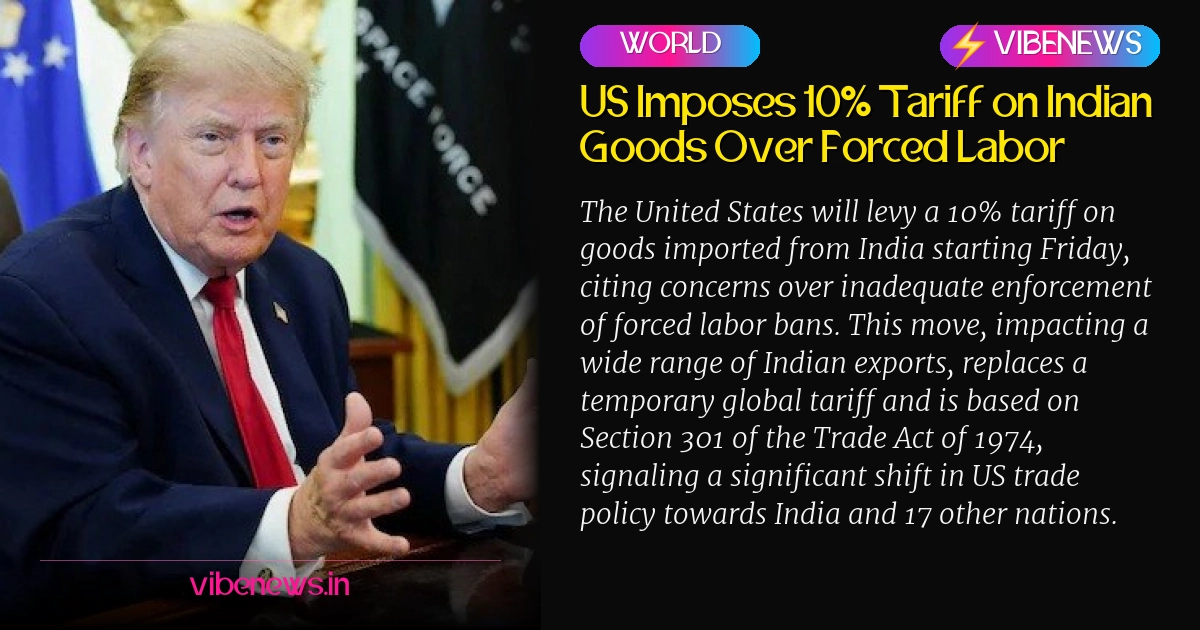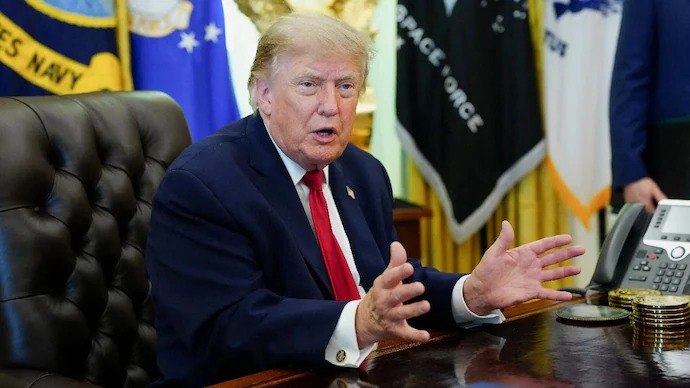
The United States will impose a 10% tariff on a vast array of goods imported from India starting Friday, July 26, 2026, citing concerns over inadequate enforcement of bans on products made with forced labor. This significant trade action targets India among 17 other nations and marks a critical shift in global trade dynamics, directly impacting Indian exporters and the nation’s economic outlook.
This new duty, replacing an expiring temporary global tariff, is particularly noteworthy for India as it broadens the scope of affected products, covering nearly all US imports from the country, excluding specific categories like oil and gas. The move places substantial pressure on Indian industries to demonstrate compliance with international labor standards to maintain access to one of their largest export markets, potentially reshaping supply chains and trade strategies for businesses across the country.
Why is the US Imposing Tariffs on India?
The tariffs are a direct response to what Washington perceives as insufficient enforcement of forced labor restrictions by its trading partners. US Trade Representative Jamieson Greer stated that the United States has rigorously enforced its own forced labor import ban for nearly a century and expects its partners to do the same.
Greer emphasized that the measure aims to address both critical human rights concerns and unfair trade practices. The US administration believes that countries failing to enforce these bans gain an unfair competitive advantage, making the tariffs a tool to level the playing field and promote ethical labor standards globally.
Legal Basis for the New Tariffs
Unlike previous attempts, these fresh duties are imposed under Section 301 of the Trade Act of 1974. This legal provision is considered by the Donald Trump administration to be less vulnerable to judicial challenges compared to the emergency powers used for earlier tariffs, which were struck down by the US Supreme Court in February.
The shift to Section 301 indicates a more robust and potentially long-term strategy by the US to enforce its trade priorities. This legal grounding provides a stronger foundation for the tariffs, making them a more enduring challenge for affected nations, including India.
What Goods are Affected by the New US Tariffs?
The 10% tariff will apply to a broad spectrum of goods, covering an estimated 99.4% of US imports from the targeted countries. For India, this means a wide range of manufactured goods, textiles, agricultural products, and other non-exempted items will face increased costs when entering the US market.
However, several categories have been explicitly exempted from these new duties. These include essential commodities like oil and gas, fertilizers, and certain food products. Additionally, goods already subject to national security tariffs, such as steel, aluminum, copper, and automobiles, will not face these new charges. Products compliant with the US-Mexico-Canada Agreement (USMCA) are also excluded.
Impact on Indian Exporters and Economy
The imposition of a 10% tariff will inevitably increase the cost of Indian goods for US importers, potentially reducing their competitiveness against products from countries not subject to these duties or domestically produced alternatives. This could lead to a decrease in demand for Indian exports in the US, impacting various sectors and potentially affecting employment.
Indian exporters will need to absorb these costs, find ways to increase efficiency, or explore new markets to mitigate the impact. The Indian government will likely face pressure to engage with Washington to address the underlying forced labor concerns and seek a resolution to avoid prolonged economic strain on its export-oriented industries.
Global Reactions to the US Trade Policy Shift
The announcement has drawn significant criticism from several countries, highlighting the contentious nature of the US policy. Norway, for instance, stated that the tariff lacked justification, asserting that it already enforces strict rules against goods produced using forced labor.
Australia and Brazil also described the move as unjustified and indicated their intention to seek its withdrawal. Canada, which recently faced separate US tariffs, confirmed it would continue engaging with Washington on the issue. These reactions underscore the global apprehension and potential for trade disputes arising from the US administration’s aggressive stance on trade enforcement and human rights.
Broader Implications for International Trade
Trade experts suggest that these new measures effectively replace the expiring temporary tariffs while resting on stronger legal footing. This indicates a more permanent shift in US trade policy, where human rights and labor standards are increasingly integrated into trade enforcement mechanisms.
The move could prompt other nations to review and strengthen their own enforcement of forced labor bans to avoid similar tariffs. It also signals a potential for increased scrutiny on global supply chains, pushing companies worldwide to ensure ethical sourcing and production practices, thereby reshaping the landscape of international commerce.
TL;DR
- The United States will impose a 10% tariff on Indian goods starting July 26, 2026, over concerns about forced labor enforcement.
- India is among 18 nations targeted by the new duties, which replace an expiring temporary global tariff.
- The tariffs are based on Section 301 of the Trade Act of 1974, a legal provision considered more robust against challenges.
- US Trade Representative Jamieson Greer stated the move addresses human rights and unfair trade practices.
- A wide range of Indian exports will be affected, though oil, gas, fertilizers, and certain other goods are exempt.
- The policy shift could significantly impact Indian exporters and global supply chains, prompting international criticism.