A man died of electrocution on Karva Chauth, and his wife was then blamed by her own family for breaking her fast. The incident took place on October 29, and the details were shared on social media by a doctor who saw the aftermath firsthand.
Family members brought the man to a hospital after he suffered an electric shock. Doctors found that he had already died. His wife, who had kept a fast on Karva Chauth for her husband’s long life, broke down in grief at the hospital.
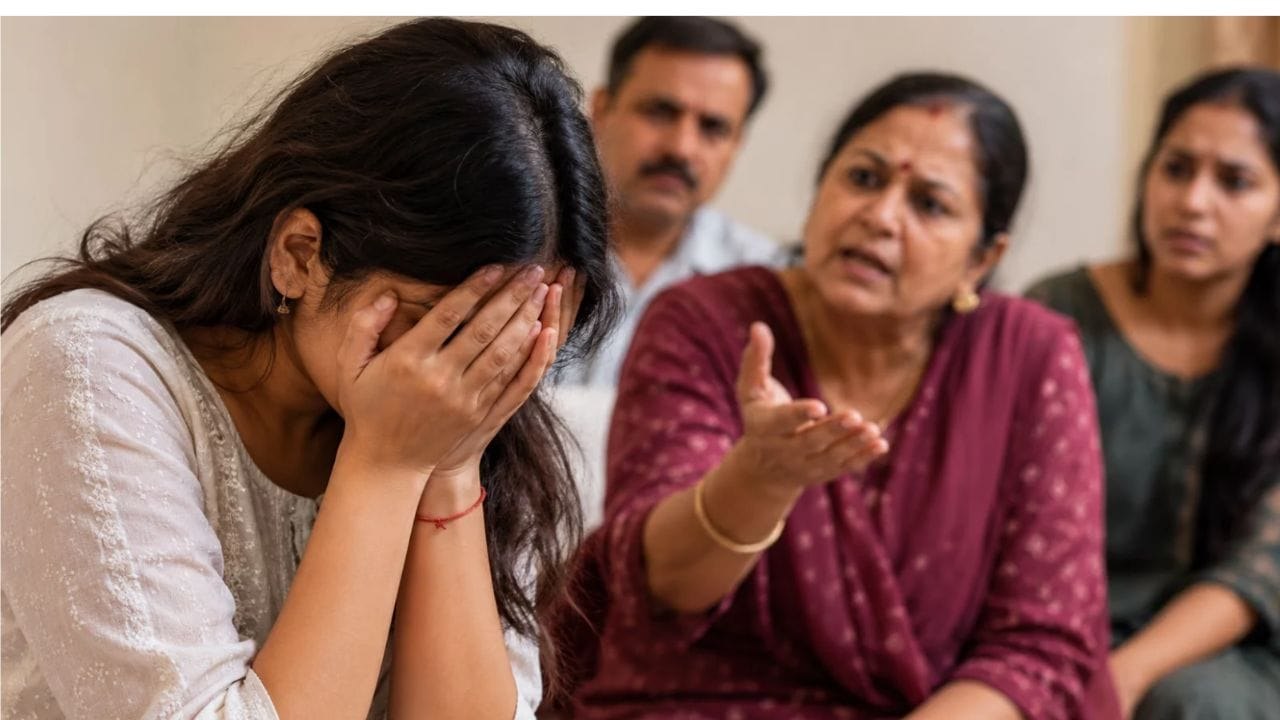
Instead of consoling her, her mother-in-law began questioning her. According to the doctor, the older woman asked whether she had eaten or drunk anything during the fast and suggested that this was the reason her husband had died. The doctor said the woman kept insisting she had not eaten anything, but the accusations did not stop. Other relatives standing nearby joined in with their own questions, and the widow cried harder.
The doctor who spoke up
The woman who revealed the incident is Dr. Akanksha Singh, an MBBS intern working in the emergency department of the hospital. She was on duty when the family arrived with the body, and she witnessed the questioning directly. She later shared the account on her Instagram profile, where it quickly gathered attention.
In her telling, the incident was not only about one family. She said that in some places, when a husband is harmed or dies, the wife is held responsible because of a superstition that she did not observe the fast properly. That belief, she suggested, is what pushed relatives to turn on a woman who was already in mourning.
Outrage online
Her post drew strong reactions from social media users, many of whom focused on one uncomfortable fact: the cause of death was obvious. Electrocution was clearly the reason the man died, yet commenters asked why a fast was being used to explain it at all.
One reaction captured the mood of many who responded to the post. A user asked how it could be just to blame a woman who had already lost her husband, instead of comforting her. Another commenter said that some people in the 21st century still think like those of the 17th or 18th centuries.
How is it fair to blame a woman who has already lost her husband, instead of consoling her?
Others looked beyond this one household. They questioned the social pressure placed on women to follow rituals and beliefs, even when they are financially independent and educated. Some argued that educated women also follow such customs because of family and community expectations, and that the pressure does not disappear with a degree or a paycheck.
What the tradition is meant to mean
Karva Chauth is observed by wives who fast for the safety and long life of their husbands. The ritual is built on devotion and love, which is why the accusation that a fast caused a death struck so many readers as cruel. The custom is meant to express a wife’s care for her husband, not to serve as a measure of blame when something terrible happens.
That gap between intention and outcome is at the center of this story. A tradition that is supposed to protect a marriage was used, in this telling, to pile guilt onto a widow within hours of her loss. The people questioning her were not, according to the doctor’s account, asking about the electric shock or the circumstances around it. They were asking about her food and water.
Why this case stays with readers
Stories like this travel fast because the cruelty is easy to picture. A woman is at her most vulnerable, surrounded by people who should be holding her up, and instead they are cross-examining her about a religious fast. The shock is in the timing and in the family’s choice of blame over facts.
The account also shows how quickly superstition can override common sense. Even with a clear medical and practical cause in front of them, relatives turned to a ritual to explain a death. For many readers, that is the most unsettling part: the belief felt more real to them than the electrical shock that actually killed the man.
The episode has become a point of discussion because it forces a question that goes beyond one family. When a tragedy strikes, who gets blamed, and why? In this case, the answer, according to the doctor and the online response, was a grieving wife who had done nothing more than fast for her husband. The story has left many people asking why that was enough to make her the target.
The family’s conduct, as described in the doctor’s post, has been widely criticized. The widow’s repeated denials did not end the questioning, and the reaction from people who read the account has been largely one of anger on her behalf. The case has now moved from a hospital emergency room to a national conversation about how grief is treated when old beliefs are allowed to take the lead.
TL;DR
- A man died of electrocution on Karva Chauth, October 29, and his wife was blamed for breaking her fast.
- Relatives questioned the widow about whether she had eaten during her fast, even as she repeatedly denied it.
- Dr. Akanksha Singh, an MBBS intern on emergency duty, shared the incident on her Instagram account.
- The doctor said that wives are sometimes blamed for a husband’s harm or death due to superstition.
- Netizens have condemned the family’s response, saying the cause of death was electrocution.