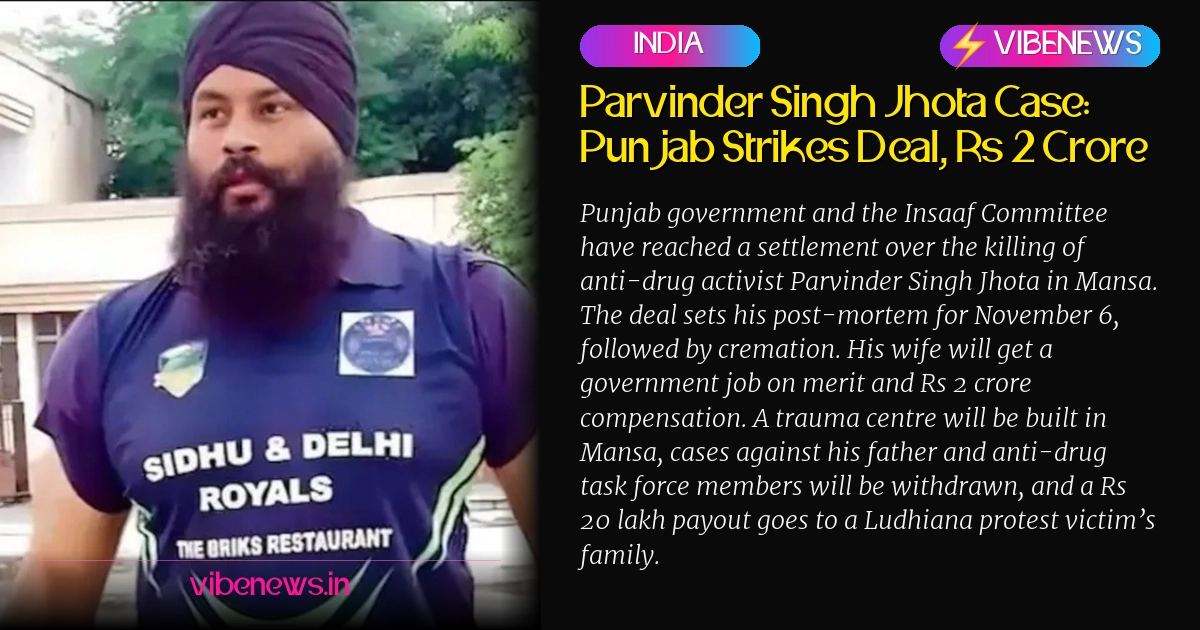
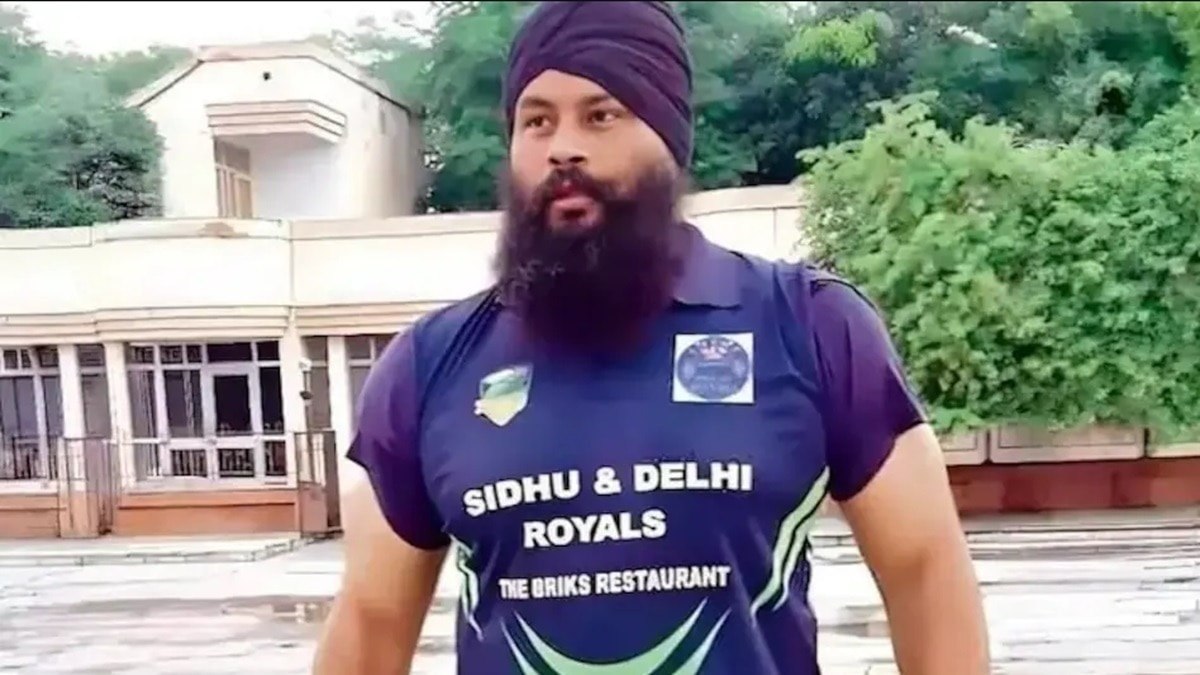
The Punjab government and the Insaaf Committee have reached a settlement over the killing of anti-drug activist Parvinder Singh Jhota, clearing the way for a post-mortem on November 6 and his cremation after that. The agreement was finalised on November 4, and it brings a long and bitter standoff over the case to a tentative close.
Jhota was shot dead on the morning of October 13 in Mansa, a district in Punjab. He had spent a long stretch campaigning against what he described as the illegal sale of narcotic drugs in the state. On the day he was killed, he was questioning the owner of a medical store about the sale of drugs and was broadcasting live on Facebook. The argument escalated, and the store operator allegedly opened fire. Jhota was hit by three bullets and died. Four of his companions were also injured.
The settlement terms, in detail
The agreement is specific, and the terms are what families, activists and officials will now be measured against. Under the deal, Jhota’s wife will receive a government job on the basis of merit, along with Rs 2 crore as compensation. The post-mortem will be conducted on November 6, and his last rites will follow.
The settlement commits the Punjab government to a government job and Rs 2 crore for Jhota’s wife, a trauma centre in Mansa, a memorial in Mansa, and the withdrawal of cases before the post-mortem is carried out.
A trauma centre will be built in the name of Jhota in the village of Khyala in Mansa district. The government has said it will give the project approval soon. The state will also set up a memorial to him in Mansa.
Cases registered against Jhota’s father and against members of the anti-drug task force team will be cancelled. The deal also agrees to cancel cases linked to tearing down flex boards across Punjab. Those are among the most sensitive points in the agreement, because they remove legal exposure for people who were involved in the protests and the anti-drug campaign that followed the killing.
Two other people were named in the settlement. Lakha Sidhana and Mohneet Sheron are to be released before the post-mortem takes place. That condition was listed as one of the important preconditions of the deal, and it means the release has to happen before Jhota’s body goes for examination.
Compensation beyond the Mansa case
The settlement does not stop at Jhota’s family. The family of a young man who died during a protest in Ludhiana will receive Rs 20 lakh in compensation. Separately, the wife of Daljit Singh, who died in the village of Bhamme Kalan, will be given a job at the office of the Deputy Commissioner in Mansa, along with Rs 50 lakh in compensation.
The agreement also includes a decision on protest plans. A programme to lay siege to the Sangrur residence of Chief Minister Bhagwant Mann, scheduled for November 5, has been postponed for now. That move removes an immediate flashpoint, although the committee has not dropped its wider demands.
How the case reached this point
The killing triggered large-scale protests across Punjab within days. The family and the Insaaf Committee demanded strict action against the accused and justice for the victim’s family. The police arrested the main accused, identified as Ashwani Kumar, on October 14 from Salasar in Rajasthan.
Chief Minister Bhagwant Mann announced on October 20 that the case would be investigated by the Central Bureau of Investigation. Even with that announcement, the standoff continued because the protesting groups had several separate demands. Talks have now produced a single agreement that covers the family’s core demands, the cases against activists, and compensation for other families affected by protest-related deaths.
What happens next
The next few days will show whether the settlement holds. The November 6 post-mortem and cremation are the first milestones, and they will be watched closely by the family and by the committee. The job, the compensation payments, the trauma centre approval and the memorial will need to move from agreement to action. The withdrawal of cases against Jhota’s father and the task force members will also be tested in the coming weeks.
The case began with a confrontation over drug sales and ended with a public killing in front of a live audience on Facebook. It has since turned into a political and social test for the Punjab government, which has now put its commitments in writing. Whether those commitments are carried out will decide how the settlement is remembered.
TL;DR
- Punjab government and the Insaaf Committee reached a settlement over the killing of anti-drug activist Parvinder Singh Jhota on November 4.
- Jhota’s post-mortem is set for November 6, followed by his cremation.
- His wife will receive a government job on merit and Rs 2 crore as compensation.
- A trauma centre will be built in his name in Khyala village, Mansa district.
- Cases against his father and anti-drug task force members will be withdrawn.
- A Rs 20 lakh payout goes to the family of a youth who died during a Ludhiana protest.