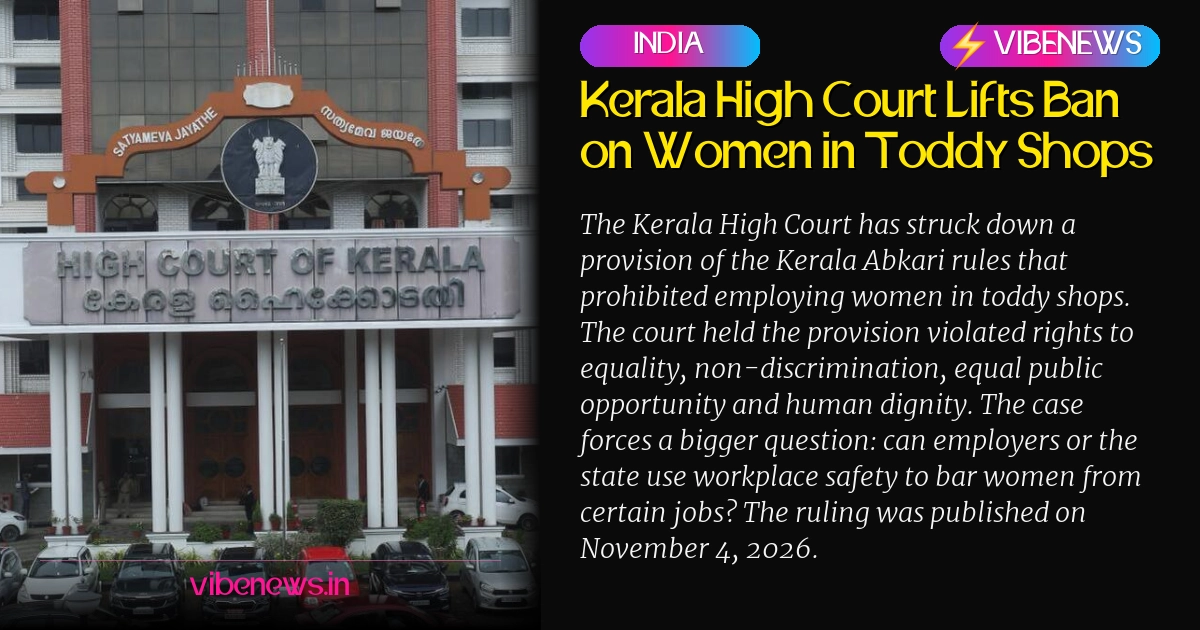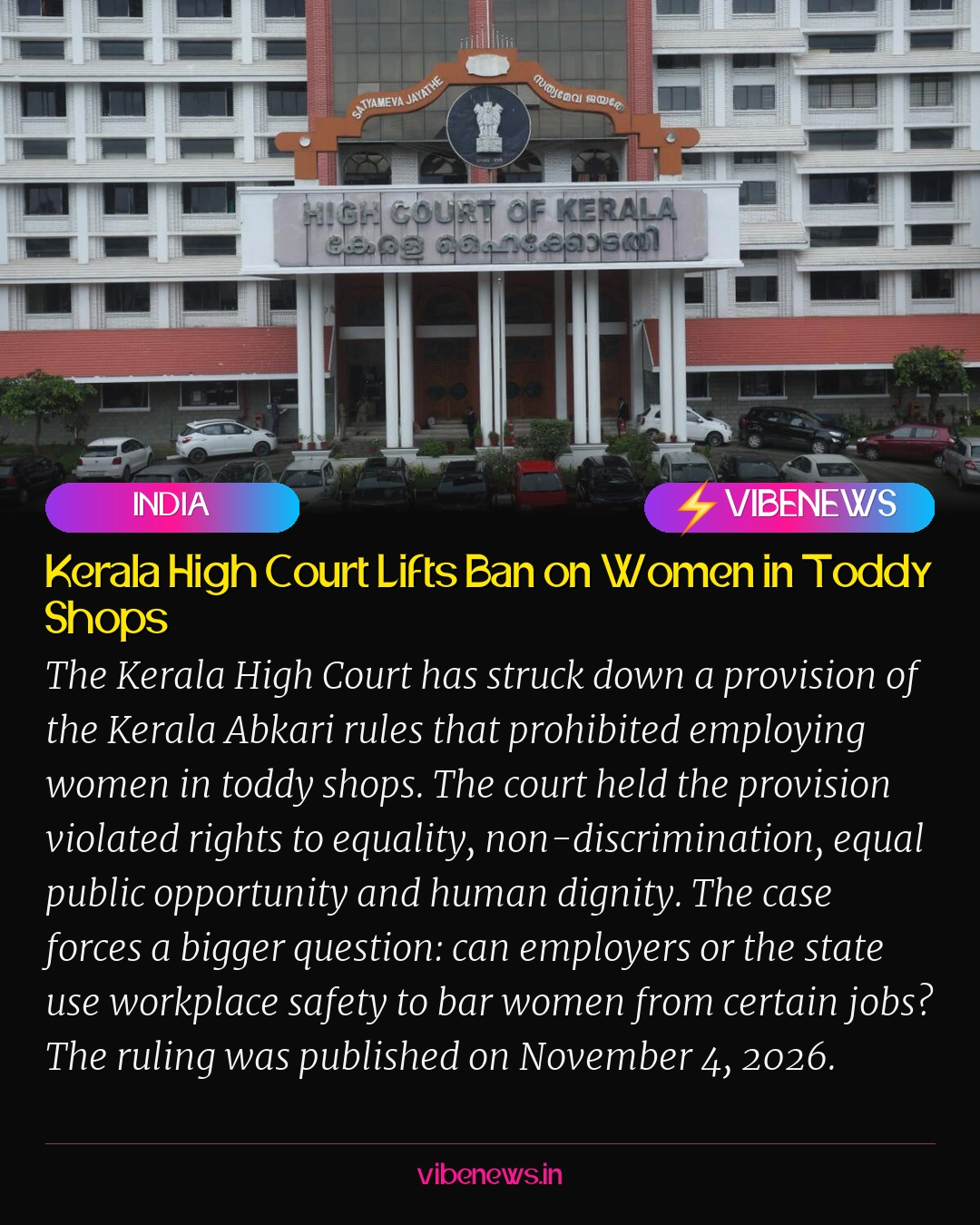
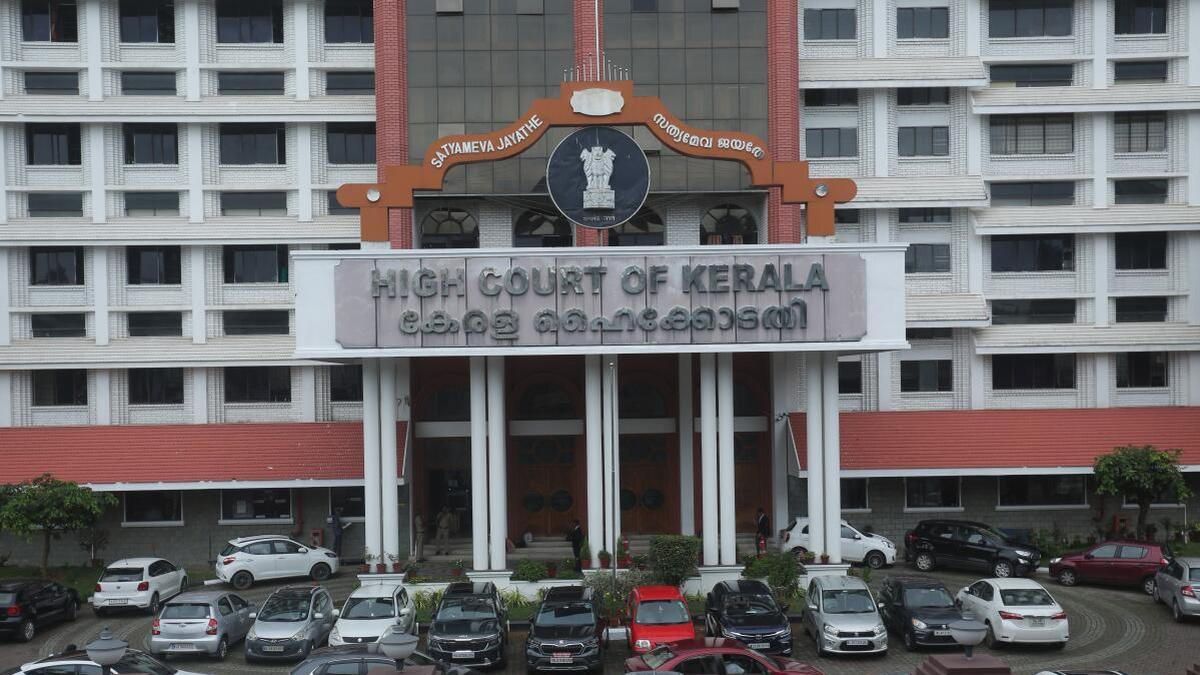
The Kerala High Court has struck down a provision of the Kerala Abkari rules that prohibited employing women in toddy shops, ruling that the restriction violated fundamental rights. The judgment was published on November 4, 2026, and it puts a long-standing workplace restriction under legal scrutiny.
The provision, part of the Kerala Abkari rules, barred employers from hiring women to work in toddy shops. Under the court’s reading, that blanket exclusion could not stand.
What the court found
The bench held that the provision violated several rights at once. Those include the right to equality, the right to non-discrimination, the right to equal public opportunity, and the right to life with human dignity. Each of these is a core protection, and the court concluded that the rule failed to meet them.
The finding matters because it goes beyond a question of whether a single shop can hire a particular worker. It addresses whether a government rule can classify an entire group of workers as unfit for a job before any individual case is examined.
The provision violated the rights to equality, non-discrimination, equal public opportunity, and the right to life with human dignity.
The safety question at the center of the case
The case opens with a question that employers and policymakers across many industries have wrestled with. Can employers legally deny women jobs in certain industries in the name of workplace safety? Does the State have the right to restrict women’s employment to protect them from possible harassment?
Those are not abstract questions. They go to the heart of how protective rules get written. A rule meant to shield workers from harm can, in practice, remove their access to income and opportunity. The Kerala ruling suggests that a protective intention alone does not justify a blanket bar.
For women working in or seeking jobs in traditional industries, the distinction is important. A safety measure that targets specific risks, applied to the actual conditions of a workplace, is a different thing from a rule that simply removes half the workforce from consideration.
Why labor rights are part of the story
Labor rights and gender equality are closely linked, and this case sits on that intersection. When a regulation excludes women from a category of work, it does more than shape hiring decisions. It determines who gets to earn a living in a sector, and who is left out of the wages, skills and independence that come with it.
The court’s reliance on the right to equal public opportunity is especially telling. It frames access to employment as more than a private arrangement between an employer and a worker. It treats it as a public guarantee that the state must respect.
Legal reformers have long argued that protection and exclusion can look similar on paper but feel very different to the people affected. This ruling draws that line clearly, at least for the rule under review.
What comes next
The judgment strikes down the provision, which means the blanket prohibition on employing women in toddy shops no longer stands under the Kerala Abkari rules. The reporting available does not detail how employers or authorities will now implement the change, so the practical effects will become clearer as the ruling is applied.
For readers following progressive social change and legal reform, the case offers a clear template. Courts can examine whether a rule framed as protection actually respects the equality and dignity of the people it covers. In Kerala, the answer this time was no.
The broader question the case raises will not end with this judgment. Other workplaces with similar restrictions will face the same test: whether safety concerns justify keeping women out, or whether those concerns can be addressed without denying anyone the right to work.
TL;DR
- Kerala High Court struck down a provision of the Kerala Abkari rules that barred employing women in toddy shops.
- The court held the provision violated rights to equality, non-discrimination and equal public opportunity.
- The ruling also found it violated the right to life with human dignity.
- The case asks whether workplace safety can legally justify restricting women’s jobs in certain industries.
- The judgment was published on November 4, 2026.