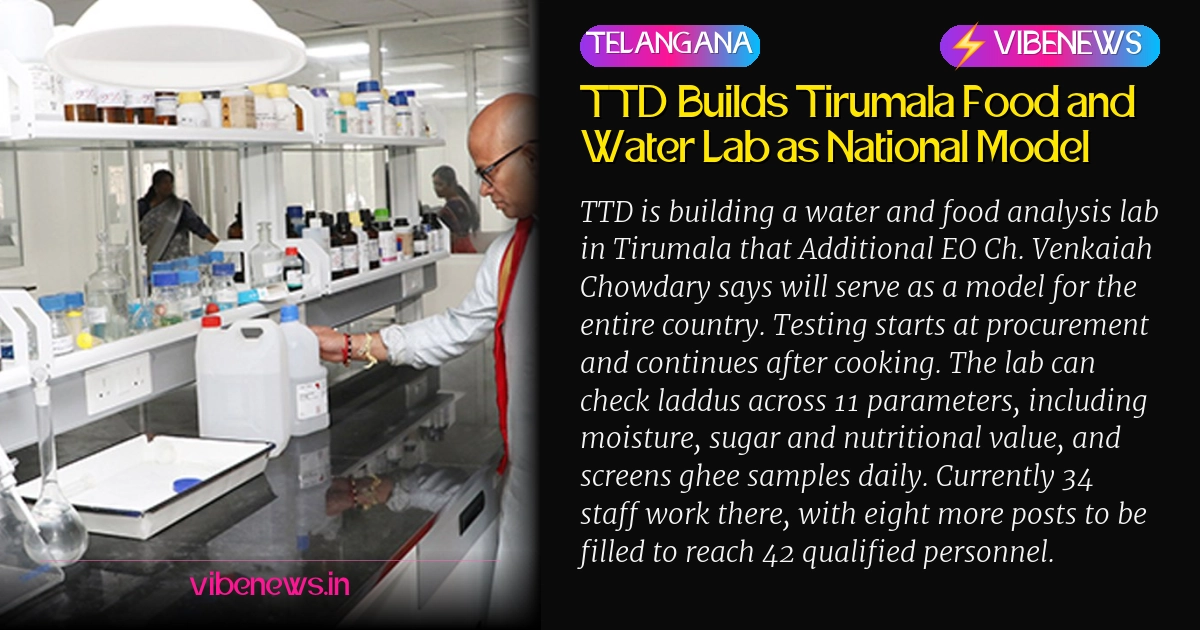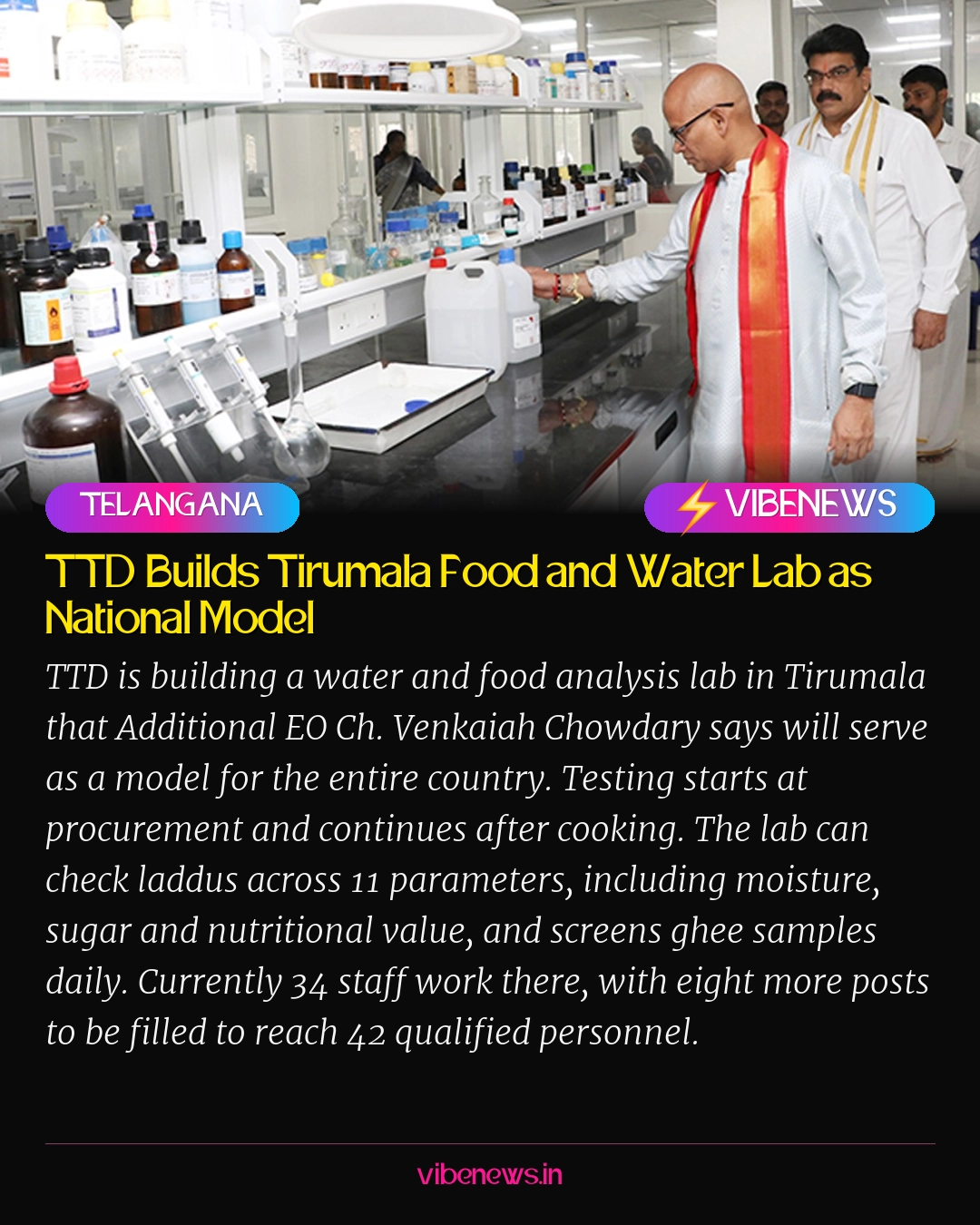
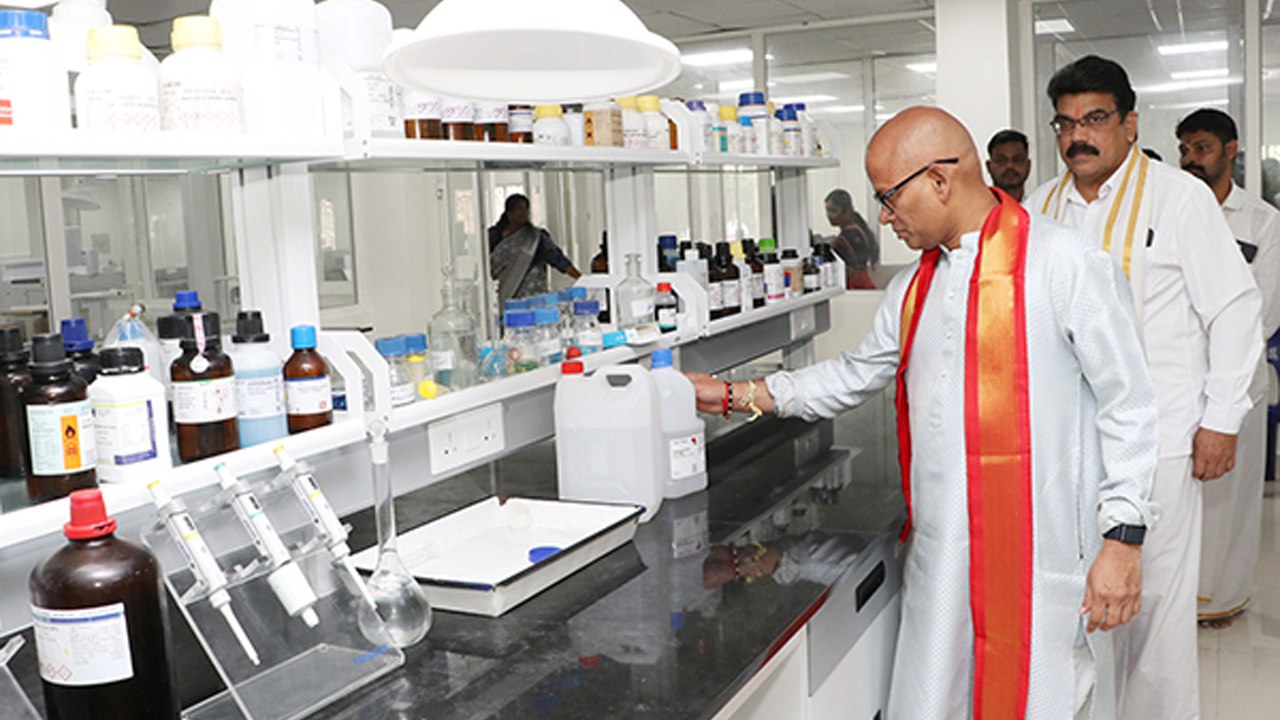
TTD is developing a water and food analysis laboratory in Tirumala that it wants to serve as a model for the entire country, Additional Executive Officer Ch. Venkaiah Chowdary said. He made the announcement on Wednesday after performing Ayudha Puja at the lab and reviewing its operations and performance with officials.
Chowdary told reporters the lab has been built to standards higher than those found at any other temple or religious endowment institution in India. The aim, he said, is to ensure devotees receive the highest quality food and drinking water.
Staffing the lab
Thirty-four people currently work at the facility. The team includes internal staff along with personnel taken on deputation from the state Food Safety Commission.
Chowdary said eight more people are needed to run the lab fully. Once they are appointed, the total will rise to 42 qualified staff, enough to operate every section of the facility.
Testing from procurement to the plate
Quality checks begin before food ever reaches a kitchen. TTD is testing food items from the moment it buys them, the Additional EO said.
Testing does not stop once cooking is done. Officials collect and examine samples of prepared food as well, so the lab checks both raw ingredients and the finished dishes served to pilgrims.
The lab also tests rice. Samba rice, cooked rice and the rice TTD purchases are checked against FSSAI standards, along with dry fruits and other ingredients.
Laddu under the microscope
The laddu, Tirumala’s most recognised offering, gets some of the lab’s most detailed attention. According to Chowdary, the lab has advanced instruments that can test about 11 parameters to assess laddu quality.
The checks go beyond the basics. Staff can measure cashew size in both small and large laddus, along with moisture content, water content, sugar and syrup levels. The lab can also estimate the nutritional value of a laddu.
The lab is being built to a standard not found in any other temple or endowment institution in the country, and the goal is to make it a model for all of India.
That line, translated from Chowdary’s remarks to the media, sets the ambition clearly. TTD is not just upgrading its own kitchens. It wants its testing system to become a reference point for other religious institutions.
Ghee cleared only after testing
Ghee gets a daily routine. Samples are collected every day and tested, and the ghee is cleared for use only after those results come back. For a temple that uses large volumes of ghee in its offerings, that step is the lab’s most immediate safeguard.
Why the Tirumala model matters beyond the hill shrine
Tirumala is in Andhra Pradesh, and the lab’s work is directly tied to the state’s most visited religious site. Any tightening of food and water standards here shapes the experience of pilgrims who travel from across the country and abroad to reach the temple.
Food and water safety is a concern that cuts across faiths and borders. Devotees who travel long distances to a temple want to know that what they eat and drink has been checked. By placing testing at the procurement stage and continuing it through cooking, TTD is building a system designed to catch problems early rather than after food reaches the queue.
The plan is still under way. The lab is operating with 34 staff, and the full team of 42 is yet to be assembled. Whether the facility lives up to its billing as a national model will depend on how quickly that staffing gap is closed and how consistently the tests are run.
For now, the message from TTD is clear. The lab is already in use, its testing covers everything from raw rice to finished laddus, and its leadership wants the rest of the country to take notice.
TL;DR
- TTD is developing a water and food analysis lab in Tirumala to serve as a national model for temple food safety.
- Food quality checks start at procurement and continue after cooking.
- Laddu testing covers about 11 parameters, including moisture, sugar, syrup and nutritional value.
- Ghee samples are tested daily and cleared for use only after results come back.
- 34 staff work at the lab now, with eight more needed to reach a full team of 42.