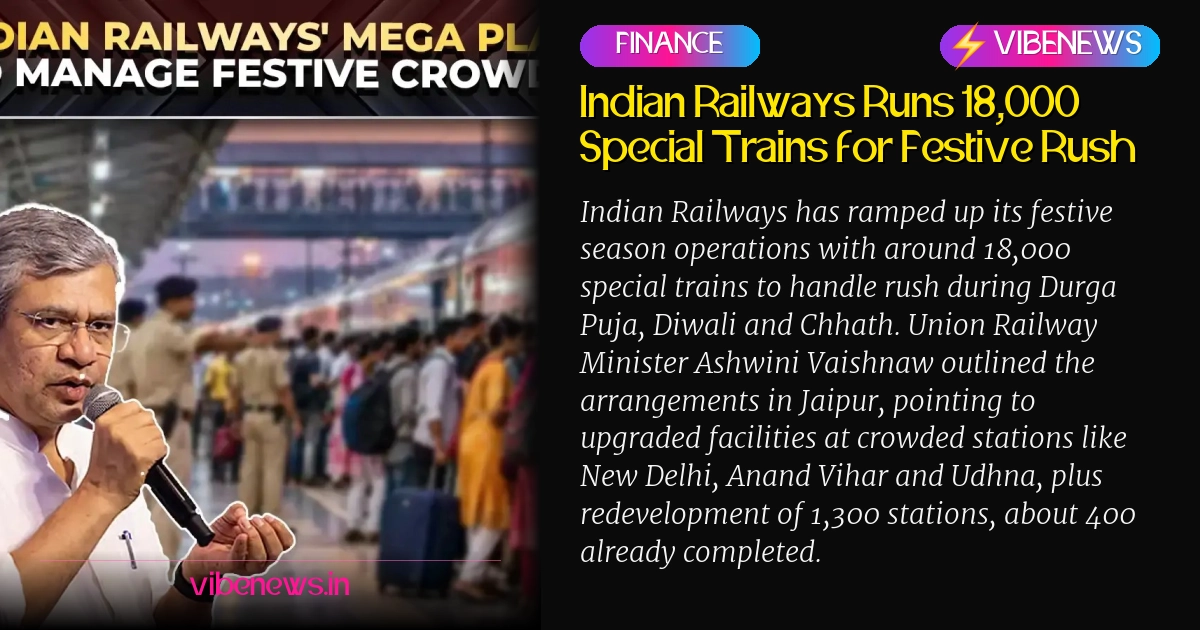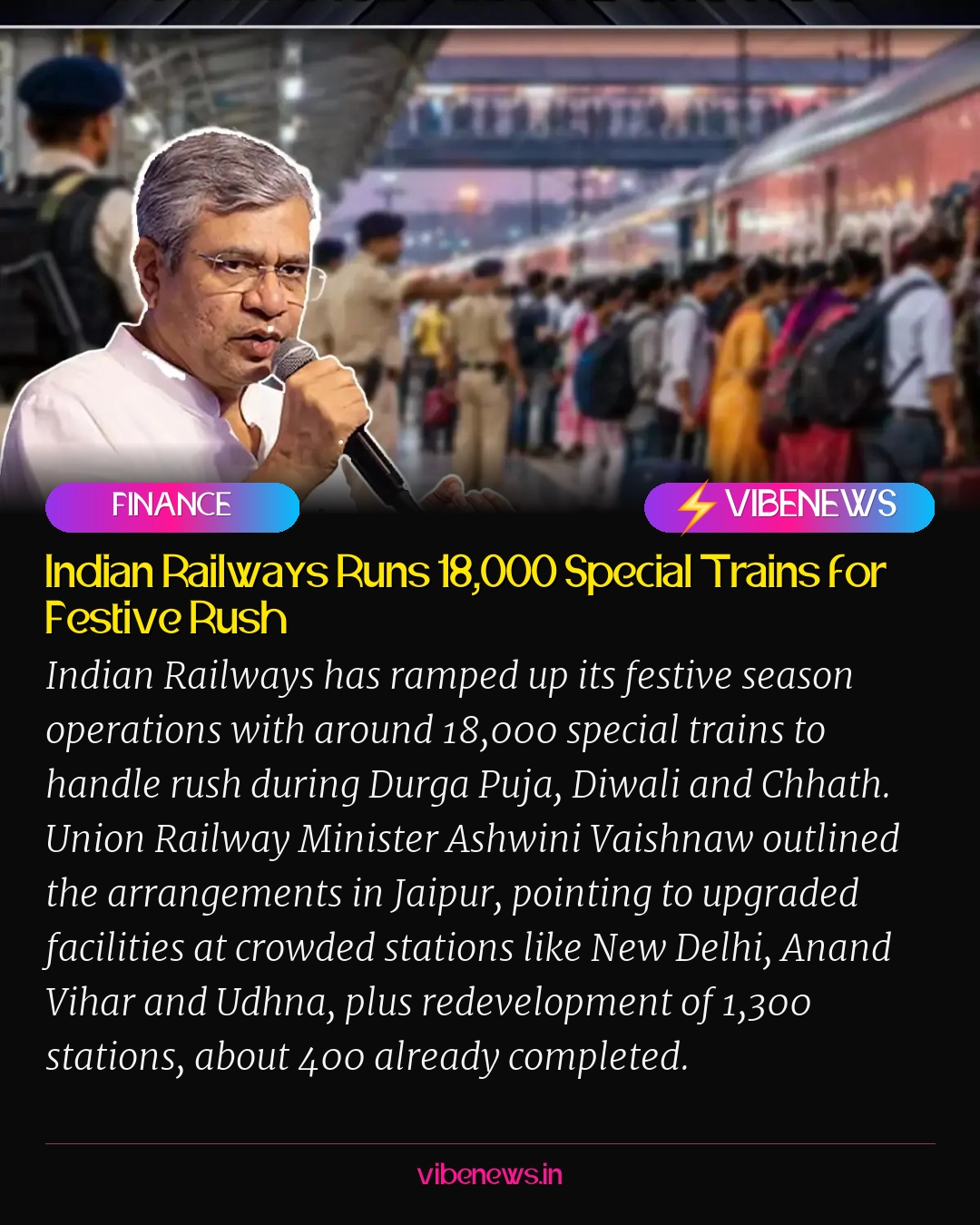
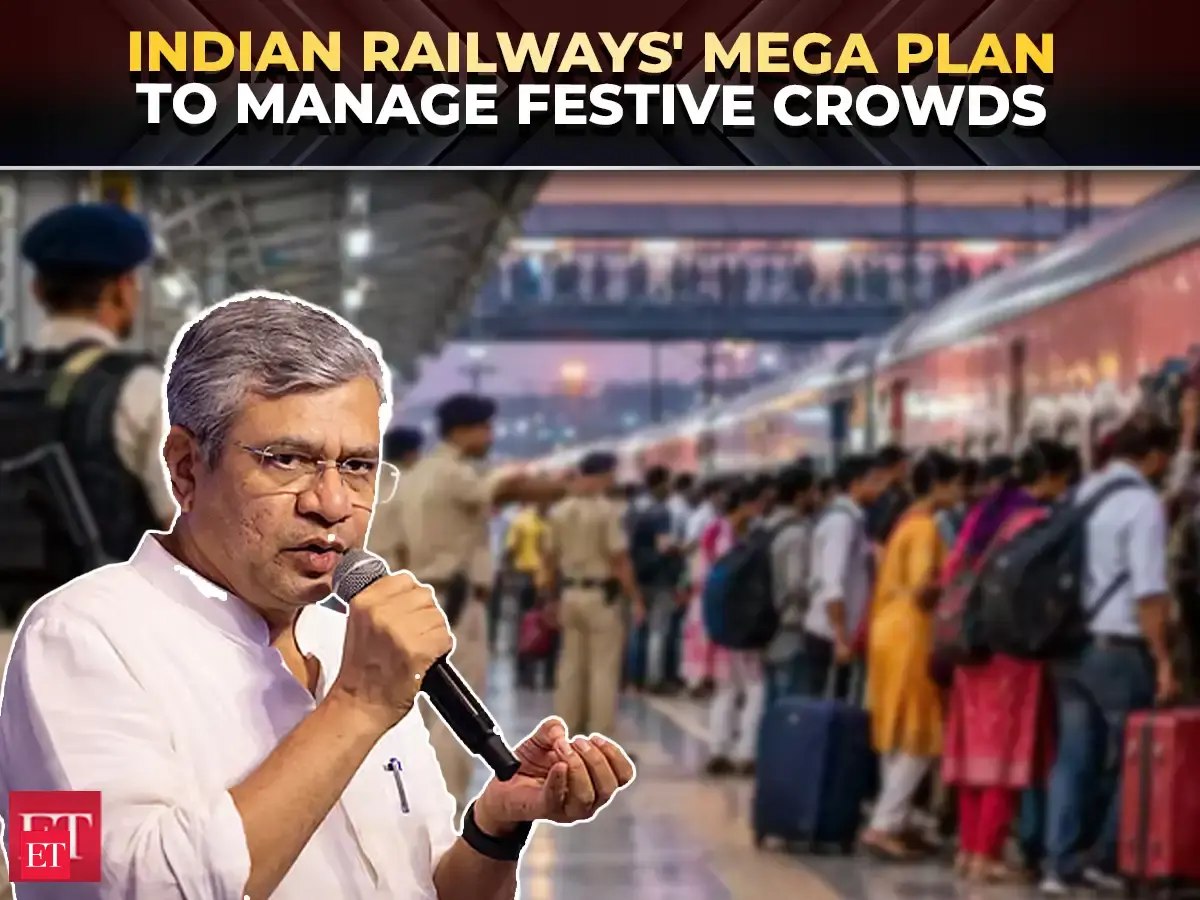
Indian Railways is operating around 18,000 special trains this festive season to handle the rush around Durga Puja, Diwali and Chhath. Union Railway Minister Ashwini Vaishnaw laid out the arrangements in Jaipur, and the numbers alone show how big the operation has become.
Eighteen thousand trains is not a timetable tweak. It is a national logistics exercise that runs on top of the regular network, and it has to be planned station by station, platform by platform, and crowd by crowd. Every additional train needs a path on the tracks, a crew, a rake of coaches and a place to load and unload passengers. Stacking that much extra movement onto an already busy system is where most festive seasons either hold together or fall apart.
Where the pressure builds
The minister pointed to three stations in particular: New Delhi, Anand Vihar and Udhna. These are among the places where festive crowds tend to gather in large numbers, and they are where the upgrades are concentrated. The reporting highlights improved passenger facilities at these congested hubs rather than a generic promise of more capacity across the board.
Holding areas are the most tangible change. The report says the holding areas at New Delhi and Udhna can each accommodate around 20,000 passengers. For anyone who has stood in a packed concourse waiting for a train to be announced, that figure explains the logic. A large holding area lets railway staff separate people into controlled groups, keep walkways clear and move passengers toward platforms in batches instead of letting them surge at the gates.
The same upgrades include additional toilets, improved ventilation and relocated ticket counters. None of these is glamorous, and each one addresses a problem that festive travelers hit repeatedly. Crowded washrooms, stale air in enclosed waiting spaces and ticket queues that block the main flow of people all add to delays and frustration. Moving ticket counters is a particularly practical fix, because it can reduce the bottlenecks that form where buyers and boarding passengers collide.
A bigger rebuild running in the background
The festive arrangements sit inside a much larger program. Vaishnaw also spoke about the ongoing redevelopment of 1,300 railway stations across India, with around 400 already completed. That means roughly three in every ten stations in the program are finished, while the rest are still in progress.
The report says the redevelopment aims to increase passenger capacity. It also says the designs incorporate local architectural styles, which means the rebuilt stations are meant to reflect the places they serve rather than follow one template. Just as important, the work is being done while trains keep running. Rebuilding a station that is still handling live traffic is slower and harder than building on an empty site, and the requirement to avoid disruption shapes every stage of the work.
The redevelopment aims to increase passenger capacity while incorporating local architectural styles and ensuring train operations continue without disruption.
That single sentence captures the core challenge. The railways are trying to add capacity and modernize stations without shutting them down. For commuters, the test is simple: whether the station they use every day gets better without becoming harder to reach during the work.
Why the scale matters beyond the platform
Festive travel is one of the biggest movement events in the country, and the railway network is the backbone that carries much of it. When a station is upgraded, the benefit does not stop at the ticket hall. Better waiting areas and clearer passenger flow can reduce the time people spend in transit, which affects everything from household budgets for travel to the productivity of workers who rely on going home for the festival.
Infrastructure readers will recognize the economic side of this. Stations are nodes in supply chains, labor markets and local commerce. Holding areas, relocated counters and new facilities change how crowds move, and that in turn affects the retail, food and transport businesses that cluster around major stations. The reporting does not put numbers on these effects, so they should be read as the general logic of station upgrades rather than as measured outcomes from this specific program.
There is also a planning message in the way the announcement was framed. Running 18,000 special trains and redeveloping 1,300 stations are two different efforts, but they share a goal. Both are designed to handle more people with fewer breakdowns. The festive season tests that goal every year, and this year’s version is being tested with a larger infrastructure base than before, even though much of the rebuild is still unfinished.
What to watch next
The key questions are practical. Will the holding areas and relocated ticket counters ease the worst congestion at New Delhi, Anand Vihar and Udhna during the peak days? How many of the remaining stations in the redevelopment program will be completed, and how quickly? And can the rebuilding continue without interrupting the trains that millions of people rely on?
For now, the official picture is clear. Indian Railways is betting that a mix of extra trains, bigger holding spaces and gradual station upgrades can carry the festive rush without a collapse. The festival calendar will show whether that bet pays off, one crowded platform at a time.
TL;DR
- Indian Railways is operating around 18,000 special trains this festive season for Durga Puja, Diwali and Chhath.
- Union Railway Minister Ashwini Vaishnaw outlined the arrangements in Jaipur.
- Holding areas at New Delhi and Udhna can each accommodate around 20,000 passengers.
- Upgrades include additional toilets, improved ventilation and relocated ticket counters at congested stations.
- Anand Vihar is among the highly congested stations receiving upgraded passenger facilities.
- Around 400 of the 1,300 stations under redevelopment across India are already completed.