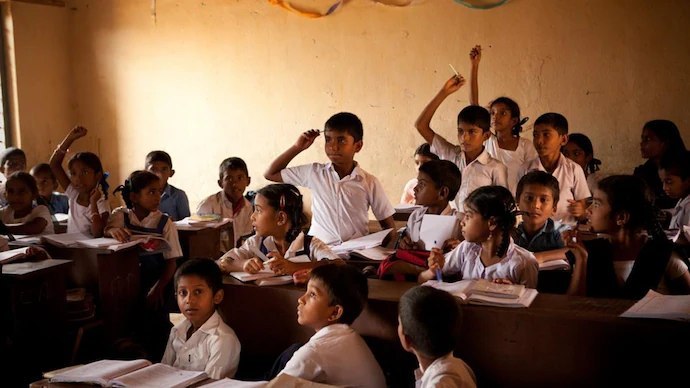
The State Human Rights Commission (SHRC) said on Monday, November 9, 2026, that many educational institutions in Andhra Pradesh are not following the stipulated manual for the safety and security of children. The commission’s finding puts the spotlight on schools that have rules on paper but, according to the SHRC, have not put them into practice.
The manual at the center of the order was developed by the National Commission for Protection of Child Rights (NCPCR). According to the SHRC, it has remained on paper only. The commission also noted that several guidelines on child safety have been issued by the government and the courts, yet the schools and the authorities concerned have not taken the measures those guidelines call for.
An attack that forced the commission’s hand
The SHRC’s remarks come in the wake of an attack on two Class X students at Raptadu Zilla Parishad High School in Anantapur district. A youth wielding an electric chainsaw attacked the students on October 31. The commission took suo motu notice of the incident based on a news report about it.
The commission’s order links the tragedy directly to the school management’s failure to act on government directions. It is a blunt conclusion, and it shifts the focus from the attacker to the institution that was supposed to keep students safe inside its gates.
"It was the duty of the head of the school to implement the safety and security guidelines strictly, but prima facie it appeared that the head of the Raptadu school failed to implement those instructions," the Commission said in its order.
The phrase "prima facie" matters. The commission is describing what appeared to be the case on the basis of its review, not issuing a final finding of guilt against any individual. Still, the order places clear responsibility on the head of the school for enforcing the rules.
What the state had already told schools to do
The SHRC pointed to instructions issued by the Director of School Education, Andhra Pradesh, in August 2025. Those instructions directed the Regional Joint Directors (RJDs) and the District Education Officers (DEOs) to strengthen security in schools. They also asked officials to take steps to prevent unauthorised persons from entering schools without prior permission from the heads of institutions.
The problem, according to the commission, is that many schools have not carried those instructions out. The gap is not in the policy itself. It is in what happens after the policy reaches the classroom and the school gate.
That gap is what makes this a state story as well as a local one. The directions came from the state’s own education department, which means the failure sits inside Andhra Pradesh’s school system. The SHRC has put the responsibility on the schools and the officials overseeing them to close it.
What the commission wants schools to put in place
The order sets out specific steps. According to the SHRC, the school management should install CCTV cameras and appoint watchmen. It should also appoint security guards, both male and female, and set up internal vigilance committees. The commission adds that schools should discuss these safety issues with their staff and with parents.
None of these measures is exotic. Cameras, guards and a formal committee are basic tools. The commission’s point is that they were supposed to be in place already under existing directions, and in many schools they are not.
Why parents should be paying attention
For parents, the order raises an uncomfortable question. A child’s school may have a safety manual, a government circular and a head teacher who is meant to enforce both. None of that guarantees that the gates are checked, the campus is watched or anyone is responsible for who walks in.
The SHRC’s language suggests that parents should not assume the paperwork has been followed. Parents who want to know where their child’s school stands can ask the school directly about its CCTV coverage, its watchmen and security guards, and whether an internal vigilance committee exists and meets. They can also ask whether the school has discussed these arrangements with staff and parents, as the commission has recommended.
The attack at Raptadu involved a weapon that should never have been anywhere near a school campus, and the SHRC’s order suggests that the basic safeguards meant to stop such an intrusion were not working as intended. The commission has now put that failure on the record.
What happens next
The order describes the failures and the steps schools should take. It does not, in the material available, spell out what penalties or disciplinary action may follow for the head of the Raptadu school or for any other official. Those questions remain open, and they will determine whether the commission’s findings lead to changes on campuses across the state or fade into another reminder that the rules exist.
TL;DR
- The State Human Rights Commission says many Andhra Pradesh schools are not following child safety and security guidelines.
- The SHRC’s order follows an October 31 attack on two Class X students at Raptadu Zilla Parishad High School in Anantapur district.
- A youth wielding an electric chainsaw attacked the students, and the commission took suo motu notice.
- The commission says the school head appears to have failed to implement state directions issued in August 2025.
- The state’s directions require heads to prevent unauthorised entry into schools without prior permission.
- The commission recommends CCTV cameras, watchmen, male and female security guards, and internal vigilance committees.