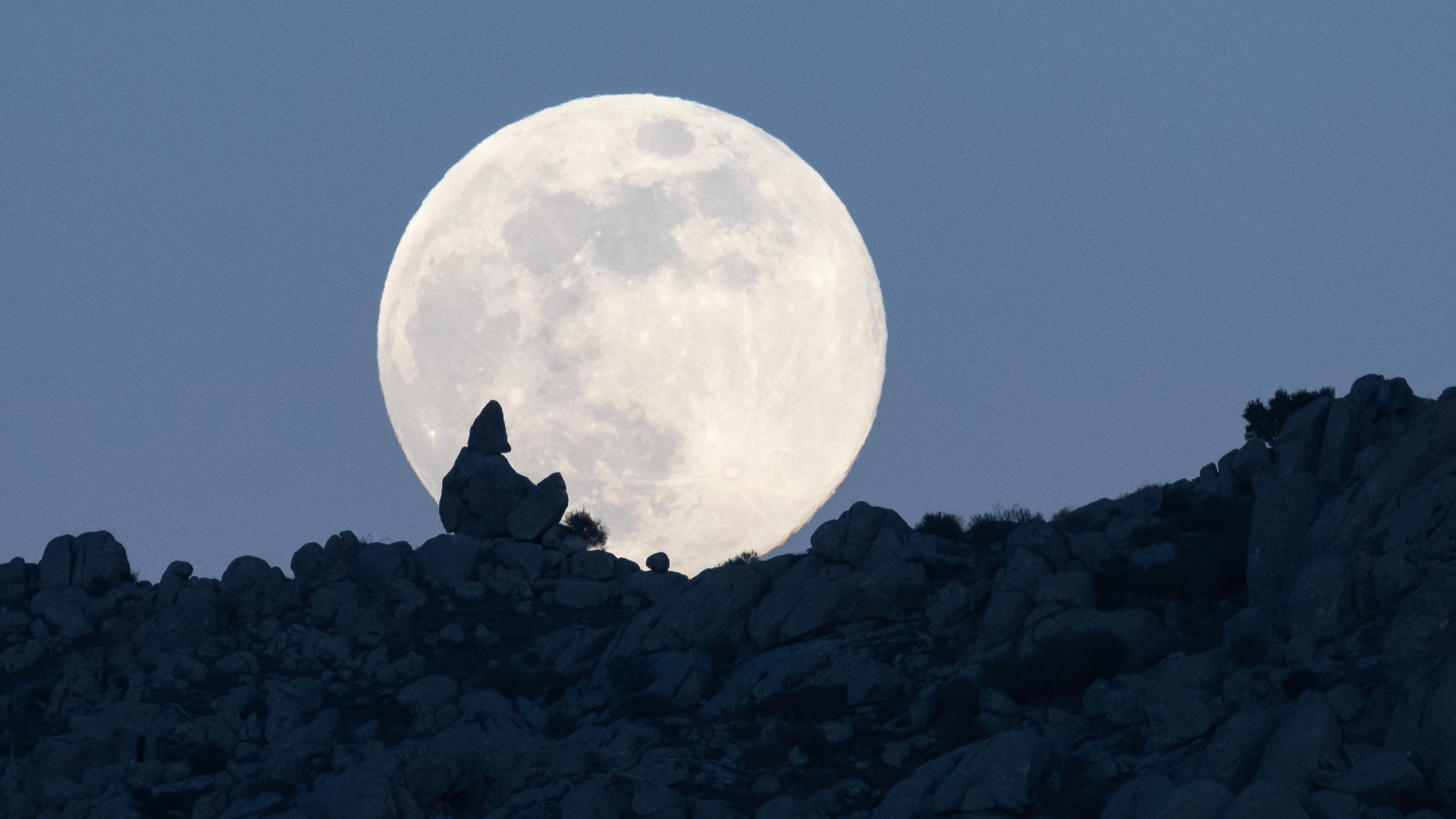
Skywatchers, get ready for a treat: the first supermoon of 2026, dubbed the Wolf Moon, is set to grace the night sky on January 3. This full Moon will look extra impressive because it's near perigee—the closest point in its elliptical orbit to Earth—making it appear up to 14% larger and 30% brighter than usual.
Adding to the magic, this one gets a "triple boost" since Earth is also near its closest approach to the Sun, flooding the Moon with more sunlight. Traditionally called the Wolf Moon in Northern Hemisphere folklore (evoking midwinter howls), it's a cultural nod more than anything literal these days. The Moon hits peak fullness around 10:00 GMT, but it'll look gorgeously round for nights around it.
Across India, catch it rising shortly after sunset—around 5:45 to 6:00 pm IST—opposite the Sun in Gemini. For the best views, head out at moonrise on January 2 or 3, when the low horizon creates that illusion of enormous size. Bonus: brilliant Jupiter will be hanging nearby, making a beautiful pairing.
No fancy gear needed—just your eyes, maybe a camera for those Instagram shots. It's one of the brightest full Moons this year, kicking off 2026 with some natural wonder amid the winter chill.
TL;DR
- First supermoon of 2026, Wolf Moon, peaks on January 3.
- Appears larger (up to 14%) and brighter (up to 30%) due to perigee.
- Distance about 362,000 km from Earth.
- Triple boost from Earth's perihelion increasing sunlight reflection.
- Visible across India from ~5:45-6:00 pm IST after sunset.
- Best at moonrise on Jan 2-3 for horizon illusion.
- Jupiter nearby for striking sky pairing.
- Traditional Wolf Moon name from midwinter folklore.
- Part of three supermoons expected in 2026.
- Naked eye or telescope viewing recommended.