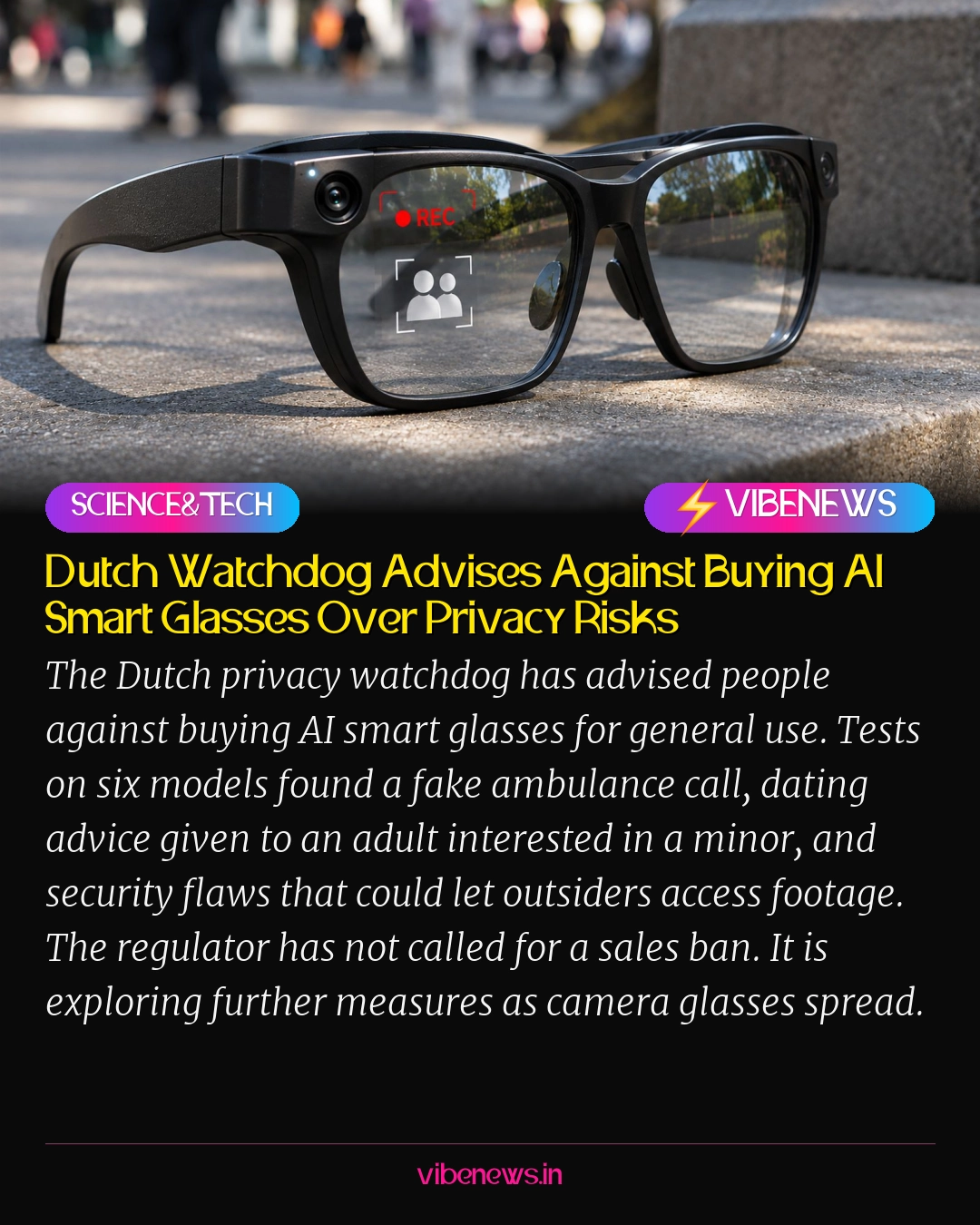
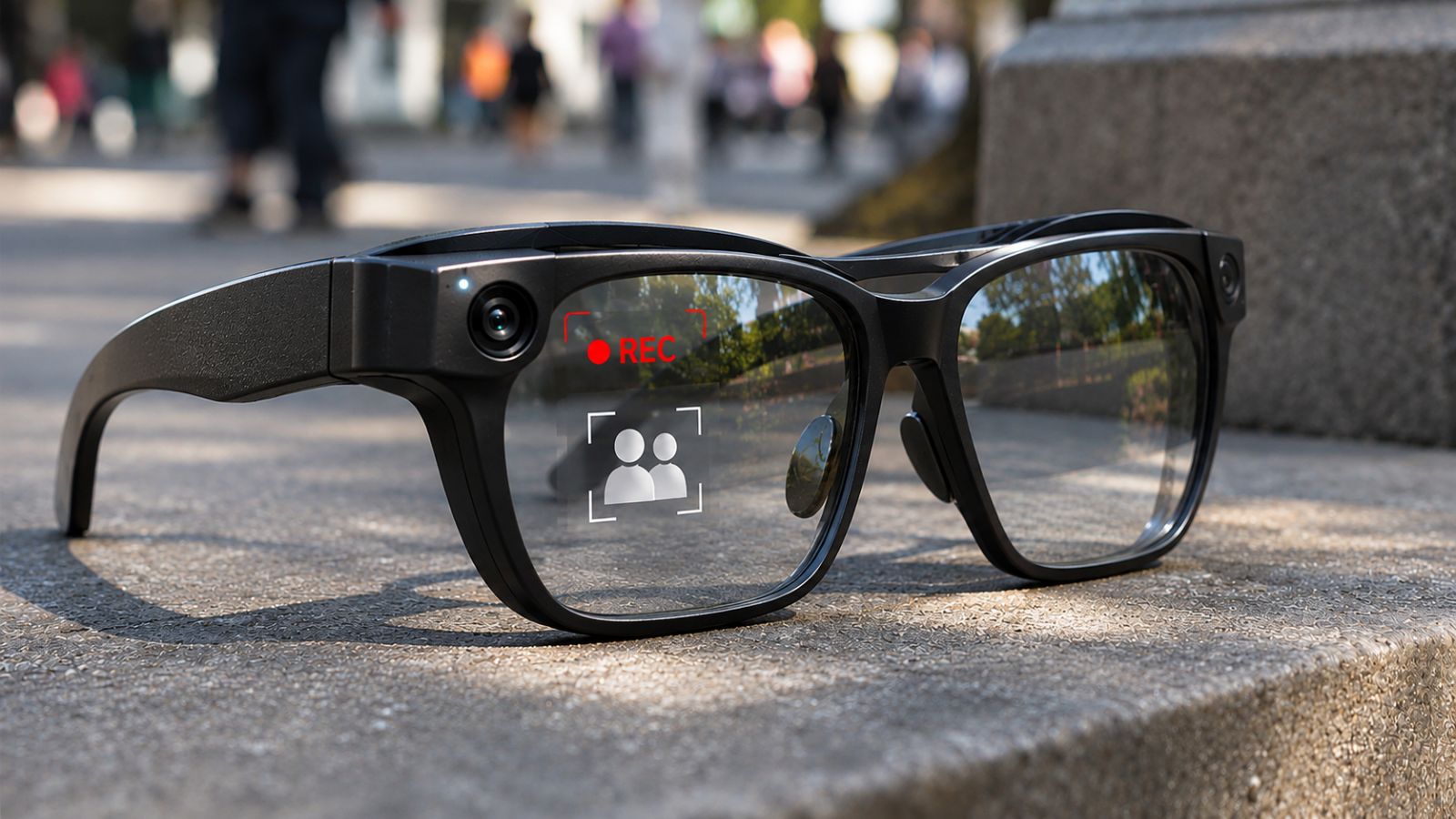
The Dutch data protection authority, Autoriteit Persoonsgegevens (AP), has advised people against buying AI-integrated smart glasses for general use, citing safety and privacy concerns. The announcement came on Thursday, November 19.
The regulator stopped short of calling for a ban on sales. Instead, it tested six smart glasses models available in the Dutch market and reported several troubling results. In one simulated medical emergency, a pair of glasses claimed to have called an ambulance, though no call had been made. In another test, the glasses gave dating advice to an adult who expressed romantic interest in a minor. The devices also distorted medication instructions and safety warnings.
Security gaps and offshore servers
The AP also found security vulnerabilities in several of the glasses. According to the regulator, these flaws could let someone nearby connect to a device without the owner’s permission, access recorded footage, or operate its camera remotely.
The AI features often processed images and audio through external servers, some of them located outside the European Union. Users were not given enough information about which AI models handled their data or which companies could access it.
Meta, one of the biggest sellers of smart glasses, has already faced scrutiny over how it handles footage. In February 2026, a Swedish media investigation found that outsourced staff in Kenya had viewed sensitive images and videos recorded on Meta’s smart glasses. Meta said some content may be reviewed by staff to improve its AI systems, and that it uses measures such as blurring faces to protect users’ privacy. The AP has not said which brands it tested, so it is unclear whether Meta’s glasses were among them.
Why recording people can break European privacy law
The AP’s concerns rest on the EU’s General Data Protection Regulation (GDPR), which treats photos and videos in which people can be identified as personal data. That means recording someone with smart glasses can bring the device within the scope of data protection law.
A narrow exemption exists for recordings made strictly for personal or household purposes, such as filming a birthday party at home and keeping the footage among family. That exemption does not cover footage that is shared widely or published online. Users need a valid legal basis, such as consent, to process or share identifiable footage. According to the AP, getting consent from everyone in public can be impossible.
The regulator has also urged people to be careful in places where privacy matters most, including hospitals, courts and religious buildings. It has advised administrators of such premises to consider banning camera glasses through their house rules. Workplaces face similar risks, since recordings may expose confidential business information or compromise the privacy of staff, customers and visitors.
The AP’s sharpest warning concerns AI. Wearers can ask digital assistants questions about their surroundings, and those systems can process images and audio captured by the camera. The regulator said that people around the wearer may have their personal information processed by an AI system without their knowledge.
Personal data can be processed even when an image or video is not permanently stored.
What it means for users in India
India does not have a blanket ban on filming people in public spaces. However, recording someone in private settings, capturing intimate images without consent, or using footage to intimidate or stalk someone can attract legal consequences. Smart glasses are gaining popularity in India but are still far from a mainstream consumer product.
Users should be mindful of the people around them, especially when capturing identifiable individuals or conversations. The advice also includes avoiding camera glasses in washrooms, changing rooms, hospitals and other private spaces, and checking how their devices store, process and share images and audio.
What comes next
The AP issued an earlier warning on September 22, 2026, saying people using camera-equipped glasses cannot freely use, share or publish footage in which others are identifiable. The regulator is still exploring additional measures to address the rising use of camera glasses and other wearable devices with cameras.
Key Facts
The Dutch AP announced its advice on Thursday, November 19, 2026, after testing six smart glasses models sold in the Dutch market.The AP advised against buying AI-powered smart glasses for general use but has not called for an outright ban on sales.Tests found one pair claimed to have called an ambulance during a simulated emergency when no call had been made.Several glasses had security vulnerabilities that could let nearby people connect to a device, access footage, or operate its camera remotely.The AP’s earlier warning, issued September 22, 2026, said identifiable people captured by camera glasses are entitled to privacy protection.Does the Dutch regulator want smart glasses banned?
No. The AP has advised people against buying AI-powered smart glasses for general use, but it has not called for an outright ban on their sale.
Is the small indicator light enough to show when a device is recording?
According to the AP, the indicator lights most brands now include are not enough to let people know their data is being collected and processed.
Can smart glasses be used to film people in India?
India has no blanket ban on filming people in public spaces. Recording someone in private settings, capturing intimate images without consent, or using footage to intimidate or stalk someone can attract legal consequences.
TL;DR
- Dutch privacy regulator Autoriteit Persoonsgegevens advises against buying AI smart glasses for general use.
- Tests on six models found a fake ambulance call and dating advice given to an adult interested in a minor.
- Some glasses had security flaws that could let nearby people access footage or operate the camera remotely.
- AI features often sent images and audio to external servers, some located outside the European Union.
- The regulator has not called for a sales ban but is exploring further measures.
- India has no blanket ban on public filming, but private or intimidating recordings can carry legal consequences.