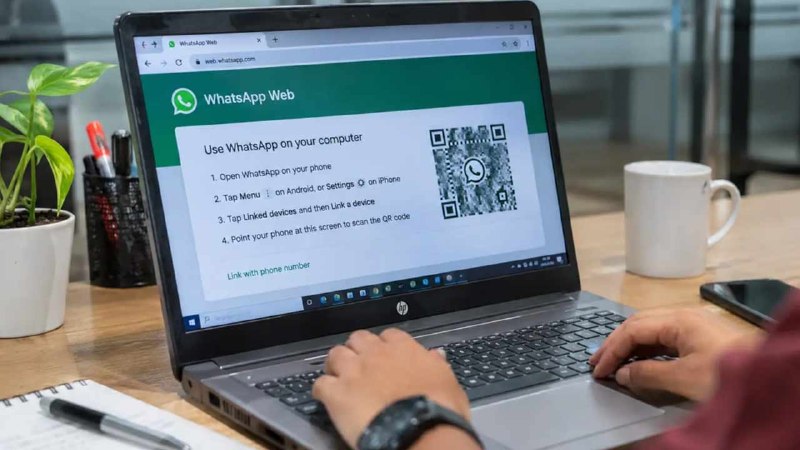
The Union Home Ministry has warned WhatsApp Web users not to leave their accounts logged in on office computers or other shared systems, saying hijacked sessions can let cybercriminals read private messages and send texts in the account holder’s name. The advisory, published on Monday, November 23, 2026, was issued by the National Cybercrime Threat Analytics Unit under the Indian Cyber Crime Coordination Centre, known as I4C.
What attackers can do once they get in
If criminals enter a WhatsApp Web session, they can access personal chats, contacts and group conversations. The advisory warns that they can then pose as the victim, sending messages to friends, family and colleagues. That trusted identity becomes the tool for fraud, phishing and social engineering.
The advisory is blunt on one point. Closing a browser tab or window does not log you out. Users must log out manually every time they finish.
Why shared computers carry the highest risk
The warning is aimed at people who use WhatsApp Web on computers that others also use. I4C said users should not keep sessions open on public computers or systems used by other people. It named cyber cafes, public kiosks and hotel business centres as places to avoid.
Organisations received a separate set of instructions. Government, institutional and financial information should not be shared through WhatsApp Web on computers used by multiple people. Urgent financial instructions that arrive by WhatsApp or email should be confirmed by phone call or in person before anyone acts on them.
The attacks behind the warning
I4C had already flagged attacks on senior executives, directors, chartered accountants and finance professionals on June 22 and August 7, 2026. According to the agency, criminals sent compressed files disguised as updates from the RBI or regulatory compliance notices. These files contained harmful executable and DLL files. Once opened, the malware allegedly hijacked WhatsApp Web session tokens. Attackers then saved their number as the company CEO and asked finance teams to transfer money.
The agency said the malware can hijack sessions even without direct access to a computer, if it has already been installed on a device. It also said that in the 30 days before the August advisory, more than 58,000 potential victims received SMS alerts. Blocking command-and-control servers, I4C said, helped protect more than 10,000 Indians.
The advisory also reflects a broader rise in cyber incidents in India. In March 2026, the Home Ministry told Parliament that CERT-In recorded 15,92,917 incidents in 2023, 20,41,360 in 2024 and 29,44,248 in 2025. The government noted these are reported incidents, but said they point to a serious challenge for digital infrastructure.
Banks have been hit too. In October 2026, records of 3,897 State Bank of India customers appeared on the dark web. Reports said the data included names, mobile numbers, dates of birth, email addresses, addresses, customer IDs and loan details. SBI said it has commissioned an independent cyber agency to investigate and that customer account balances are safe. In July 2026, Bank of Baroda confirmed that an employee’s email account was hacked and internal documents surfaced on the dark web.
Globally, the stakes have been higher. In August 2025, a cyberattack on Jaguar Land Rover, owned by Tata Motors, halted production for about six weeks. Reports said the attack cost the UK economy £1.9 billion and affected more than 5,000 organisations, including suppliers and dealerships.
What to watch for
The advisory asks users to check the Linked Devices section in WhatsApp settings regularly and log out of any unknown device or session. It also warns against opening suspicious files, especially attachments sent under the name of regulatory updates. Unexpected messages or strange replies from contacts are signs that account activity needs a closer look.
Closing a browser tab or window does not log you out. Users must log out manually every time.
Key Facts
The Home Ministry’s advisory was issued by I4C’s National Cybercrime Threat Analytics Unit.Hijacked WhatsApp Web sessions can expose personal chats, contacts and group conversations.Closing a browser tab or window does not log a user out of WhatsApp Web.CERT-In recorded 29,44,248 cyber incidents in 2025, up from 20,41,360 in 2024.I4C said blocking command-and-control servers helped protect more than 10,000 Indians.Does closing the browser window log me out of WhatsApp Web?
No. The advisory says users must log out manually each time, especially on shared or public computers.
What should I do if I do not recognise a linked device?
Open the Linked Devices section in WhatsApp settings and log out of any device or session you do not recognise, according to the advisory.
Can I use WhatsApp Web safely on someone else’s computer?
The advisory advises against it. If there is no alternative, it recommends using incognito or private browsing mode and keeping operating systems, browsers and security software updated.
TL;DR
- Home Ministry warns WhatsApp Web users not to stay logged in on shared or office computers.
- Hijacked sessions can let cybercriminals read personal chats, contacts and group conversations.
- Attackers can also send fraudulent messages in the account holder’s name, enabling phishing and fraud.
- Closing a browser tab or window does not log you out; users must log out manually every time.
- I4C advises checking Linked Devices regularly and logging out of any unrecognised device or session.
- The advisory follows a wider rise in cyber incidents, including recent bank data leaks and malware-driven attacks.