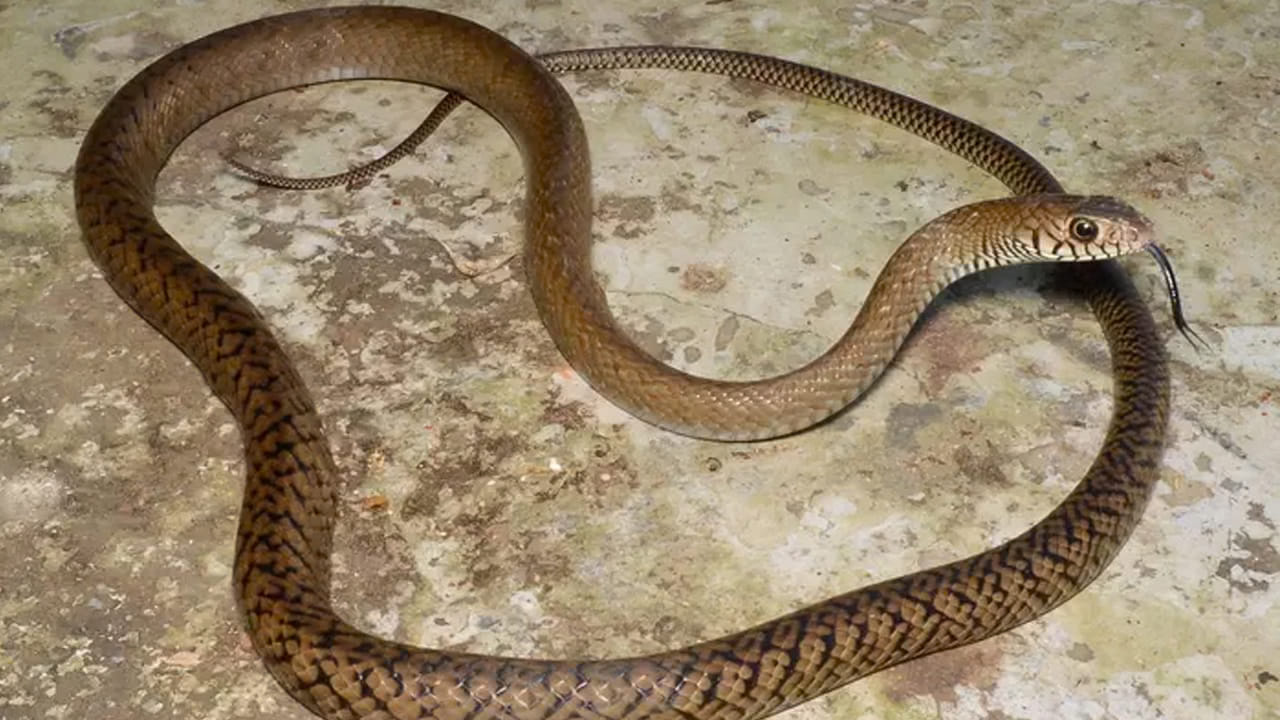
Many people react with immediate fear upon spotting a snake, often attempting to kill the reptile without realizing its ecological value. However, several species play a crucial indirect role in aiding humans, particularly farmers. Among the most notable is the Indian Rat Snake, scientifically known as the Oriental Rat Snake or locally as ‘Jerrypothu’.
The Natural Pest Controller in Agricultural Fields
Agricultural fields often face severe challenges from rodents that damage standing crops and stored grains alike. The Indian Rat Snake serves as a primary predator of these pests, aggressively hunting rats, small mammals, frogs, lizards, small birds, and their eggs. By naturally keeping rodent populations in check, this active reptile reduces the reliance on chemical pesticides. According to wildlife reports, the species is remarkably agile, capable of moving at high speeds, climbing trees with ease, and swimming in water when necessary.
Debunking Deadly Myths and Misconceptions
Numerous unfounded superstitions surround the creature. One widespread rural myth claims that a lash from its tail can cause a human to wither away and die. Wildlife experts confirm this is entirely false; the reptile is completely non-venomous, and its tail contains no lethal properties. Despite lacking venom, experts advise against handling, teasing, or attempting to photograph the snake up close when cornered, as it may hiss, expand its neck defensively, and attempt to bite out of fear. In defensive postures, its hooded appearance sometimes causes people to mistakenly identify it as a cobra.
వైవిధ్యభరితమైన ప్రకృతిలో ప్రతి జీవికి ఒక ప్రత్యేకమైన పాత్ర ఉంటుంది, అందుకే అపోహలతో వాటిని హతమార్చడం పర్యావరణానికి తీవ్ర నష్టాన్ని కలిగిస్తుంది.
Breeding Habits and Environmental Balance
During the mating season, male Indian Rat Snakes exhibit a peculiar territorial behavior by intertwining their bodies and rising upward in a competitive display of strength without inflicting severe injuries. Females lay between 5 and 20 eggs depending on regional and climatic conditions, and the newly hatched young are immediately capable of hunting independently. Beyond assisting farmers, these snakes occupy a vital position in the food chain, serving both as predators of rodents and as a food source for larger birds and carnivores.
Key Facts
The Indian Rat Snake is completely non-venomous and poses no lethal threat to humans.
Females typically lay a clutch of 5 to 20 eggs based on environmental conditions.
The species varies in color from brown, olive brown, and yellow to grey, often featuring dark markings near the tail.
Recent rescue efforts, such as an incident in Raladoddi, highlight the importance of contacting forest departments or snake handlers instead of killing them.
Can the tail of an Indian Rat Snake kill a human?
No, the belief that its tail can cause a person to wither and die is a completely groundless myth with zero scientific backing.
What should someone do if they encounter this snake?
Observers should maintain a safe distance and contact the forest department or authorized snake rescue professionals rather than handling or killing it.
TL;DR
- The Indian Rat Snake is a non-venomous reptile that acts as a natural pest controller in farming fields.
- It feeds primarily on rodents, small mammals, frogs, and birds, protecting crops from agricultural damage.
- Popular myths claiming its tail can kill humans are entirely groundless and scientifically false.
- Females lay between 5 and 20 eggs, and the young are capable of independent survival early on.
- Experts urge citizens to contact wildlife rescue specialists instead of harming the snakes.