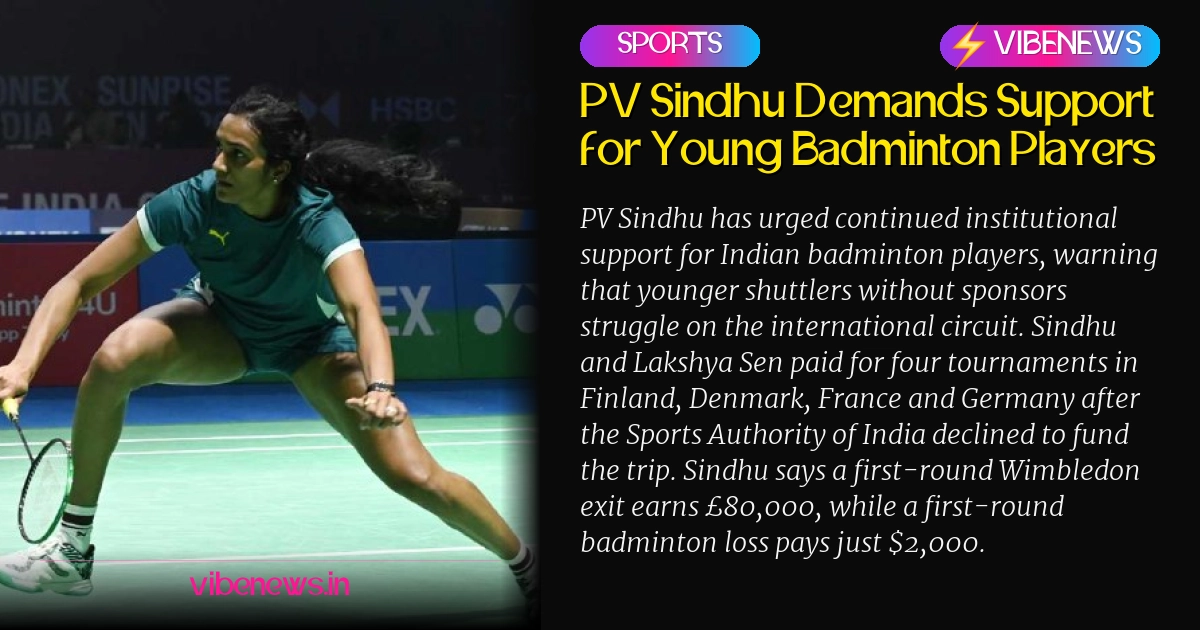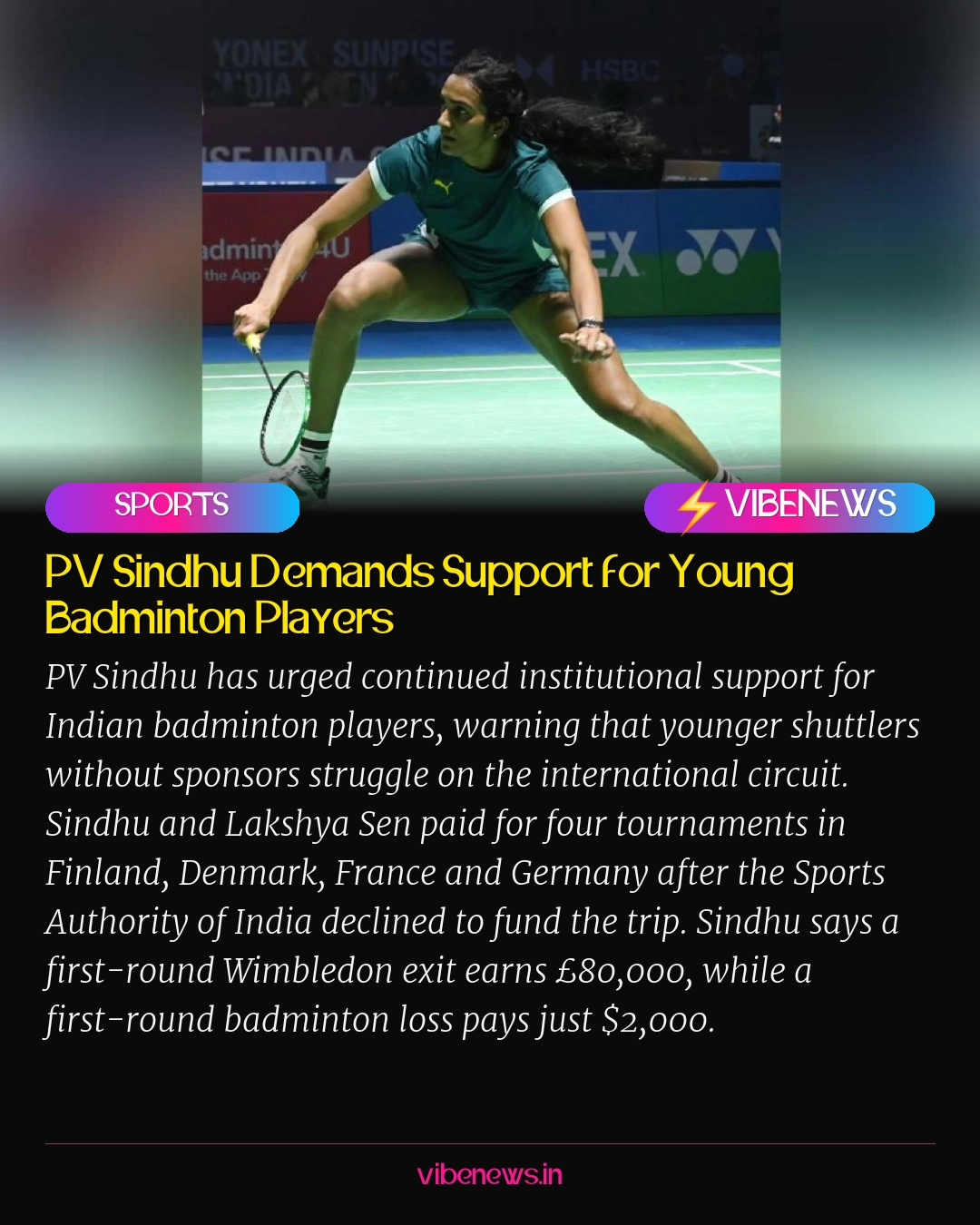
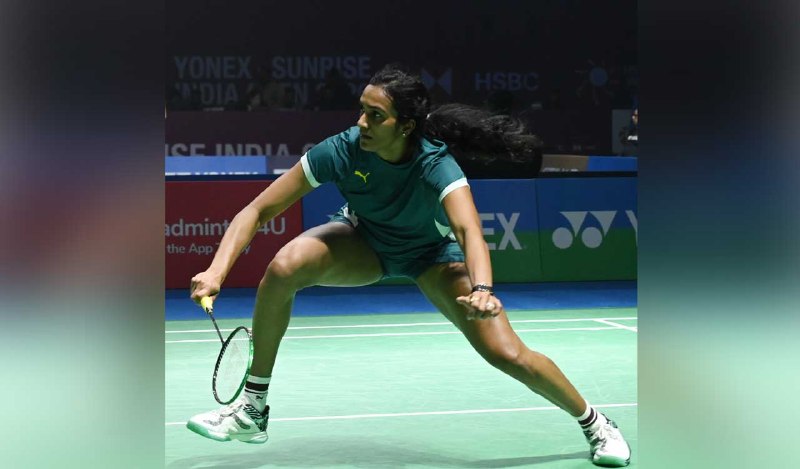
Two-time Olympic medallist PV Sindhu has called for continued institutional support for Indian badminton players, warning that younger shuttlers without sponsors or travel backing may not be able to survive the international circuit. She made the appeal on Tuesday in a detailed post on X.
The timing makes the argument hit harder. Sindhu and Lakshya Sen had just capped a successful European tour on Sunday with title-winning runs at the Hylo Open in Germany. Then came the revelation that the players had funded their own participation in four tournaments in Finland, Denmark, France and Germany, after the Sports Authority of India (SAI) decided not to finance the trip.
The money problem
A day after the funding row surfaced, the 31-year-old turned her attention to the gap between badminton and tennis earnings. Her numbers were blunt. “A first-round exit at Wimbledon earns £80,000. Winning the China Open, one of badminton’s richest tournaments, earns $140,000. Lose in the first round? Just $2,000,” she wrote.
Sindhu’s point was not only about the size of the prize purses. She argued that the costs of competing are largely the same in both sports. Travel, coaches, physiotherapists, trainers and support teams all have to be paid for, whether a player wins a title or goes out in the opening round. In a sport where the rewards can be thin for early exits, that cost structure becomes a serious burden.
She said she had spent long conversations discussing this very disparity with Rohan Bopanna, a fellow Indian athlete who has also spoken about the economics of professional sport. That detail matters because it shows the concern is not a fresh complaint. It is a problem that established names have been weighing for some time.
Self-reliance, but not for everyone
Sindhu did not frame her plea as a rejection of personal responsibility. “I agree that established athletes should strive to be financially independent. I’ve been fortunate to have wonderful sponsors, but not everyone has that privilege,” she wrote. The distinction is the heart of her message. A player who has found a sponsor can carry the load. A player who has not may be forced to stop before the career has even begun.
Sindhu, who reached the final of the French Open, said she could find ways to fund her own tour. That is the reason her warning carries weight. She is speaking from a position of security, and she is still pointing to the people beneath her who do not have that cushion.
Where the government fits in
Sindhu was careful not to attack the system outright. She acknowledged the tremendous support the Government of India and @Media_SAI have extended to athletes like her over the years. She said their contribution to Indian sport cannot be understated.
She also accepted that accountability is necessary. But her caveat was sharp. Supporting athletes, she wrote, isn’t bleeding the system. It is investing in India’s sporting future, and that long view should not be lost in debates about how public money is spent.
That balance is what makes the post stand out. Sindhu is not calling for a blank cheque. She is asking for officials to recognise that funding decisions shape who gets to keep playing at the international level, and who quietly drops out.
The athletes nobody sees
The sharpest line in her post is not about prize money at all. It is about a teenager she has never met, someone still building a reputation and still trying to make it onto the tour. Sindhu put that athlete at the centre of her argument, and she did it with a question that is hard to brush aside.
“I can find ways to fund my tour. But what about the 18-year-old chasing her dreams, hoping to become the next Sindhu or Lakshya?”
That question exposes the hidden cost of the sport. Elite results are visible. Ranking points, final appearances and title wins make headlines. What rarely makes headlines is the quiet financial calculation that happens before a young player ever steps onto a court abroad, where every flight, hotel night and physio session has to be paid for by someone.
Sindhu’s post suggests the pressure is landing hardest on the players with the least margin for error. A young shuttler without a sponsor has to win just to justify the trip, and an early loss can mean the tour has cost more than it returned. Sindhu’s argument is that such a system filters talent by wallet size rather than by ability.
Why this matters now
The Hylo Open victories were meant to be a celebration. Instead, the story has become a debate about who pays for Indian badminton’s international push. The fact that the players had to cover their own costs for four tournaments has turned a sporting success into a question about support structures.
Sindhu’s comments do not name a policy or demand a specific payout. What they do is put the issue on the table in the most direct possible way. The sport can produce champions, she is saying, but it cannot keep producing them if the path to the top is only open to those who can afford the detour.
For young athletes watching from home, the message is uncomfortable. The dream of becoming the next Sindhu or Lakshya depends not just on talent and training, but on whether someone is willing to fund the long, expensive climb. Sindhu has now asked the question publicly, and the answer will shape who gets a chance to play on the biggest stages.
TL;DR
- PV Sindhu urged continued institutional support for Indian badminton players on Tuesday.
- Sindhu and Lakshya Sen won titles at the Hylo Open in Germany before the funding row broke.
- The Sports Authority of India declined to finance four European tournaments, so the players paid themselves.
- A first-round Wimbledon exit earns £80,000, while a first-round badminton loss pays just $2,000.
- Sindhu warned that unsponsored teenagers chasing dreams face the costs with no backing.