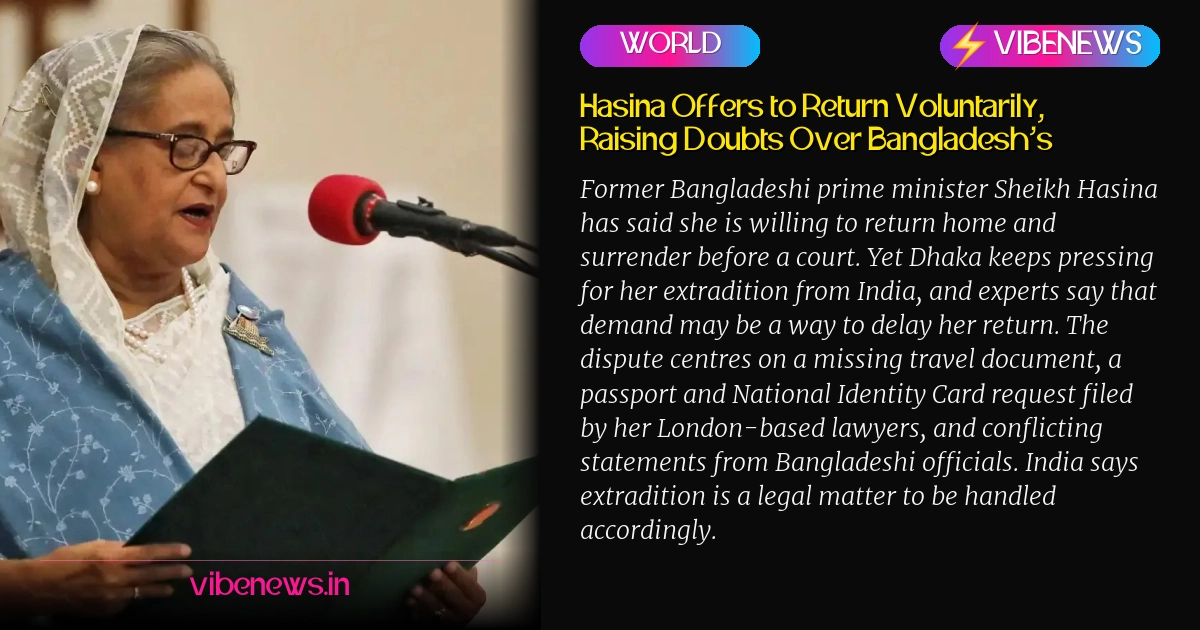
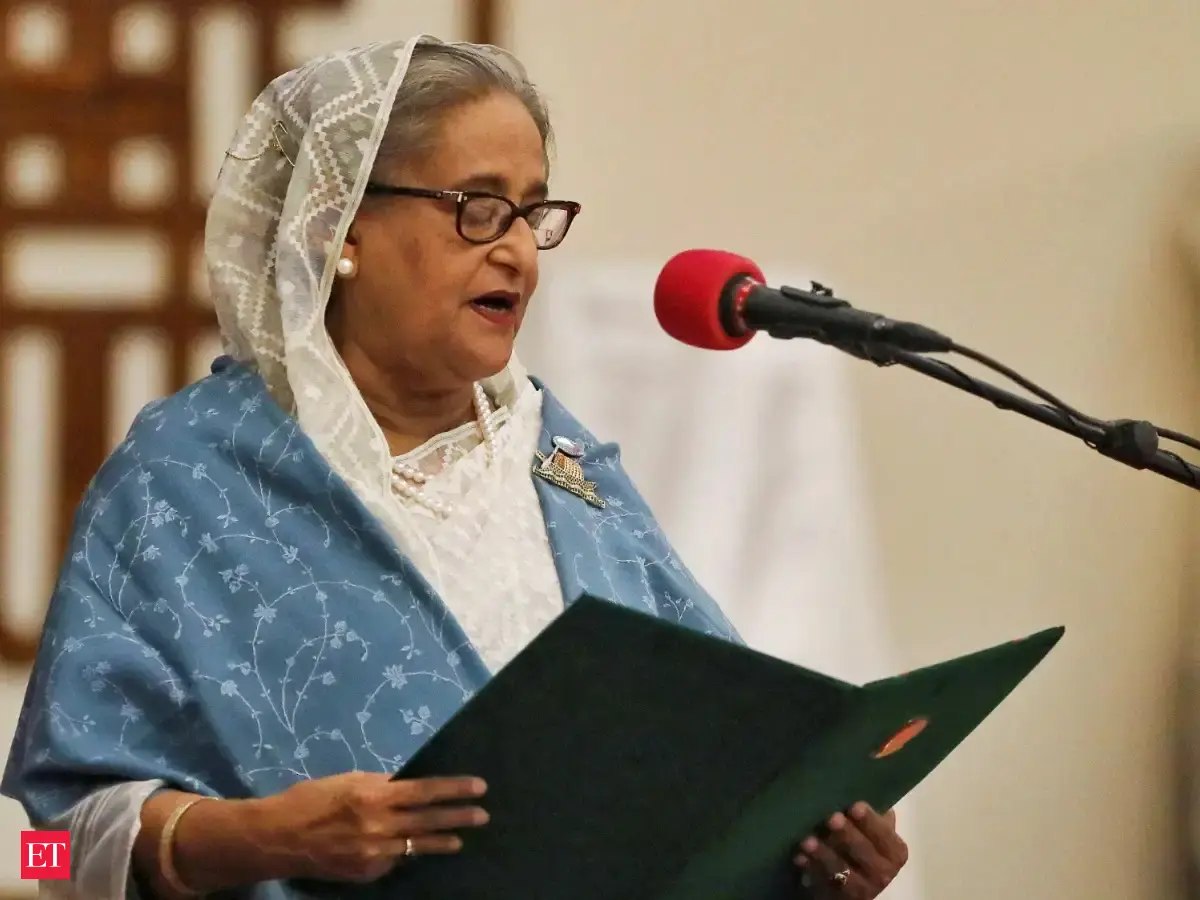
Former Bangladeshi prime minister Sheikh Hasina has said she is willing to return to Dhaka voluntarily and surrender before a court, but Bangladesh’s insistence on extraditing her is raising questions about whether it actually wants her back at this stage.
Experts on India-Bangladesh affairs described the extradition request as a likely delaying tactic. An extradition request exists to compel the return of someone who refuses to come back, they noted, so it has no role once a person has decided to return of her own accord. Bangladesh has refused to issue the documents she needs to travel, while still insisting on a legal process that one expert described as inherently complicated.
The passport and ID dispute
The London-based law firm Matrix Chambers, acting for Hasina, emailed the Bangladesh High Commission in New Delhi seeking a new passport and National Identity Card (NID). The request cited her Bangladeshi nationality and obligations under Bangladesh’s laws and international human rights instruments.
The application became necessary, the firm said, after the reported revocation of her existing Bangladeshi passport and the withdrawal of her NID by the Muhammad Yunus-led interim government and other authorities. According to reports, her diplomatic passport was revoked on August 22, 2024, and her NID was locked on February 16, 2025. Bangladesh sought her extradition from India in December 2024.
What India has said
India has not blocked her return, according to the source reporting. The immediate obstacle is practical: she needs a valid travel document, and only Bangladesh can issue one because she is a Bangladeshi national. Randhir Jaiswal, spokesperson for the ministry of external affairs, addressed the matter directly.
“Extradition of former prime minister of Bangladesh Sheikh Hasina is a legal matter and it will be dealt with accordingly. Obviously, for the travel of people, you need a travel document,” said Randhir Jaiswal, spokesperson, ministry of external affairs.
What international law says about the right to return
Several conventions Bangladesh has joined recognise an individual’s right to return to their own country. The Universal Declaration of Human Rights recognises the right to a nationality and bars its arbitrary removal, though it is not legally binding. Bangladesh acceded to the International Covenant on Civil and Political Rights in 2000. Its Article 12(4) protects people against arbitrary deprivation of the right to enter “one’s own country.”
The UN Human Rights Committee’s General Comment No. 27 reads that right more broadly than formal nationality, and says cancelling a passport cannot extinguish a national’s right to return. The committee’s general comments are recommendatory, not binding. Experts in international consular affairs added that withdrawing a passport is not impermissible in itself, but it must rest on legitimate grounds and be reasoned, proportionate and open to review.
Bangladesh’s legal argument for refusing passports appears to rest on Articles 6 and 7 of the Bangladesh Passport Order, 1973. Those provisions regulate departure from Bangladesh, not entry into it, the reporting noted.
Mixed signals from Dhaka
Bangladesh’s own officials have not spoken with one voice. The state minister for foreign affairs said no passport or travel pass is needed and none will be issued. A foreign ministry official, quoted by Bangladeshi media, said the mission “will be able to issue” a one-way travel pass once India completes its legal process.
Can Hasina return without an extradition?
According to the experts cited, extradition is only relevant if a person resists returning. Where someone wants to come back voluntarily, the sources say the two matters should be considered separately.
Is Bangladesh obliged to issue her travel documents?
States are ordinarily expected to issue, renew or replace travel documents for their nationals abroad and readmit them, the reporting said, citing ICAO Annex 9 and the Vienna Convention on Consular Relations, 1963.
What is the main obstacle now?
The absence of a valid travel document. Only Bangladesh can issue one, and the sources do not say when India’s legal process will be completed.
Key Facts
Hasina has publicly stated she is willing to return voluntarily and surrender before a court.Her diplomatic passport was reportedly revoked on August 22, 2024.Her NID was reportedly locked on February 16, 2025.Bangladesh sought her extradition from India in December 2024.TL;DR
- Sheikh Hasina says she will return to Dhaka voluntarily and surrender before a court.
- Experts call Bangladesh’s extradition demand a likely delaying tactic.
- Her lawyers at Matrix Chambers have asked the Bangladesh High Commission in New Delhi for a new passport and NID.
- Bangladesh has refused to issue travel documents, while its own officials have given conflicting statements.
- India says extradition is a legal matter and that she needs a valid travel document to travel.