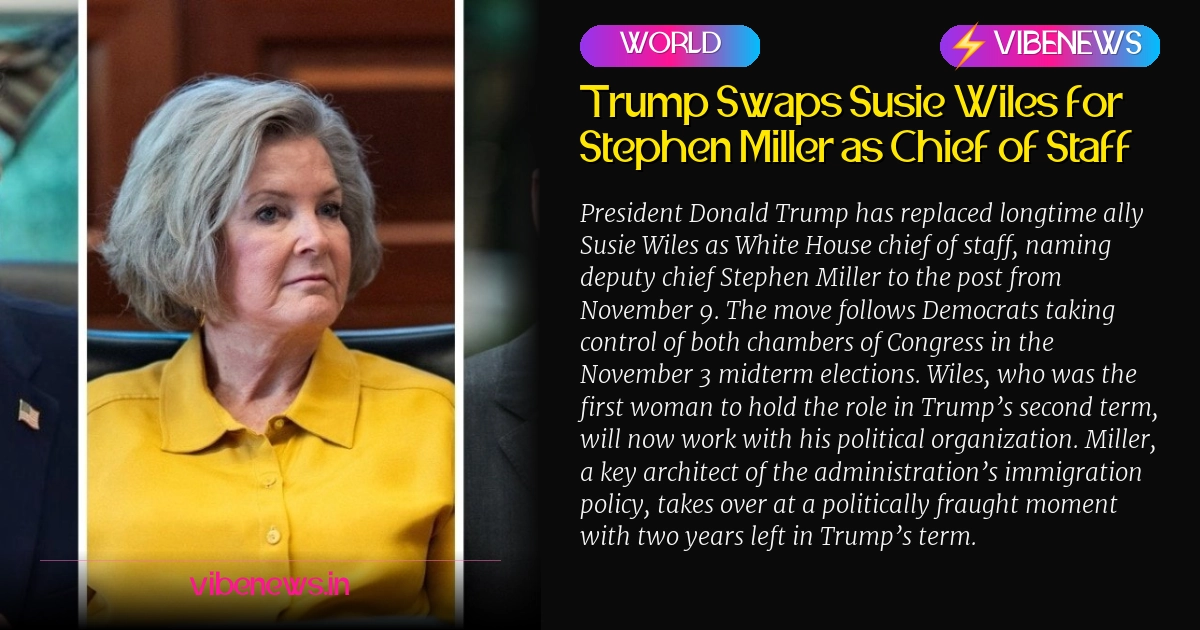
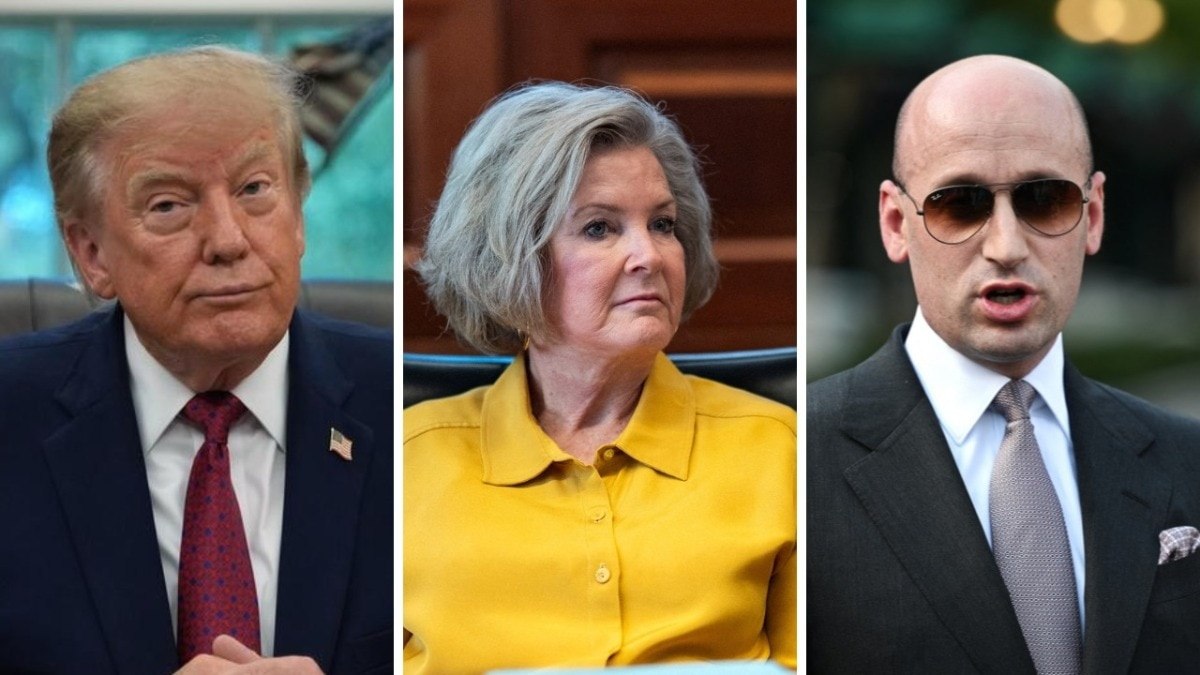
President Donald Trump has removed Susie Wiles as White House chief of staff and handed the job to Stephen Miller, his deputy chief of staff, starting November 9. Trump announced the change on Friday on his social media platform Truth Social, days after Republicans suffered a heavy defeat in the midterm elections.
The shake-up is the clearest sign yet that the White House is bracing for a harder two years. Democrats took control of both the House of Representatives and the Senate in the November 3 vote, ending Republican command of Congress. That result will make it far harder for Trump to push his agenda through the legislature for the rest of his term.
Why the Democrats’ win changes the math
The loss of both chambers does more than complicate legislation. Democrats will now control congressional committees, which gives them the power to investigate how the Trump administration runs its affairs. Oversight hearings, document requests and subpoenas become far more realistic tools for a party that spent the last two years on the sidelines of Capitol Hill.
Voters who turned against Republicans pointed to several issues: rising prices, economic pain linked to tariffs, and the war with Iran. Those three concerns dominated the post-election analysis, and they landed squarely on a White House that has tied its political fortunes to its economic record.
Trump chose to act quickly. Changing the person who runs the day-to-day machinery of the presidency is one of the few moves a president can make without a vote in Congress, and the timing suggests the White House wants a new team in place before the next political fight begins.
Who is Susie Wiles and where does she go now
Wiles has been one of the most trusted figures in Trump’s orbit for years. She joined his team during the 2016 presidential campaign. In 2020, she ran his campaign in Florida. In 2024, she managed his campaign across the country.
When Trump began his second term, he appointed her chief of staff, and she became the first woman to hold the position. Her tenure was the longest of any chief of staff during the second term, a point that underlines how much the president relied on her to keep the administration running.
Trump said Wiles will now work with his political organization. In a statement, Wiles called her time at the White House one of the greatest honours of her life and said she would continue to support Trump and his mission.
Serving in the White House has been one of the greatest honours of my life, and I will continue to support President Trump and his mission.
That language signals a graceful exit rather than a public rupture, at least on the surface. The formal wording of her departure does not reveal whether the decision was entirely hers.
Stephen Miller takes the most powerful staff job in the building
Miller has been a close Trump ally for years. He joined the future president’s campaign during the 2016 race and wrote speeches during that period. Over time, he became one of the most influential people in Trump’s team.
His public profile is built largely on immigration. He played a major role in shaping the administration’s tough border security policies and its push to deport people living in the country illegally. That record made him a lightning rod for critics and a hero for supporters who wanted a hardline approach.
The chief of staff sits closest to the president. The role involves coordinating Trump’s daily work and keeping the administration’s many moving parts aligned. Miller will now hold that position, and his decisions will shape how the White House operates in the middle of a difficult stretch.
Miller is currently serving as deputy chief of staff in the White House. He will take over the top job on Monday, November 9.
A tough stretch ahead for the administration
Trump still has two years left in his term, but the political map has shifted under him. A Congress controlled by the opposition will test every major initiative, and the new oversight powers held by Democrats will put the administration under a sharper spotlight.
The replacement of Wiles with Miller tells a story about priorities. The White House is choosing a figure long associated with its immigration agenda to run the building at a time when voters have made clear that prices, tariffs and foreign conflict weigh heavily on their minds.
What happens next will depend on how the new chief of staff manages relations with a hostile Congress, how the administration responds to the voter anger that drove the midterm results, and whether the change at the top brings a different approach to the job. For now, the message from the White House is clear: the team is changing, and the agenda is being reset for a more difficult fight.
TL;DR
- Trump has replaced Susie Wiles as White House chief of staff with deputy chief Stephen Miller, effective November 9.
- The change comes days after Democrats took control of both the House and the Senate in the November 3 midterms.
- Trump announced the move on Truth Social on Friday and praised Wiles, who will now work with his political organization.
- Wiles was the first woman to serve as chief of staff and had the longest tenure in Trump’s second term.
- Miller has long been a close Trump ally and is known for shaping the administration’s immigration and deportation policies.
- Voters cited inflation, tariffs and the war with Iran among the reasons for the Republican defeat.