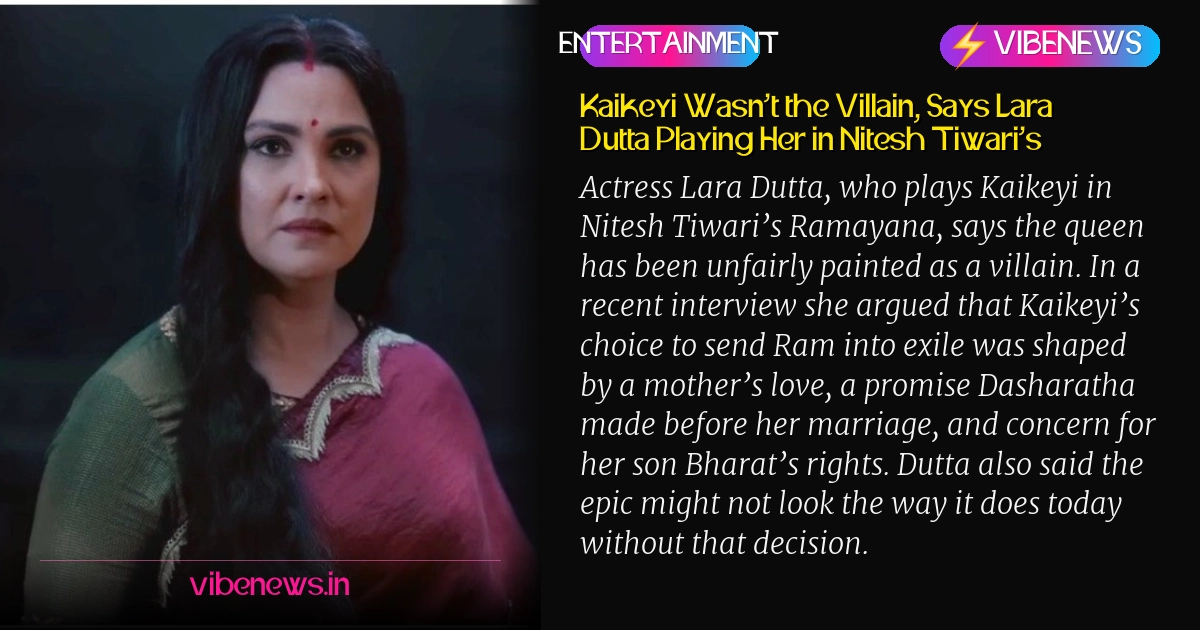
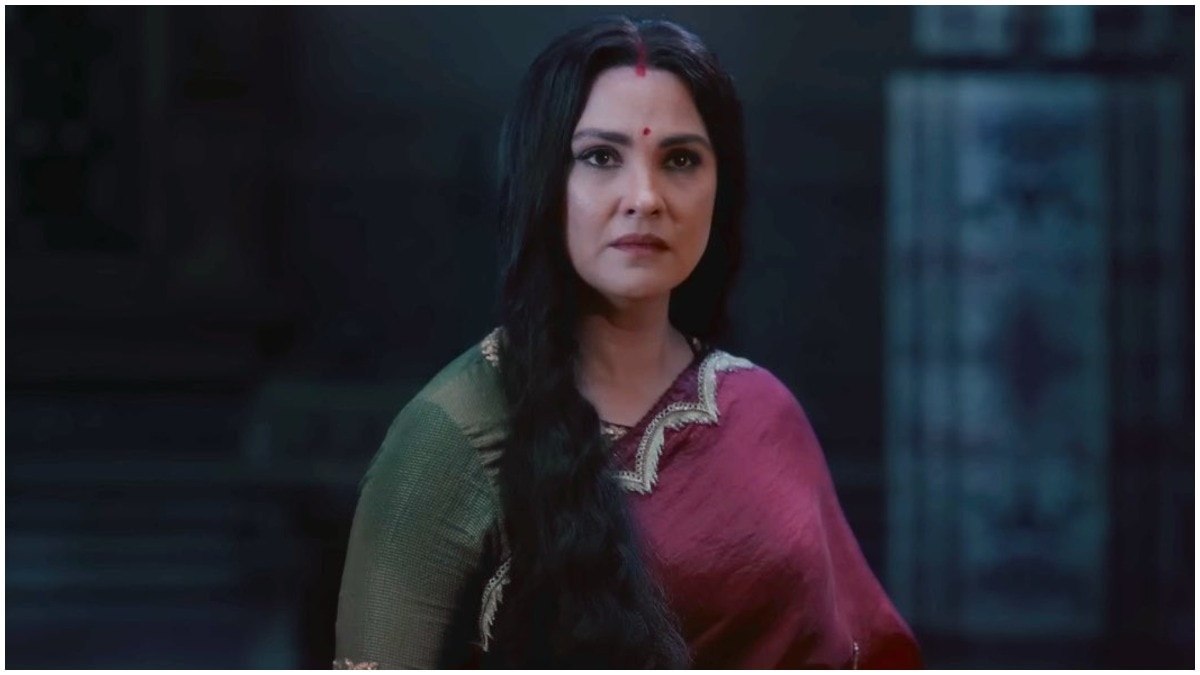
Actress Lara Dutta has said Kaikeyi, the queen most people remember as the villain of the Ramayana, has been misrepresented for generations. Dutta plays Kaikeyi in Nitesh Tiwari’s film Ramayana, and in a recent interview she argued that the queen’s decision to send Ram into exile was not born from jealousy or a hunger for power alone.
Her version of the story starts with a battle. According to Dutta, Kaikeyi once saved King Dasharatha’s life on a battlefield, and in gratitude the king promised her two boons. That promise was only one piece of the puzzle. Dutta said there was a second, older commitment that few audiences think about.
Before Kaikeyi married Dasharatha, the king had made a promise to her father. Kaikeyi’s father did not want his daughter to become the king’s third queen. To win his consent, Dasharatha reportedly assured him that the son born to Kaikeyi would become the king of Ayodhya, even if he was not the eldest. Dutta believes this promise was the foundation of Kaikeyi’s later actions. In her reading, Kaikeyi was not scheming against Ram. She was trying to secure the right her son had been promised before he was even born.
That is the crux of Dutta’s argument. She sees Kaikeyi caught between two loyalties. On one side was her love for Ram. On the other was her responsibility as a mother to protect Bharat’s claim to the throne. Dutta said Kaikeyi was a mother who stood up for her son because she feared that in the power struggles and court intrigue of a kingdom as large as Ayodhya, Bharat could lose what was rightfully his.
Playing a character the audience has already judged
Dutta admitted the role was not easy. Kaikeyi has been the villain in countless retellings, from childhood bedtime stories to stage performances, and that baggage follows any actor who takes the part. Dutta’s approach was to find the logic behind the woman’s choices, rather than treating the decisions as simple evil. She said the character has always been shown as a villain, even though her decisions had several reasons behind them.
Dutta also pointed to another version of the Ramayana. According to some beliefs she referenced, Kaikeyi was born with a divine purpose: to set Ram on the path that would lead to the end of Ravana and the restoration of peace on earth. It is a striking reframing. In that telling, the exile is not a cruel accident but a step in a larger cosmic design, and the woman at the center of it is an instrument rather than a schemer.
The claim that changes the whole epic
The sharpest line in the interview is Dutta’s argument about the story itself. She called Kaikeyi one of the most important links in the Ramayana. If Kaikeyi had not sent Ram into exile, Ram would have become king of Ayodhya and governed like any ordinary ruler, Dutta said. The exile opened the door to everything that followed.
Dutta pointed to what happened after Ram left the city. The abduction of Sita and the war with Ravana, the events that define the epic for most readers, came only because Ram was in the forest. Without the banishment, those events would not have unfolded in the same way.
“Without Kaikeyi, there might not be the Ramayana we know today.” — Lara Dutta, as reported in her interview
Dutta’s position is that Kaikeyi was never trying to deceive anyone. In her view, the queen believed she was asking for what her son had been promised before his birth. Whether audiences accept that reading or not, it asks them to look again at a character they may have dismissed for decades.
The film is directed by Nitesh Tiwari, and Dutta’s comments offer a preview of how the production is approaching one of the epic’s most debated figures. Her interview does not settle the old argument over whether Kaikeyi was wicked or wronged. What it does is put the promises, the motives and the consequences on the table, and ask viewers to weigh them before they reach a verdict.
For many readers, the most unsettling part of Dutta’s argument is how little of it depends on new information. The promises she described are part of the same story that has been told for centuries. What has changed is the lens. Dutta is asking audiences to read Kaikeyi as a mother fighting for a child’s future, and to consider that the Ramayana’s most painful turning point may have been the decision that made the rest of the epic possible.
TL;DR
- Lara Dutta says Kaikeyi was misrepresented, and that her choices were shaped by a mother’s love rather than greed alone.
- Dutta, who plays Kaikeyi in Nitesh Tiwari’s Ramayana, cites a boon Dasharatha promised after Kaikeyi saved his life in battle.
- According to Dutta, Dasharatha also promised Kaikeyi’s father that her son would become king of Ayodhya, even if not the eldest.
- Dutta argues that Kaikeyi was protecting Bharat’s rights in a court full of power struggles, not scheming against Ram.
- She claims that without Ram’s exile, the Ramayana as audiences know it may never have taken shape.