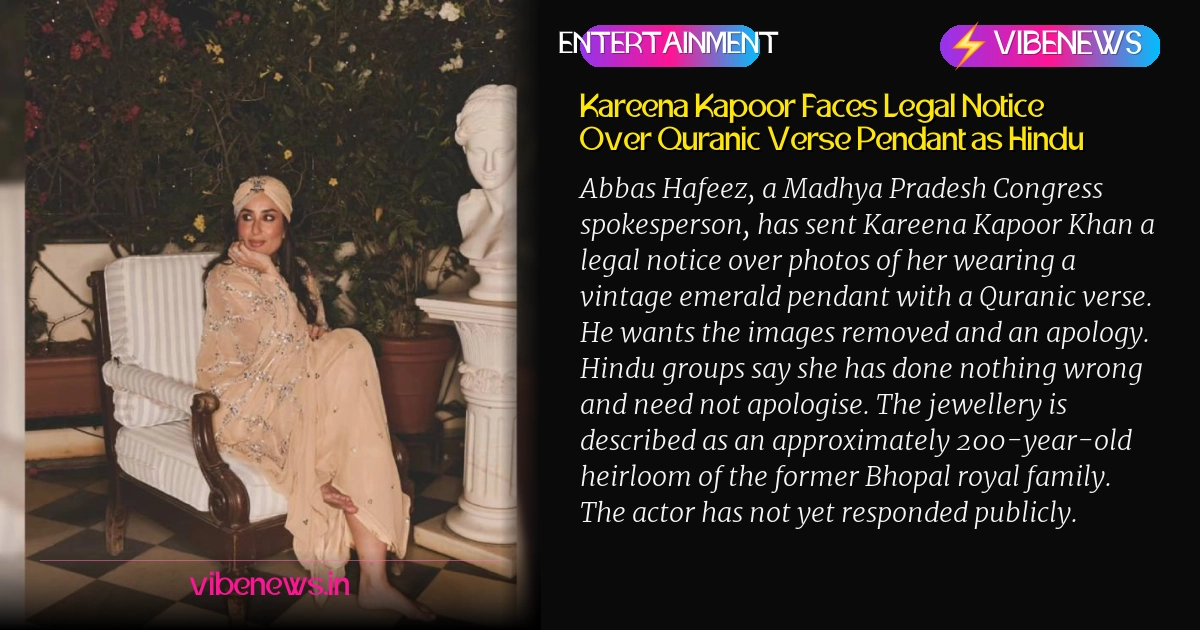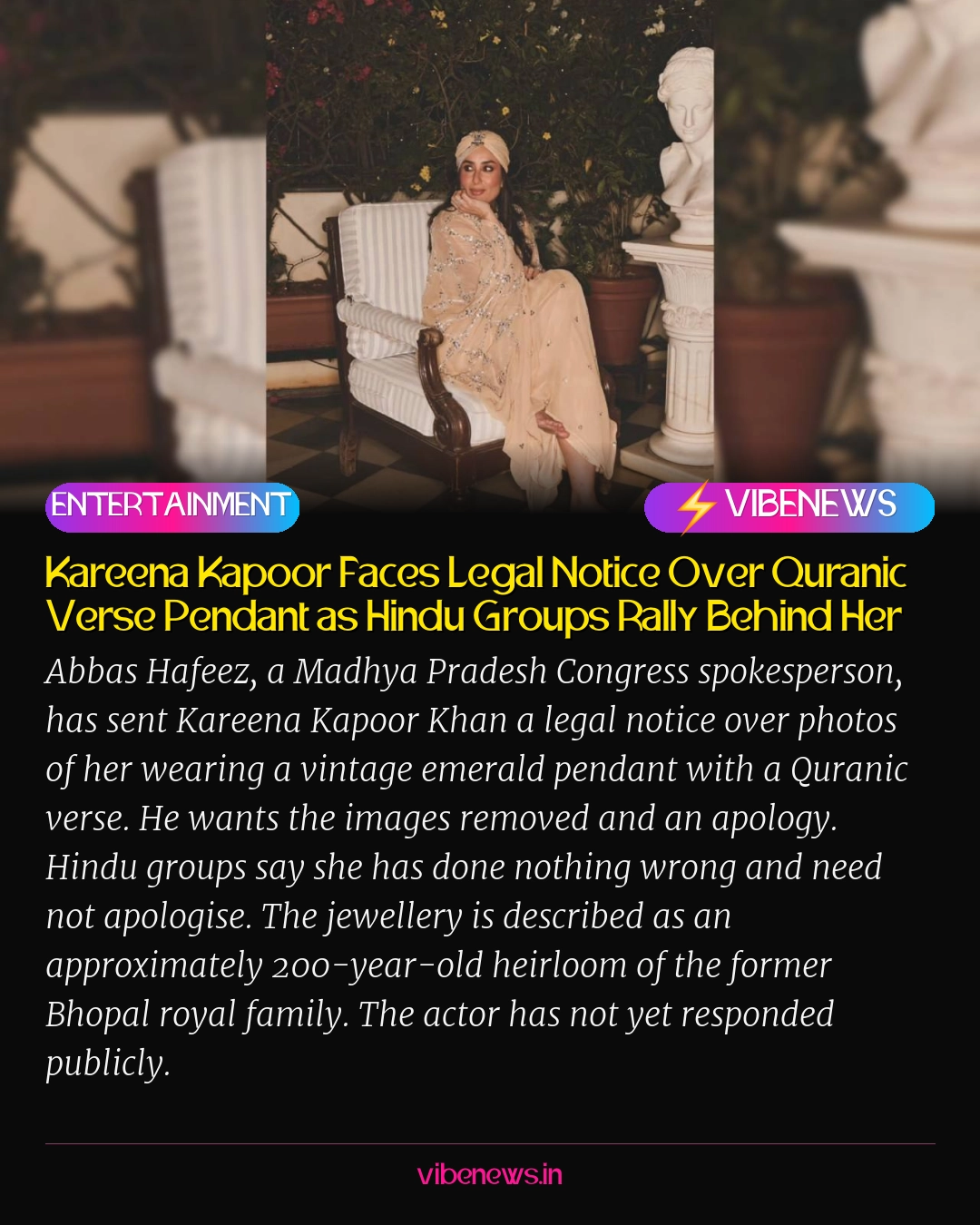
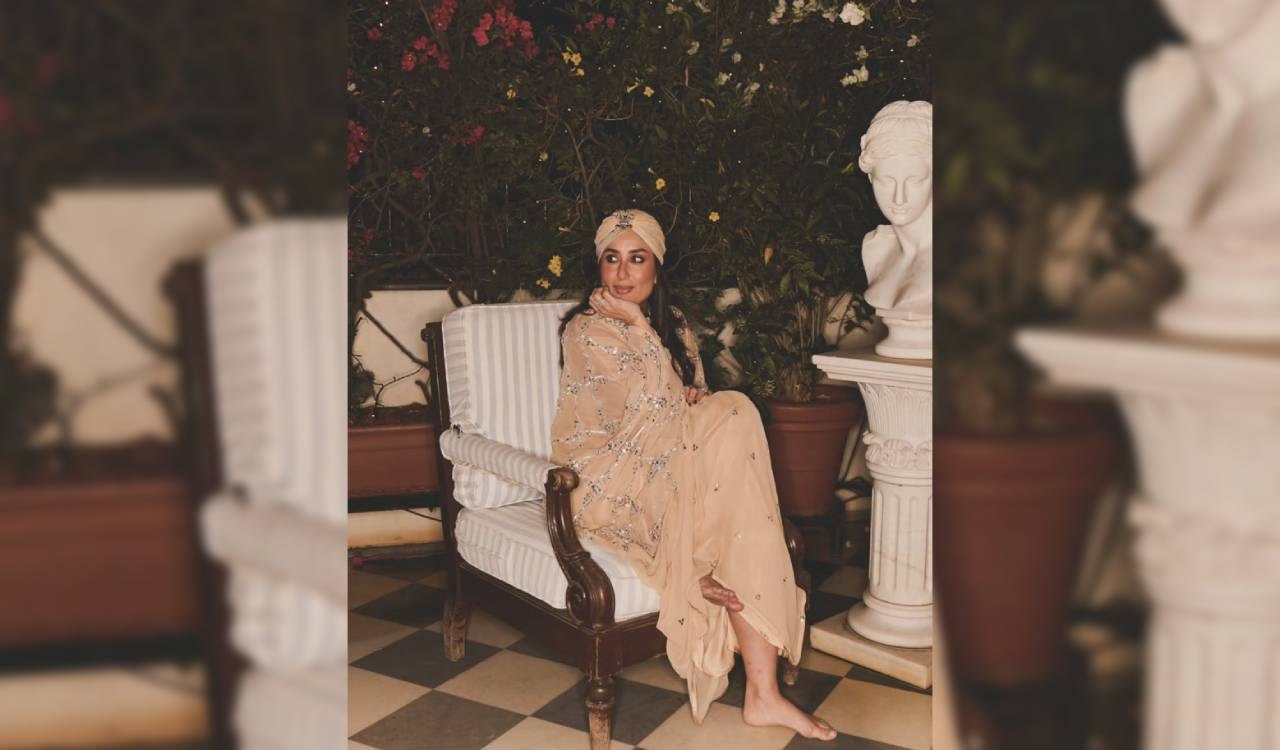
A legal notice has been sent to Bollywood actor Kareena Kapoor Khan by Abbas Hafeez, a Madhya Pradesh Congress spokesperson, over social media photographs showing her wearing a huge vintage emerald pendant that bears a verse from the Quran. Hafeez wants the photographs removed and a public apology issued.
The notice has also pulled Hindu organisations into the fight, and they are firmly on the actor’s side. The Hindu Utsav Samiti and the Sanskriti Bachao Manch have both said Kareena has done nothing wrong and does not need to apologise to anyone. What began as a Diwali look shared online has now become a legal and religious dispute, with two communities effectively pulling in opposite directions.
What the notice actually demands
Hafeez has been careful to say his objection is not to the jewellery itself. In his telling, the problem lies in the way the religious inscription was displayed on social media, which he says hurt the sentiments of the Muslim community. That distinction matters, because it moves the complaint from who can wear what toward how sacred text gets presented to the public.
His advocate, Mohammad Zafar, put the religious argument on the record. He said the pendant carried a verse from the Holy Quran, which is considered sacred in Islam, and that religious practice calls for ritual ablution before touching or reciting the holy texts. The implication is clear. In Zafar’s view, a verse of that kind should not appear in a setting that is considered disrespectful.
The notice seeks three things: the removal of the photographs and related posts, an apology, and an assurance that the religious inscription will not be displayed in a manner considered disrespectful in future. Notably, the reporting describes this as a legal notice, not a court filing. No case has been reported as filed.
A heirloom at the centre of it
The pendant itself has become the story’s most talked-about object. Celebrity stylist Rhea Kapoor described it as an approximately 200-year-old heirloom of the former Bhopal royal family. She had shared photographs of Kareena wearing the jewellery as part of her Diwali look, and those images are the ones now under challenge.
Hafeez said the pendant was associated with the heritage of the Begums of Bhopal and was worn as an expression of faith, not as a fashion accessory. That claim cuts to the heart of the dispute. Supporters of the actor see a piece of royal jewellery worn with respect. Critics see a sacred verse turned into an ornament for social media.
Hafeez also made a point of separating himself from his party. He clarified that the move was his personal initiative and should not be linked to the Congress party, its ideology or its political position. That clarification will not stop people from connecting the notice to politics, given the source of the complaint, but it is his own stated position.
A royal and cricketing family connection
The historical thread runs straight into the Pataudi family. Actor Saif Ali Khan’s grandmother, Sajida Sultan, was the daughter of Hamidullah Khan, who was the last ruling Nawab of Bhopal. She married Iftikhar Ali Khan Pataudi, and their son was former Indian cricket captain Mansoor Ali Khan Pataudi, who was Saif’s father.
That lineage is why the pendant is being read as more than a piece of expensive jewellery. It sits at the meeting point of Bhopal’s princely past, a famous cricketing family and a modern film star whose own family tree is now part of a public argument about faith and respect.
The Hindu groups step in
Hindu Utsav Samiti president Chandra Shekhar Tiwari has been the most direct voice in Kareena’s defence. He did not hedge his position, and his argument rests on what he sees as the basic logic of how such a pendant would be worn.
"A pendant is meant to be worn around the neck, close to the heart. If it bears Quranic verses, she would not have worn it at any place considered disrespectful. She does not need to apologise to anyone," Tiwari said.
Tiwari went further and argued that Kareena, as the daughter-in-law of the erstwhile Bhopal royal family, could naturally wear jewellery that belonged to her mother-in-law. That line of reasoning ties the item to family and inheritance rather than to any sense of provocation. It is a defence built on relationships, not on the religious text itself.
The Sanskriti Bachao Manch has also expressed support for the actor. Together, the organisations are presenting a unified front that frames the criticism as misplaced and the demand for an apology as unnecessary. The reporting does not describe any further action from these groups beyond their public statements of backing.
Silence from the actor’s camp
So far, the actor has not spoken. There was no immediate public response from Kareena Kapoor or her representatives to the legal notice. That silence leaves the field to the two sides, each making its case through statements and public support rather than through the person at the centre of the row.
For readers, the central questions are simple and unresolved. Was the verse displayed in a way that crossed a religious line, as the notice claims? Or was a royal heirloom worn with the respect Hindu groups describe? The available reporting does not settle either question, and it does not show a court ruling or any formal finding. What it does show is a celebrity photo shoot that has become a test of how faith, heritage and social media collide, and a legal notice that is now waiting for a response that has not come yet.
TL;DR
- A legal notice from Madhya Pradesh Congress spokesperson Abbas Hafeez demands removal of Kareena Kapoor Khan’s photos wearing a Quranic verse pendant and a public apology.
- Hafeez says his objection is to how the religious inscription was displayed on social media, not to the jewellery itself.
- Hindu Utsav Samiti and Sanskriti Bachao Manch say Kareena has done nothing wrong and does not need to apologise.
- Stylist Rhea Kapoor described the emerald pendant as an approximately 200-year-old heirloom of the former Bhopal royal family.
- Kareena Kapoor or her representatives have not publicly responded to the notice.